Is Form 2290 Filed Annually? Everything Truck Owners Need to Know
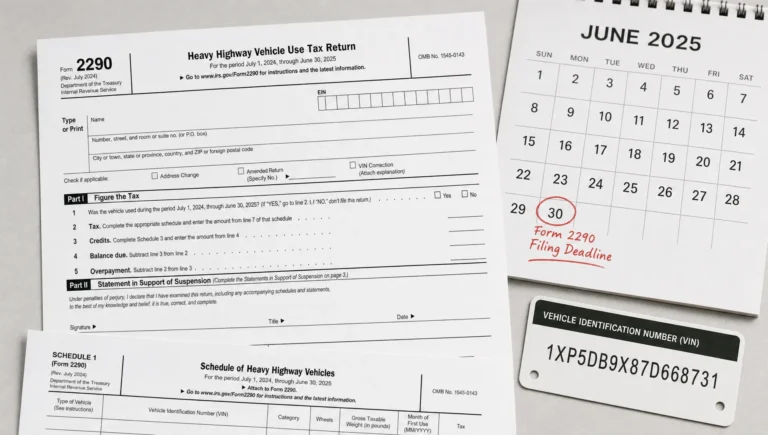
If you are wondering is form 2290 filed annually, the practical answer is yes for most truck owners. You generally file once per HVUT tax year for each heavy vehicle you run on public highways.
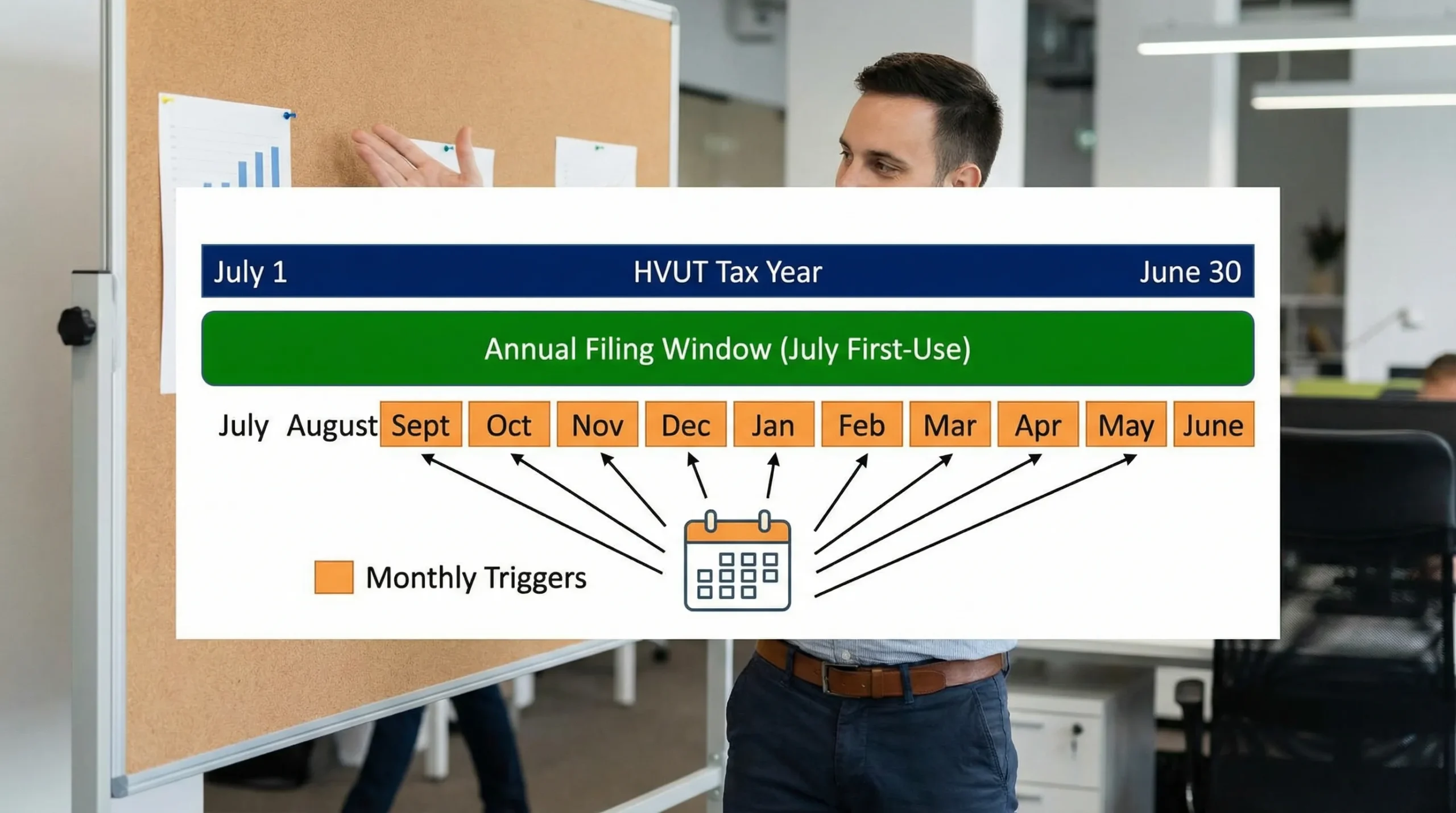
What confuses many first-time filers is that the IRS uses a July 1 to June 30 tax year and a “first used month” rule, so your filing can feel monthly when you add trucks mid-year. In this guide, we will break down exactly when you file, when you may need to file again, and how to plan renewals, payments, and pre-filing so you never get stuck waiting on Schedule 1 at registration time.
So, is Form 2290 filed annually or monthly?
For planning purposes, is form 2290 filed annually is the right way to think about it. Form 2290 is an annual tax return for the Heavy Vehicle Use Tax (HVUT). If your truck is on the road in July (the first month of the HVUT tax year), you typically file for the full year and renew on the same annual cycle.
However, you can end up filing more than once in a tax year if any of these happen:
- You put a vehicle on the road for the first time in a later month (new purchase, used purchase, newly registered, or brought back into service).
- You add units to your fleet after you already filed.
- You need certain amendments (for example, a taxable weight increase).
That is why drivers often ask again later, is form 2290 filed annually? The best mental model is: annual tax year, but filing is triggered by each vehicle’s first used month.
Annual filing scenarios at a glance
| Scenario | How often you file | What to watch |
|---|---|---|
| Same truck operated from July | Once per year | File by the last day of August (or next business day) |
| Truck first used in October | Once for that truck (prorated) | Due last day of November |
| Fleet adds 5 trucks in January | Additional filing for new VINs | Due last day of February |
| Weight category increases mid-year | Amendment filing | Due end of month after the change |
For official definitions, always cross-check the IRS rules in the Form 2290 instructions.
The deadline rule that matters most: first used month
The IRS deadline is not “one date for everyone” in every situation. The key rule is:
- Your Form 2290 is due the last day of the month following the month the vehicle is first used on public highways.
So if a truck’s first used month is July, the due date is the last day of August (commonly referred to as the main annual HVUT deadline). If you first use a vehicle in March, you file by the last day of April.
If you want the most direct deadline breakdown, use this internal guide: form 2290 due dates.
Why the annual question is trending again in 2026
Operationally, more fleets are treating HVUT filing like a renewal workflow, similar to insurance and IRP, instead of a once-a-year scramble. Here are the big drivers behind that shift:
- Registration timing pressure: Most states and IRP offices will not process transactions without the IRS-stamped Schedule 1.
- Higher cost of downtime: A late filing is not just a penalty risk, it can delay plates and dispatch.
- More mixed fleets: Fleets add and retire equipment continuously, which increases “mid-year first used month” filings.
This is where the question is form 2290 filed annually becomes a strategy question. Annual compliance is simple only if your fleet is stable. If your fleet size changes, you need a system.
How to renew Form 2290 (the simple annual playbook)
If you searched how to renew form 2290, what you are really asking is: “How do I repeat last year’s filing without mistakes and get Schedule 1 fast?”
A high-accuracy renewal process looks like this:
- Confirm your EIN and legal name match what the IRS has on file. Mismatches are a top cause of rejections.
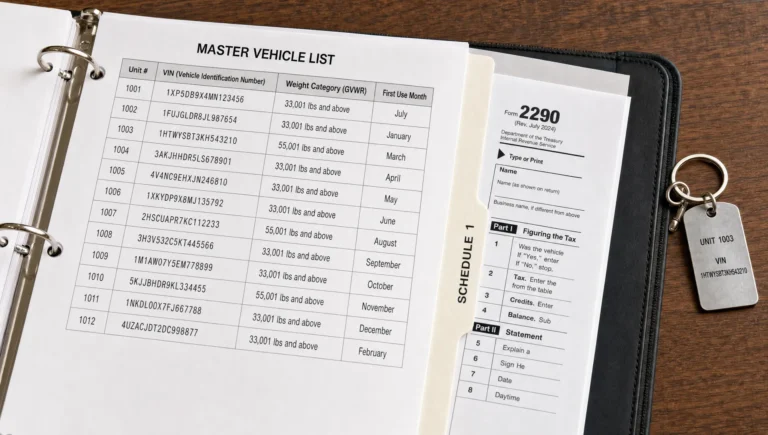
- Verify every vehicle identification number before submission (even one transposed character can stop acceptance). Keep a VIN validation habit, not just a once-a-year check.
- Confirm taxable gross weight category and whether any unit qualifies as logging or suspended.
- Choose payment method based on speed and control.
- File early enough to fix rejections before your IRP or DMV appointment.
For a deeper view of why renewal ties to registration, see irp truck registration and how it connects to Form 2290 schedule 1.
How to pay IRS Form 2290 (speed vs control)
When people ask how to pay irs form 2290, the decision is usually about two things: confirmation speed and administrative control.
Common payment options include:
- Direct debit (bank withdrawal)
- EFTPS (good for controlled, trackable payments, but timing matters)
- Credit or debit card (through IRS-approved card processors)
- Check or money order (slowest confirmation for many filers)
Strategic advice: if you are close to a deadline, treat payment like a settlement process, not a click. EFTPS in particular can require scheduling lead time, and settlement must be on or before the due date. If EFTPS is your standard, keep this reference handy: heavy vehicle use tax payment.
Pre-filing Form 2290: when it helps and when it backfires
Pre-filing has become popular because fleets want Schedule 1 in hand the moment the IRS begins accepting returns for a new tax year. If you are asking pre file form 2290 or can you pre file form 2290, the practical answer is: yes, in many cases you can prepare and submit early through an authorized process, but you still need to align timing with IRS acceptance windows.
Think of Form 2290 pre filing as an operations tool. It is best when:
- You have stable vehicle data (VINs, weights, use category) and a predictable first used month.
- You are coordinating with IRP renewals and want to avoid peak-season delays.
- You manage multiple entities or terminals and want centralized tracking.
It can backfire when:
- You are still changing weight categories or adding/removing vehicles.
- Your “first used month” assumptions are not final.
If you are planning to pre-file irs form 2290, set an internal cut-off date for VIN validation and weight confirmation so you do not create rework. This is the heart of pre filing Form 2290 done right.
A practical way to “submit before the deadline” without rushing
If you looked up how to submit Form 2290 before deadline, use this buffer rule that many fleet controllers follow:
- Submit early enough to allow time for a possible rejection and correction.
Rejections happen, and the true cost is often not the filing fee, it is the lost day in your registration timeline. A guided e-file workflow can reduce simple errors (VIN, EIN/name control, duplicate filings), especially when you are pre filing heavy vehicle use tax form returns for dozens of units.
E-file vs paper: the time and risk comparison that actually matters
Most decision articles say “e-file is faster,” but fleets should compare risk as much as speed.
| Factor | Paper filing | E-filing through an authorized provider |
|---|---|---|
| Typical turnaround to proof | Often weeks in peak season | Often same day after IRS acceptance |
| Error correction loop | Mail delay compounds mistakes | Faster fix and resubmit |
| Fleet scalability | Manual handling grows quickly | Bulk workflows reduce touch points |
| Record retrieval | Physical storage risk | Secure online access and retrieval |
The IRS also requires e-filing when you file for 25 or more vehicles in a return. If you are scaling, your best bet is building around an IRS Authorized E-file Provider.
A real-world planning lesson from fleet operators
Here is the lesson that experienced fleet owners repeat: treat HVUT like a compliance asset.
Example (common fleet situation): a small carrier grows from 4 trucks to 9 trucks during the year. If they only plan for an “annual filing,” they miss the fact that every added truck triggers a first used month filing cycle. The fleet that wins is the one that stores vehicle profiles by VIN, validates taxable gross weight as equipment changes, and standardizes a monthly compliance check.
That is why the question is form 2290 filed annually matters beyond semantics. The best operators plan for annual renewal plus mid-year events.
To keep tax estimates predictable, use a reliable rates reference like HVUT tax rates by weight and keep taxable gross weight documentation ready.
Frequently Asked Questions
Is form 2290 filed annually for owner-operators? Yes, in most cases. If your truck is first used on public highways in July, you typically file once per HVUT tax year. If you add a truck later, you file again for that vehicle based on its first used month.
What if I bought a truck mid-year, is Form 2290 filed annually or do I wait? You generally do not wait. You file for the vehicle based on the month it is first used on public highways, and the tax is prorated for the remaining months in the HVUT tax year.
Can you pre file form 2290 to avoid last-minute delays? Often yes. Pre-filing can help you prepare early and reduce peak-season risk, but you still need to align submission and acceptance timing with IRS processing windows and confirm your vehicle details are final.
How do I pay IRS Form 2290 online? You can pay using options like direct debit, EFTPS, or card payment (through IRS-approved processors). The best method depends on how quickly you need confirmation and how you manage accounting controls.
What document proves I filed and paid HVUT? The IRS-stamped Schedule 1 is the proof most DMVs and IRP offices require for registration and renewals. Keep it saved by VIN for fast retrieval.
File and renew confidently with Simple Form 2290
If you want a smoother renewal cycle, faster proof for registration, and fewer rejection headaches, use Simple Form 2290 to e-file in a guided, IRS-authorized workflow. You can electronic file form 2290 and pay online through a step-by-step process, get quick access to your stamped documents, and use fleet-friendly tools when you have multiple vehicles.
Get started at Simple Form 2290 and consider reviewing provider feature checklists like Bulk and fleet filing if your operation is growing.