How to Calculate 2290 Taxable Gross Weight Correctly
Getting your 2290 taxable gross weight right matters more than many truck owners realize. It affects whether you must file Form 2290 at all, which weight category you choose and how much Heavy Highway Vehicle Use Tax (HVUT) you owe. A small guess can turn into a rejected filing, an amendment or an overpayment you did not need to make.
The good news is that the calculation is not complicated once you know what the IRS is asking for. The mistake is usually treating taxable gross weight as only the empty truck weight, only the GVWR or only the registered weight on a cab card. For Form 2290, you need the full working combination weight.
What 2290 taxable gross weight means
For IRS Form 2290, taxable gross weight is the total weight of the vehicle setup as it is customarily used on public highways. According to the IRS Instructions for Form 2290, that includes the actual unloaded weight of the vehicle, the actual unloaded weight of any trailer or semi-trailer customarily used with it and the maximum load customarily carried.
That definition is different from several numbers truckers see every day. Gross Vehicle Weight Rating (GVWR) is the manufacturer rating. Registered weight is tied to registration and apportioned plates. A scale ticket shows what the truck weighed at one specific moment. Each can be useful, but none should automatically replace the IRS formula.
The IRS formula in plain English
The basic formula is simple:
| Part of the calculation | What to include | Common mistake |
|---|---|---|
| Actual unloaded vehicle weight | Truck or tractor fully equipped for service | Using a bare chassis weight |
| Actual unloaded trailer weight | Trailer or semi-trailer normally used with the vehicle | Leaving the trailer out |
| Maximum load customarily carried | The heaviest load normally carried in your operation | Using an average load instead |
For IRS filing, 2290 taxable gross weight is not the heaviest load you could possibly haul in an unusual situation. It is the maximum load customarily carried in your normal business. A one-off emergency move should not control the calculation, but a recurring heavy route probably should.
The three numbers you need before you file
Start with the power unit. For a straight truck, this may be the truck itself. For a tractor, it is the tractor fully equipped for service, including the normal fuel, fluids and equipment that make it ready to work.
Next, add the unloaded trailer or semi-trailer that is customarily used with that vehicle. If the same tractor regularly pulls different trailers, use the trailer setup that matches how the vehicle is normally operated for the work that produces the taxable weight.
Finally, add the maximum load customarily carried on that truck and trailer combination. Your 2290 taxable gross weight should reflect the way the vehicle is actually used, not just what it weighed on the day you sat down to file.
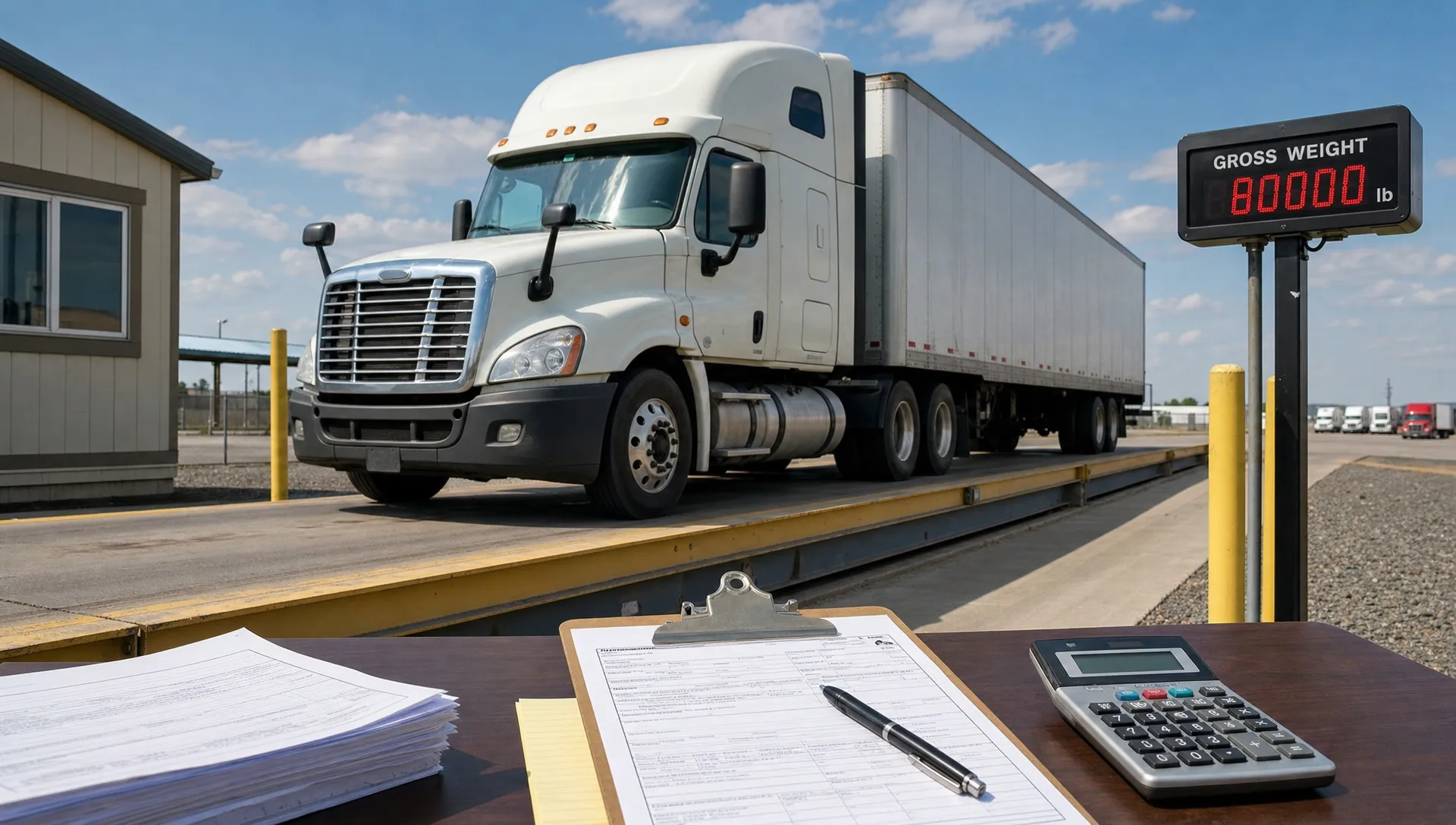
Good records make this easier. Fleet specs, manufacturer documentation, registration records, bills of lading, dispatch history and recent scale tickets can all support the number you use. If your records conflict, slow down and identify which number is rating, registration, empty weight or actual operating weight.
Do not confuse GVWR with taxable gross weight
GVWR is useful because it tells you what the manufacturer designed the vehicle to handle safely. It is not always the same number the IRS wants on Form 2290. If you want a deeper explanation of that difference, this guide to Gross Vehicle Weight Rating for truck owners breaks down GVWR, payload and operating weight in more detail.
The IRS calculation is more practical. It asks what the truck and its usual trailer weigh unloaded, then adds the maximum load customarily carried. That is why two similar tractors can land in different tax categories if they are used in different operations.
Step-by-step: calculate your weight category
Once you have your 2290 taxable gross weight, compare it to the IRS threshold. Form 2290 generally applies when a taxable highway motor vehicle has a taxable gross weight of 55,000 pounds or more and is registered, or required to be registered, in your name.
Use this process before filing:
- Add the actual unloaded weight of the truck or tractor.
- Add the actual unloaded weight of the trailer or semi-trailer customarily used.
- Add the maximum load customarily carried on that combination.
- Compare the total to the 55,000-pound threshold.
- Select the correct Form 2290 weight category for that total.
If your total is under 55,000 pounds, the vehicle usually does not fall under HVUT filing requirements based on weight. If it is 55,000 pounds or more, you will use the appropriate weight category when you file. For a broader look at the filing threshold, see this explanation of what weight requires Form 2290 for trucks.
Quick examples for common truck setups
Examples help because the formula feels different depending on the type of work you do. These are simplified numbers, so use your own equipment records when filing.
| Vehicle setup | Unloaded power unit | Unloaded trailer | Maximum customary load | Total taxable gross weight | Result |
|---|---|---|---|---|---|
| Tractor and dry van | 18,000 lb | 15,000 lb | 45,000 lb | 78,000 lb | Over 75,000 lb category |
| Dump truck with pup trailer | 26,000 lb | 8,000 lb | 24,000 lb | 58,000 lb | 58,000 lb weight band |
| Straight box truck | 24,000 lb | 0 lb | 20,000 lb | 44,000 lb | Below 55,000 lb threshold |
| Tractor with lighter regular freight | 17,500 lb | 14,500 lb | 32,000 lb | 64,000 lb | 64,000 lb weight band |
Notice how the empty tractor alone does not tell the full story. In the first example, the tractor weighs only 18,000 pounds, but the working combination reaches 78,000 pounds once the trailer and normal maximum load are included.
For a semi truck, 2290 taxable gross weight often lands above 75,000 pounds, which places the vehicle in the highest standard weight category. Lighter specialized vehicles, local delivery trucks and certain vocational trucks may fall into lower categories or below the filing threshold, depending on their actual setup.
Common taxable weight mistakes that cost time or money
Most errors come from using a shortcut instead of the IRS definition. It is understandable, especially when you are trying to file quickly and get your stamped Schedule 1. Still, the wrong number can cause problems later if the IRS questions the return or if your operation changes.
Watch for these common mistakes:
- Using only the empty tractor weight and ignoring the trailer
- Using GVWR without checking the IRS taxable weight formula
- Entering registered weight from the cab card without confirming the operating combination
- Using an average load instead of the maximum load customarily carried
- Forgetting that a heavier trailer can change the category
- Treating a suspended vehicle as if no Form 2290 filing is needed
A suspended vehicle is a good example. If you expect to use the vehicle 5,000 miles or less during the tax period, or 7,500 miles or less for certain agricultural vehicles, you may report it as suspended. That does not mean the weight calculation disappears. You still need the right vehicle information when filing.
What if the weight changes after you already filed?
If your 2290 taxable gross weight increases during the tax period, you may need to file an amendment and pay the additional tax for the remaining months. This can happen when you add equipment, start pulling a heavier trailer or begin hauling heavier loads as part of normal operations.
The IRS generally requires the amended filing by the last day of the month following the month in which the taxable gross weight increased. For example, if the increase happens in October, the amendment is generally due by the last day of November.
Do not assume a lower operating weight later in the year automatically creates a refund. Form 2290 credits have specific rules, such as certain sold, destroyed or stolen vehicles, or vehicles that stayed under the mileage use limit. A simple shift to lighter work is usually not the same thing.
If your vehicle moved into a heavier category after filing, this guide on updating Form 2290 for an increase in gross weight walks through what that amendment means.
How to check your number before submitting Form 2290
Before you e-file, do a quick sanity check. Ask whether the number includes the truck, trailer and regular maximum load. Check whether the total makes sense compared with your bills of lading, operating routes and equipment specs. If the vehicle regularly runs near 80,000 pounds, filing it as a much lighter vehicle should raise a red flag.
It also helps to keep the source documents you used. You do not need to upload every weight record when e-filing, but having your calculation notes can save time if you need to review the filing later.
When you file through Simple Form 2290, the guided process helps you enter vehicle details, choose the proper category and submit your return electronically. You can also use the platform for multiple vehicles, which is helpful when one fleet has tractors in different weight categories.
The main point is simple: calculate 2290 taxable gross weight before you rush through the filing screen. A few minutes with the right numbers can prevent overpayment, underpayment and avoidable amendments.
Frequently Asked Questions
What is included in 2290 taxable gross weight? It includes the actual unloaded weight of the vehicle, the actual unloaded weight of any trailer or semi-trailer customarily used with it and the maximum load customarily carried on that combination.
Is GVWR the same as taxable gross weight for Form 2290? No. GVWR is the manufacturer rating. Taxable gross weight for Form 2290 is based on the IRS formula for the working vehicle combination and its customary maximum load.
Do I need Form 2290 if my truck is under 55,000 pounds? In general, Form 2290 applies to taxable highway motor vehicles with a taxable gross weight of 55,000 pounds or more. If your properly calculated total is below that threshold, HVUT usually does not apply based on weight.
What if I pull different trailers with the same tractor? Use the trailer or semi-trailer customarily used with the vehicle for your operation. If your normal business changes and creates a higher taxable gross weight, review whether an amendment is required.
Can I change my Form 2290 if I used the wrong weight? If the vehicle's taxable gross weight increased or you filed in the wrong category, you may need to file an amendment. If you are unsure, review your records before submitting another return.
File with the right weight and get your Schedule 1
Form 2290 filing is easier when your weight calculation is clear before you begin. Simple Form 2290 is an IRS-authorized e-file provider built for truckers, owner-operators and fleets that want a straightforward filing process, secure data handling and fast Schedule 1 delivery after IRS acceptance.
If you are ready to file, gather your EIN, VIN, first used month and calculated taxable gross weight, then start your return at Simple Form 2290.