How to Get a Form 2290 Stamped Schedule 1 Without Delays
If you need a form 2290 stamped schedule 1 for a DMV renewal, IRP plate, or a truck that needs to get back on the road, the goal is simple: file clean, file electronically, and remove anything that might make the IRS reject the return. Most delays are not caused by a long IRS review. They come from small mistakes, like an EIN mismatch, a wrong VIN, a bad first-used month, or filing by paper when time is already tight.
That stamped Schedule 1 is the document most truckers use to prove Heavy Vehicle Use Tax compliance. When you are standing at a registration counter or trying to renew apportioned plates, a missing or rejected Schedule 1 can turn into lost time fast.
How to get your form 2290 stamped schedule 1 without delays
Getting it fast starts before you enter the first field. Have your business name exactly as the IRS has it, your EIN, VIN, taxable gross weight, first-used month and payment method ready. If you manage multiple trucks, organize the vehicle list before filing instead of typing from memory.
The safest way to avoid waiting is to e-file through an IRS-authorized provider. The IRS requires electronic filing if you report 25 or more vehicles, and even smaller owner-operators usually benefit from e-filing because paper returns take longer to process. The IRS Instructions for Form 2290 also explain the filing rules, taxable vehicle categories and due date basics.
After submission, the IRS either accepts or rejects the return. If it accepts the return, your form 2290 stamped schedule 1 can be downloaded or delivered electronically, often within minutes when the information is accurate and IRS systems are running normally. If it rejects the return, you must correct the issue and transmit it again.
For truckers who want a guided walk-through rather than guessing at each screen, Simple Form 2290 explains the filing flow in its guide on how to e-file Form 2290 with Simple Form 2290.
What the stamped Schedule 1 actually proves
Schedule 1 is the proof document attached to Form 2290. Once the IRS accepts your HVUT return, the electronic Schedule 1 shows an IRS received date or e-file watermark. That is why state DMVs, IRP offices and many registration services ask for it when a taxable heavy vehicle is registered or renewed.
It is not just a receipt you keep in a tax folder. In the trucking world, it is often a working document. You may need it when renewing plates, registering a newly purchased truck, adding a truck to your fleet or proving that the vehicle is properly reported for the tax period.
A valid form 2290 stamped schedule 1 should match the vehicle you are presenting. If the VIN is off by one character, the DMV clerk may not accept it, even if the tax was filed. If the business name does not match your registration documents, that can also create questions.
If you want a plain-English breakdown of what appears on this document, the article on Schedule 1 Form 2290 is a helpful companion.
Pre-check the details before you e-file
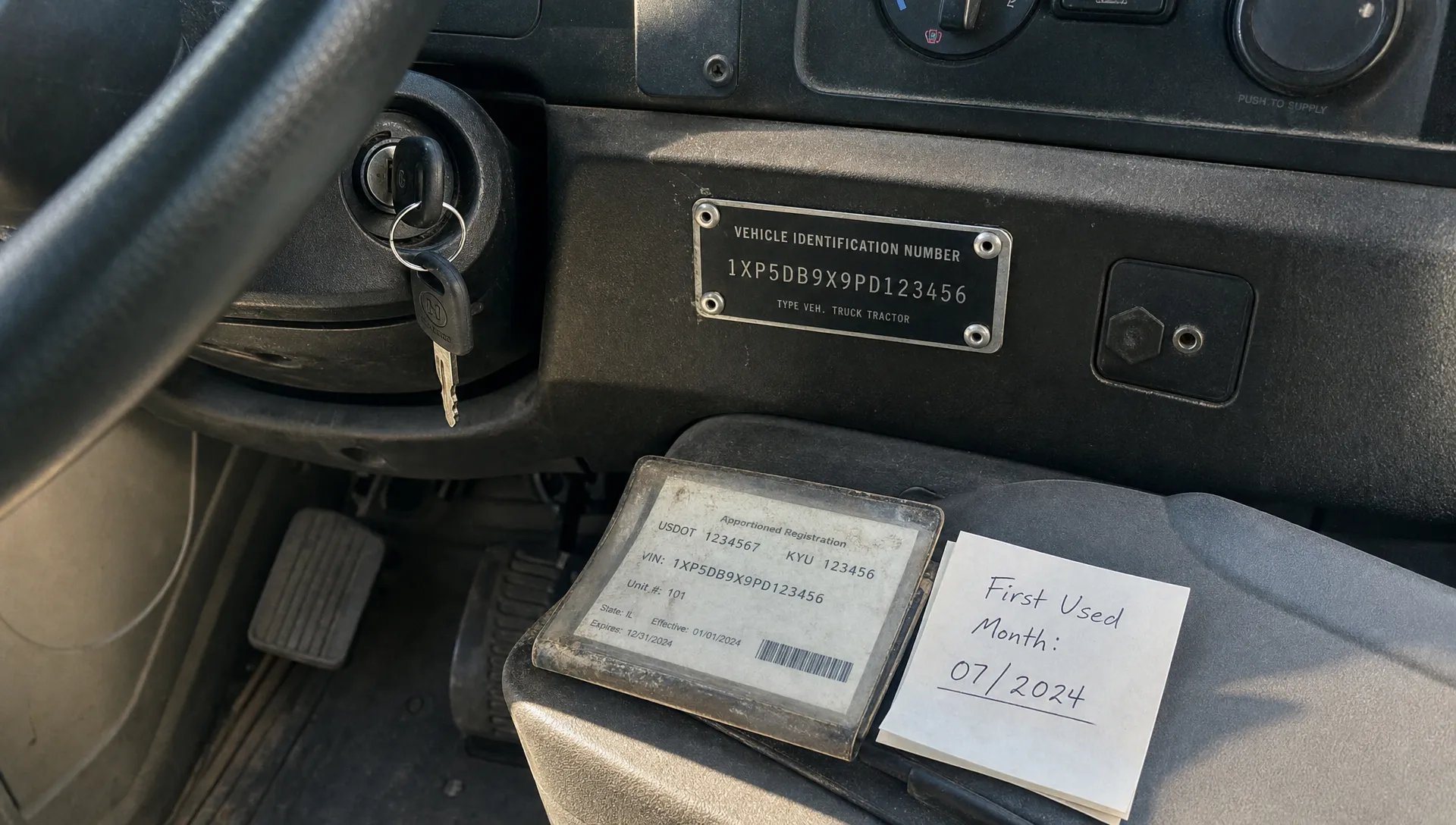
The quickest filing is the one you do not have to fix. Before you submit, compare every entry against official documents such as your IRS EIN confirmation, title, lease agreement, prior year Schedule 1, bill of sale, registration card or fleet records.
For a new business, make sure your EIN is ready for IRS e-file matching. A newly issued EIN may not be available immediately in every IRS e-file system. If you apply for an EIN and try to file right away, an otherwise correct return can be rejected because the IRS has not fully updated its records yet.
Details to verify before submission
| Field to check | Why it matters | What can happen if it is wrong |
|---|---|---|
| EIN and legal business name | The IRS matches the return to your business record | Rejection or processing delay |
| VIN | DMV and IRP offices tie Schedule 1 to the truck | VIN correction may be needed |
| First-used month | It determines the filing deadline and tax period | Wrong period or tax amount |
| Taxable gross weight | It affects the HVUT amount due | Underpayment or amended filing risk |
| Suspended vehicle mileage | Low-mileage vehicles are treated differently | Incorrect tax reporting |
| Payment information | The tax still has to be paid correctly | Balance due, notices, or follow-up |
Once these items are right, your form 2290 stamped schedule 1 timing becomes much more predictable.
The most common reasons Schedule 1 gets delayed
Some delays happen outside your control, such as IRS system maintenance or peak filing volume near the August deadline. Still, many slowdowns are preventable. If you can avoid the usual rejection triggers, you avoid the most frustrating part of the process: submitting, waiting, seeing a rejection, correcting it and starting over.
Common delay triggers include:
- Filing with a Social Security number instead of an EIN
- Using a business name that does not match IRS records
- Entering a VIN from memory instead of the title or registration
- Selecting the wrong tax year or first-used month
- Trying to file a duplicate return for the same vehicle and period
- Waiting until the DMV appointment to start the Form 2290 filing
VIN errors are especially common because truck VINs are long and easy to mistype. Characters like 5 and S, 2 and Z, or 8 and B can cause trouble when copied from a blurry photo. If possible, zoom in on the title, registration card, cab plate, or bill of sale before entering the VIN.
Visual check before sending

If you need a Schedule 1 today, do this first
If you need a form 2290 stamped schedule 1 today, do not mail a paper return. Paper filing may work when you have plenty of time, but it is not the right choice for a same-day registration problem. E-filing is the practical route when your plate renewal, DMV visit, or dispatch schedule depends on proof.
Start by gathering the exact documents you will use to verify the filing. Then choose an IRS-authorized e-file provider and enter the information carefully. If you are using Simple Form 2290, the guided process is built for truckers and fleet owners who want to finish without dealing with paper forms or confusing IRS worksheets.
Choose your payment method with care. You may pay the HVUT by electronic funds withdrawal, EFTPS, check, money order, or other IRS-supported payment routes depending on the filing setup. Keep any payment confirmation with your records, especially if someone else handles registration for you.
If the IRS rejects the return, read the rejection message before changing anything. Guessing can create a second rejection. Many issues are simple, such as an EIN and name mismatch, a duplicate return, or a VIN mistake.
After approval, store it like a business record
The form 2290 stamped schedule 1 is not a one-time download you should leave buried in an email. Save a clean PDF, print a copy for registration paperwork and store it with the vehicle file. If you operate a fleet, label each file by tax period and unit number so you can find it during renewals or audits.
For a single truck, a simple folder may be enough. For a fleet, it helps to keep Schedule 1 copies attached to VIN records, renewal dates and proof of payment. Simple Form 2290 includes data retrieval and fleet management features, which can make repeat filing less painful when the next tax period comes around.
If you filed in the past and cannot find the document, do not panic. The process depends on how you filed, but the guide on getting a copy of your IRS 2290 form explains the common recovery options.
Extra tips for fleet owners
Fleet filings carry more risk because one spreadsheet mistake can affect many trucks. Before uploading or entering vehicle data, clean the list. Remove sold trucks, confirm newly added vehicles, separate suspended vehicles from taxable ones and check that the first-used month is correct for each truck.
Do not assume last year’s list is still accurate. A truck that was suspended last year may exceed the mileage limit this year. A truck that changed ownership may not belong on your return. A replacement truck may need its own VIN and first-used month entry.
The fastest route to a clean form 2290 stamped schedule 1 for every truck is a disciplined review before filing, not a rushed correction after the IRS rejects the return. A few minutes spent checking the vehicle list can save hours during registration season.
Frequently Asked Questions
How fast can I get a Form 2290 stamped Schedule 1? When you e-file with accurate information, the IRS often returns the stamped Schedule 1 in minutes. Timing can vary due to IRS system availability, rejection issues, or incorrect filing details.
Can I get a form 2290 stamped schedule 1 without paying immediately? You can transmit the return and select an IRS-supported payment method, but the tax obligation still must be paid. Keep your filing and payment records together so you can respond if the IRS sends a notice.
What if my VIN is wrong on Schedule 1? A VIN correction is usually needed. Do not file a brand-new taxable return just to fix a VIN unless your e-file provider or tax professional confirms that is the right action.
Do I need Schedule 1 for every truck? You need proof for taxable heavy vehicles used on public highways. Suspended vehicles may still be reported, but their mileage rules are different.
Can I file Form 2290 myself? Yes. Many truck owners file themselves online using an IRS-authorized provider. Just make sure your EIN, business name, VIN and vehicle details are correct before submission.
File clean and avoid the waiting game
A delayed Schedule 1 can cost more than a filing fee. It can delay registration, waste a DMV appointment, or keep a truck from working. The best defense is simple: prepare your documents, e-file through an IRS-authorized provider, check every detail and save the approved copy right away.
Simple Form 2290 helps truckers and fleet owners file online with a step-by-step process, secure record access, bulk vehicle filing, bilingual support and customer support when questions come up. If you are ready to file, you can start through Simple Form 2290 and get your form 2290 stamped schedule 1 without turning a routine tax filing into a roadblock.