How Are Vehicle Weights Verified for Tax Reporting on Form 2290?
Most Form 2290 weight questions come down to one misunderstanding: the IRS is not asking what your tractor weighs sitting empty in the yard. For Heavy Vehicle Use Tax, the weight reported on Form 2290 is the taxable gross weight, which can include the truck, the trailer or semitrailer normally used with it and the maximum load it usually carries.
That number matters because it decides whether the vehicle is taxable, what weight category applies and how much HVUT tax is due. If the number is wrong, you may underpay, overpay or need to file an amendment later.
The short answer: weights are verified through records, not a pre-filing weigh-in
When you e-file Form 2290, the IRS does not physically weigh your vehicle before accepting the return. You report the taxable gross weight category based on your records and your actual operation of the vehicle.
That does not mean the weight is just a guess. The verification happens through documentation. If the IRS questions the return later, you should be able to show how you calculated the taxable gross weight and why the category you selected was reasonable.
For many truckers, that proof comes from a mix of registration paperwork, manufacturer specifications, certified scale tickets, trailer details and load records. Fleet owners may also use internal equipment files, dispatch records and prior Form 2290 filings to support the number.
If you are still trying to confirm whether your truck is even subject to HVUT, the key starting point is the 55,000 pound Form 2290 filing threshold. Vehicles below that taxable gross weight are generally outside the regular Form 2290 tax requirement.
What weight does the IRS actually want?
The official term is taxable gross weight. According to the IRS Instructions for Form 2290, taxable gross weight generally includes:
- The actual unloaded weight of the vehicle, fully equipped for service
- The actual unloaded weight of trailers or semitrailers customarily used with the vehicle, fully equipped for service
- The weight of the maximum load customarily carried on the vehicle and those trailers or semitrailers
This is why a semi tractor that weighs far less than 55,000 pounds by itself may still fall into a taxable category. The IRS is looking at how the vehicle is used on the highway, not just the empty tractor weight.
Here is a simple way to think about the supporting records:
| Weight component | What it means | Common records that support it |
|---|---|---|
| Truck or tractor unloaded weight | The vehicle weight when fully equipped for service | Manufacturer specs, purchase documents, certified empty scale ticket, fleet equipment record |
| Trailer or semitrailer unloaded weight | The trailer weight if it is customarily used with the truck | Trailer registration, spec sheet, lease file, scale ticket |
| Maximum load customarily carried | The normal maximum load your operation carries, not a random guess | Bills of lading, dispatch history, route records, fleet loading practices |
| Taxable gross weight category | The IRS category used to calculate HVUT | Form 2290 workpapers, prior Schedule 1, internal tax records |
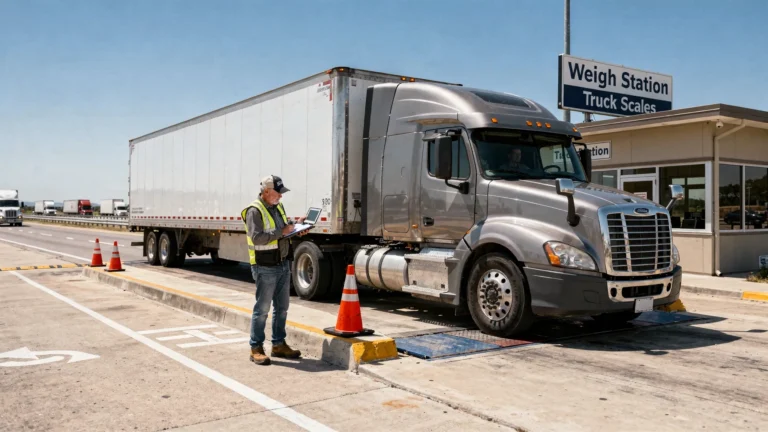
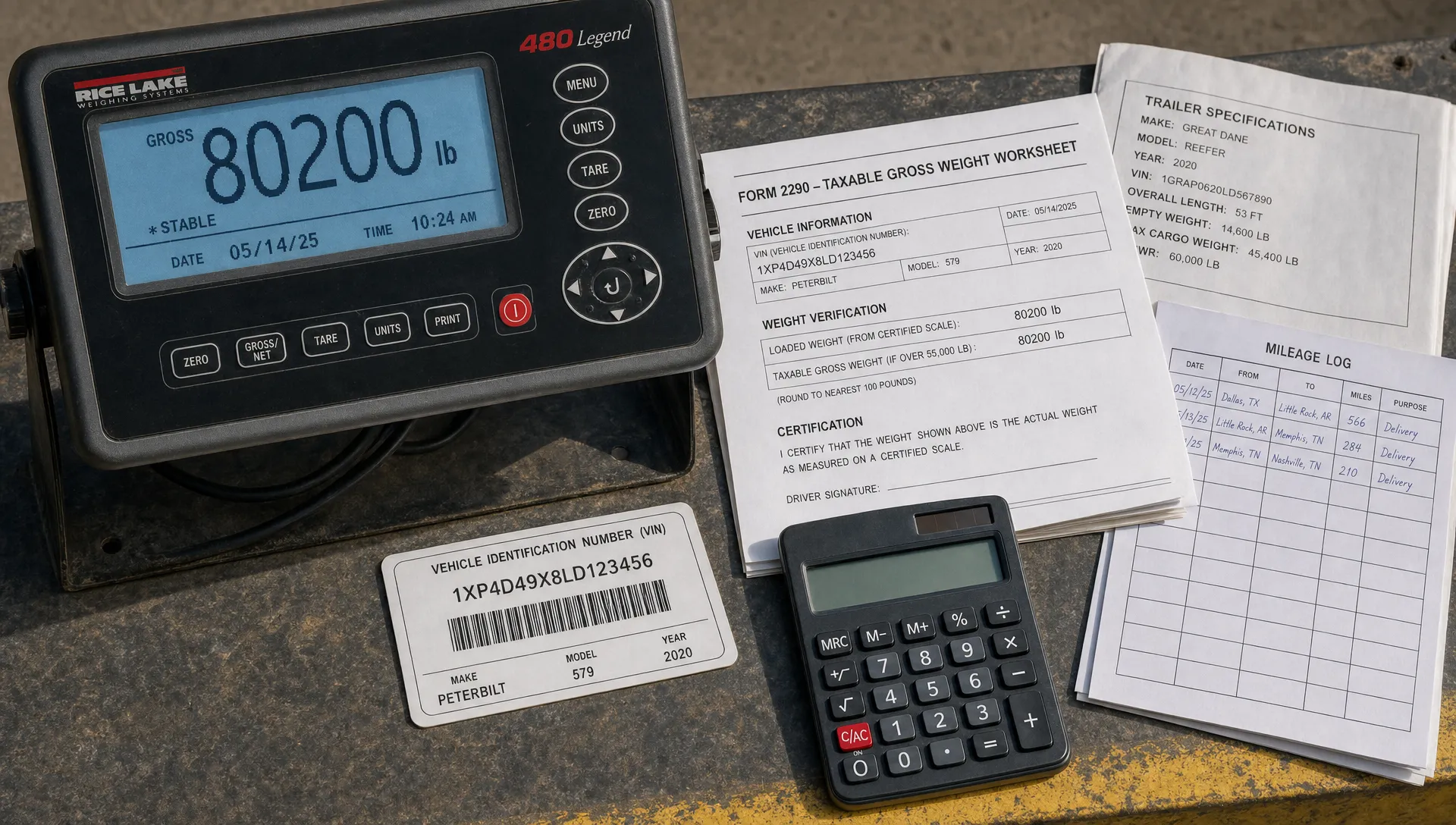
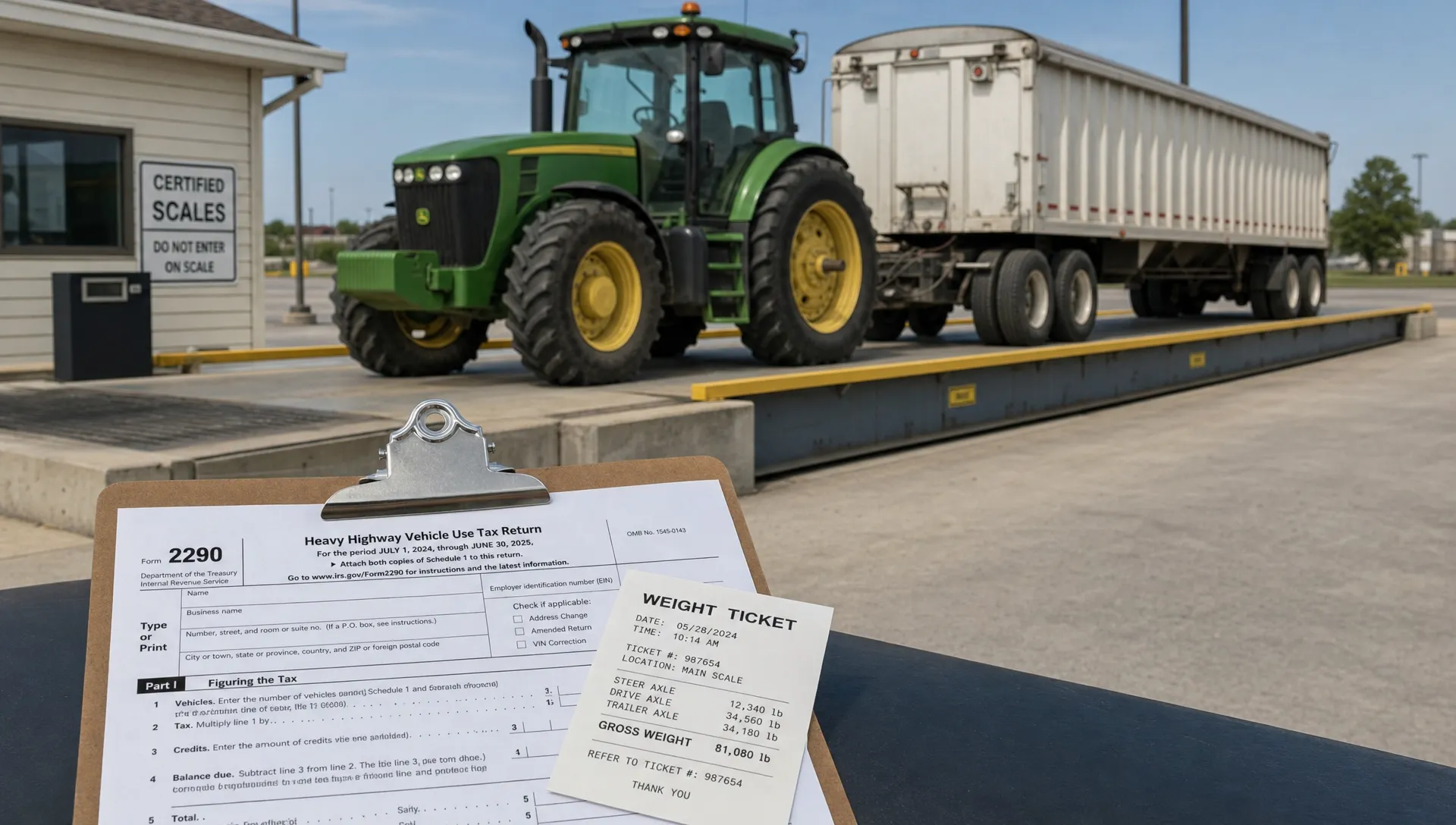
A certified scale ticket can be helpful, but it is not always the whole answer. A scale ticket shows what the truck weighed at that moment. Form 2290 asks for a category based on the vehicle, trailers customarily used and the maximum load customarily carried.
Is GVWR the same as taxable gross weight?
Not always.
Gross Vehicle Weight Rating, or GVWR, is the maximum safe operating weight assigned by the manufacturer. Registered gross weight is the weight declared for state registration. Taxable gross weight for Form 2290 is an IRS tax concept.
In everyday trucking, those numbers often line up closely. For example, a tractor and trailer combination registered for 80,000 pounds will usually be filed in the highest regular Form 2290 weight category. But there are cases where relying on only one number can lead to trouble.
A straight truck used for local deliveries may have a manufacturer rating above 55,000 pounds, but the owner still needs to look at how it is equipped and what it customarily carries. A tractor pulling different trailers also needs a realistic view of what trailer is customarily used with that vehicle.
If you want a broader breakdown of IRS weight bands, the guide to Form 2290 vehicle categories explains how category selection affects the return.
How the verification process works in real life
For most truck owners, vehicle weight verification is a practical recordkeeping process. It usually looks like this:
- You gather the truck details, including VIN, first used month, registration information and equipment specs.
- You determine the unloaded weight of the truck and the trailers customarily used with it.
- You review the maximum load the vehicle normally carries in your operation.
- You use those numbers to choose the correct Form 2290 taxable gross weight category.
- You keep supporting records in case the IRS requests them later.
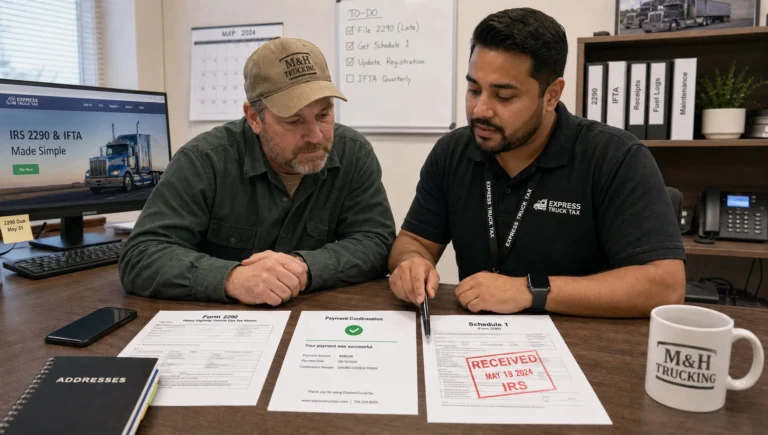
- You use the stamped Schedule 1 as proof of HVUT filing for registration purposes.
The stamped Schedule 1 proves that the Form 2290 was filed and accepted for the vehicles listed. It does not, by itself, prove that every weight category was perfect. That is why keeping your workpapers and supporting documents matters.
The IRS instructions state that taxpayers must keep records for taxable highway vehicles for at least 3 years after the due date of the tax or the date the tax is paid, whichever is later. Those records should be available if the IRS asks to inspect them.
Documents that can support the weight you report
No single document works for every truck. A one-truck owner-operator may have a certified scale ticket and registration. A larger fleet may have equipment files, trailer assignments and dispatch records. What matters is that your records tell a consistent story.
Useful documents often include:
- Vehicle title or registration showing make, model and registered weight
- Manufacturer specifications or dealer documents
- Certified scale tickets for the tractor, trailer or combination
- Trailer lease agreements or fleet assignment records
- Bills of lading showing typical maximum loads
- Prior year Form 2290 filings and stamped Schedule 1 copies
- Internal fleet records showing equipment configuration
Do not wait until an audit notice or registration deadline to pull these together. If you run multiple trucks, it is much easier to save documents by VIN as you buy, sell, lease or reassign equipment.
Common situations that affect weight reporting
Truck weight reporting is straightforward when the same tractor pulls the same trailer and carries the same type of freight all year. It gets trickier when equipment or operations change.
| Situation | How to think about the Form 2290 weight |
|---|---|
| Tractor pulls several trailer types | Use the trailers customarily used with that tractor, not an unusual one-time trailer unless that heavier setup becomes normal |
| Vehicle starts local and later hauls heavier loads | If the taxable gross weight increases into a higher category, an amendment may be needed |
| New truck has no load history yet | Use specs, intended operation, trailer setup and expected maximum customary load |
| Straight truck with no trailer | Include the vehicle fully equipped plus the maximum load customarily carried on that vehicle |
| Suspended vehicle under mileage limit | Weight still matters for reporting, but mileage rules determine whether tax is suspended |
| Logging vehicle | Weight is still calculated, but logging status may affect the tax rate if IRS requirements are met |
The phrase “customarily carried” is doing a lot of work here. A single unusual load may not define the truck’s normal tax category. On the other hand, if your truck regularly runs at a heavier operating weight, the heavier category should be used.
A simple example of taxable gross weight
Say you operate a tractor that weighs 20,000 pounds fully equipped. It usually pulls a trailer that weighs 15,000 pounds empty. The maximum load you customarily carry is 42,000 pounds.
Your taxable gross weight calculation would look like this:
| Component | Weight |
|---|---|
| Tractor fully equipped | 20,000 lbs |
| Trailer customarily used | 15,000 lbs |
| Maximum load customarily carried | 42,000 lbs |
| Total taxable gross weight | 77,000 lbs |
Even though the tractor alone is only 20,000 pounds, the taxable gross weight is 77,000 pounds. For Form 2290, that places the vehicle above 75,000 pounds, which is the highest regular weight category.
This is one of the most common reasons new truck owners underreport weight. They look at the tractor weight and forget the trailer and load.
What happens if the vehicle weight increases after filing?
If the taxable gross weight increases during the tax period and moves the vehicle into a higher IRS category, you may need to file a taxable gross weight increase amendment and pay the additional tax.
For example, suppose a truck was filed at a lower weight because it was used for lighter local work. Later in the tax period, the truck is reassigned to heavier freight and its taxable gross weight moves into a higher category. That change should be reviewed instead of waiting until next year.
Simple Form 2290 has a dedicated page for Form 2290 taxable weight amendments if you need to update a vehicle after filing.
The general IRS rule is that the amendment is due by the last day of the month following the month in which the weight increase occurred. If the increase happened in September, for example, the amended return would generally be due by the end of October.
A decrease in operating weight is different. Form 2290 amendments are commonly used for weight increases and VIN corrections. If you believe you overreported a weight category, review the IRS instructions or speak with a tax professional before assuming a refund is available.
Mistakes that can create problems later
Weight mistakes usually happen because someone files in a hurry, uses last year’s information without checking or picks a category based on a partial number.
| Mistake | Why it causes trouble | Better approach |
|---|---|---|
| Using only the empty tractor weight | It ignores trailer weight and load weight | Calculate taxable gross weight using the full IRS definition |
| Copying the registered weight without review | State registration and IRS taxable gross weight are related but not always identical | Compare registration to actual equipment and load records |
| Ignoring a heavier trailer change | A different trailer may move the vehicle into a higher category | Review weight whenever equipment assignments change |
| Guessing because the truck is “about 80,000” | A rough guess may not hold up if records are requested | Keep specs, scale tickets or fleet records by VIN |
| Forgetting to amend after a weight increase | Additional tax may be due for the higher category | File a taxable weight amendment when required |
| Treating the VIN as proof of weight | VIN identifies the vehicle, but it does not fully prove taxable gross weight | Use VIN plus documents that show weight and usage |
One practical habit helps a lot: save weight support at the same time you file. If you have to recreate it 18 months later, you may not remember which trailer was assigned or what load pattern was normal at the time.
Tips for owner-operators and small fleets
If you own one or two trucks, do not overcomplicate the process. Keep a small digital folder for each VIN. Save your registration, title, scale ticket, equipment specs, lease paperwork if any and a copy of your stamped Schedule 1.
If you run a fleet, standardize the process. The person filing Form 2290 should not have to chase down weights truck by truck each July or August. A fleet spreadsheet with VIN, unit number, registered weight, trailer type, taxable gross weight category and supporting document location can prevent a lot of mistakes.
For trucks that change jobs often, add a quick review when equipment is reassigned. A truck moving from light local hauling to heavy interstate freight may need a different category. That small check can save you from filing an amendment late.
Frequently Asked Questions
Does the IRS weigh my truck before accepting Form 2290? No. Form 2290 weight is reported by the taxpayer when filing. The IRS can later request records to support the taxable gross weight category you selected.
Is a certified scale ticket required for Form 2290? A certified scale ticket is not always required, but it can be useful evidence. You may also rely on registration documents, manufacturer specs, trailer records and load history.
Should I use empty weight or loaded weight on Form 2290? Use taxable gross weight. That generally includes the unloaded truck, trailers or semitrailers customarily used with it and the maximum load customarily carried.
What if I pull different trailers with the same tractor? Use the trailer or trailers customarily used with that tractor. If a heavier trailer setup becomes part of the truck’s normal operation and raises the taxable gross weight category, review whether an amendment is needed.
Can I use last year’s Form 2290 weight again? Yes, if the vehicle, trailer setup and customary load have not changed. If anything changed, verify the taxable gross weight again before filing.
What proof do I need for state registration? State registration offices commonly ask for a stamped Schedule 1 as proof that Form 2290 was filed. Keep the weight records separately in case the IRS requests support later.
File Form 2290 with the right weight category
Getting the weight right is one of the most important parts of Form 2290 filing. It affects your tax amount, your Schedule 1 and whether an amendment may be needed later.
With Simple Form 2290, truckers and fleet owners can e-file through an IRS-authorized provider, follow a guided online process and receive Schedule 1 quickly after IRS acceptance. If you are filing for one truck or managing multiple vehicles, start with accurate weight records and file with confidence.