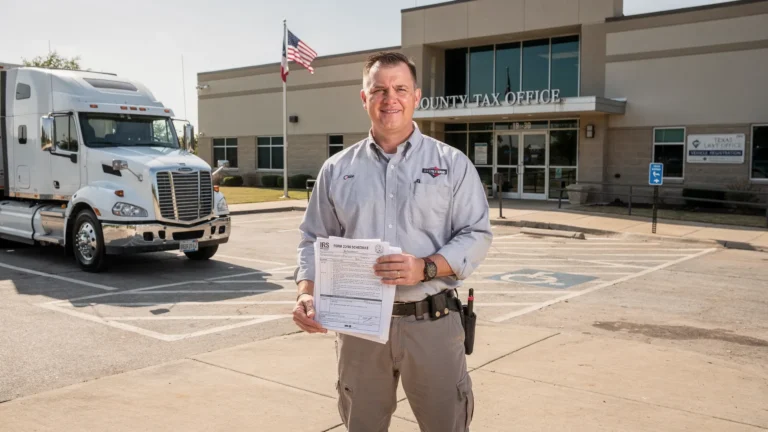
How an IRS Tax Return Service Helps Busy Truckers
Between dispatch calls, fuel stops, delivery windows, inspections, and home time, tax paperwork is rarely at the top of a trucker’s wish list. But for owner-operators and fleet managers, certain IRS filings directly affect whether a truck can stay registered and keep moving.
That is where an IRS tax return service built for trucking can make a practical difference. Instead of printing forms, checking instructions line by line, mailing paperwork, and waiting for a stamped copy, a truck-focused e-file service helps you prepare and submit Form 2290 online, then retrieve your IRS-stamped Schedule 1 after acceptance.
For busy truckers, the benefit is not just convenience. It is fewer avoidable mistakes, faster access to registration documents, better recordkeeping, and less downtime caused by missing or rejected filings.
Why Form 2290 Creates Pressure for Truckers
The IRS uses Form 2290 to report and pay the Heavy Highway Vehicle Use Tax, commonly called HVUT. In general, this applies to heavy highway motor vehicles with a taxable gross weight of 55,000 pounds or more that are used on public highways.
The filing matters because the IRS-stamped Schedule 1 is commonly required for vehicle registration, IRP renewal, plate updates, and proof of HVUT compliance. If you do not have the correct Schedule 1 when a DMV or IRP office asks for it, your paperwork can stall even if the truck is otherwise ready to work.
The deadline also depends on the vehicle’s first used month. For vehicles first used in July, the common annual deadline is August 31. For trucks first used later in the tax year, the return is generally due by the last day of the month after first highway use. That makes timing especially important for truckers who buy equipment mid-season or add units to a fleet.
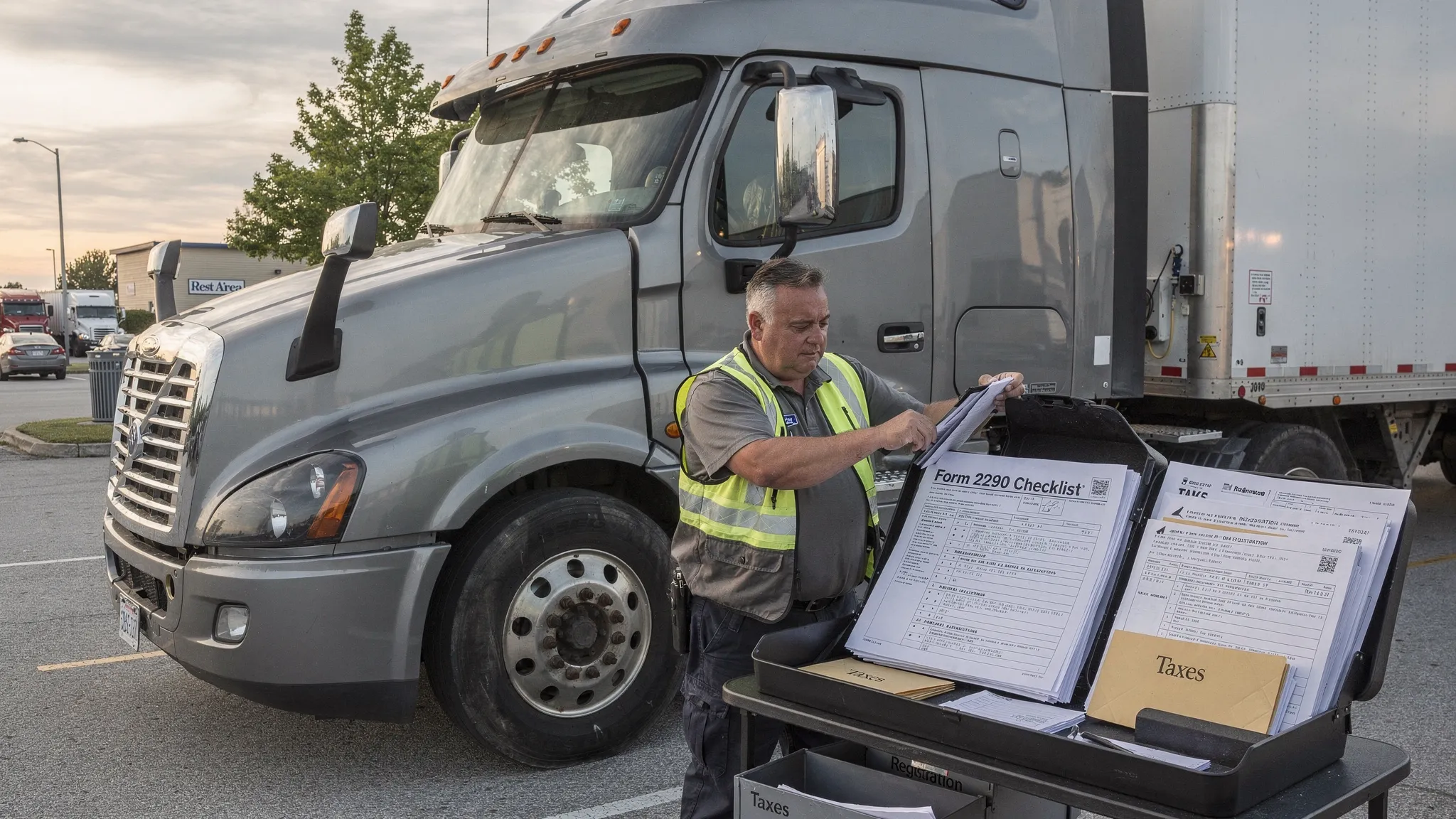
What an IRS Tax Return Service Means for Truckers
An IRS tax return service for truckers is typically an IRS-authorized e-file provider that helps prepare and transmit specific tax forms electronically. For HVUT, that means helping you file Form 2290 and get your stamped Schedule 1 after IRS acceptance.
It is important to understand what this service does and does not do. It does not mean the IRS prepares your tax return for you. It also does not replace a CPA for income tax strategy, deductions, bookkeeping, or complex business planning. Instead, for Form 2290, it gives truckers a faster and more guided way to handle a mandatory IRS filing.
For a driver working long hours, that difference matters. You do not need to study every line of the paper form before submitting. A guided online filing process asks for the business details, EIN, VIN, taxable gross weight, first used month, and vehicle category information needed for the return.
How the Right Service Saves Time on Form 2290
A paper Form 2290 filing can take weeks to process, especially during peak filing season. If a mistake appears on the form, the delay can become even longer. An online IRS tax return service helps shorten that process by guiding the filer before submission and allowing electronic delivery to the IRS.
Here is how common truck tax bottlenecks become easier to manage with a truck-focused e-file service:
| Trucking tax challenge | How an IRS tax return service helps | Why it matters |
|---|---|---|
| Limited office time | Lets you file online instead of preparing and mailing paper forms | Helps you handle filing between loads or during scheduled downtime |
| VIN mistakes | Provides review steps before submission and correction options when needed | Reduces registration problems caused by a wrong VIN on Schedule 1 |
| EIN and business name issues | Prompts you to enter business details carefully and consistently | Helps prevent IRS rejections tied to mismatched taxpayer information |
| First used month confusion | Guides you through the month that determines your deadline and tax period | Helps avoid late filing and incorrect prorated tax |
| Multiple vehicles | Supports bulk vehicle filings and fleet workflows | Saves time for fleet owners managing many units |
| Missing records | Stores prior filing details and Schedule 1 copies for retrieval | Makes renewals, audits, and DMV requests easier to handle |
For fleets, the IRS instructions state that taxpayers reporting 25 or more vehicles on Form 2290 must e-file. The IRS Form 2290 instructions are the best official source for current filing requirements, but an authorized e-file provider can make the operational side much simpler.
Faster Schedule 1 Access Can Keep Registration Moving
For many truckers, the stamped Schedule 1 is the real reason Form 2290 feels urgent. It is the document that shows HVUT was filed for the listed vehicles, and state registration offices often ask for it before processing renewals or changes.
When you mail Form 2290, you wait for IRS processing and return mail. When you e-file through an authorized provider, Schedule 1 is typically available shortly after the IRS accepts the return. That can be the difference between renewing a registration on time and losing work while waiting for paperwork.
This is especially useful in common real-world situations:
- You bought a used truck and need proof of HVUT for registration.
- Your IRP renewal is approaching and you need the current Schedule 1.
- A VIN was entered incorrectly and needs to be corrected quickly.
- You manage a fleet and need Schedule 1 copies for multiple vehicles.
- You filed last year and need to retrieve records without digging through emails or paper folders.
If you want a deeper walkthrough of the online process, Simple Form 2290 also has a guide on how to file Form 2290 electronically in the fastest way.
It Reduces Errors Before They Become Roadblocks
Most Form 2290 problems are not complicated tax disputes. They are small data errors that create big delays. A transposed VIN digit, a recently issued EIN, the wrong first used month, or the wrong taxable gross weight can lead to rejection, correction work, or registration issues.
A good IRS tax return service does not make your information correct automatically. You still need to enter accurate details. But the guided process helps you slow down at the right points, review important fields, and avoid the kinds of mistakes that are easy to make when filing after a long day on the road.
The most important details to confirm before filing are:
- EIN, not SSN, because Form 2290 requires an Employer Identification Number.
- Exact legal business name connected to the EIN.
- Vehicle Identification Number for each truck.
- Taxable gross weight category.
- First used month for the tax period.
- Logging, suspended, agricultural, or other special vehicle status if applicable.
- IRS payment method, such as electronic funds withdrawal, card payment, or EFTPS.
If you are unsure whether your truck must file, start with the basics in this guide on who must file Form 2290.
It Helps Owner-Operators and Fleets in Different Ways
Owner-operators usually need speed, clarity, and affordability. They may only file for one or two trucks, but the filing still affects registration and operations. For them, an online IRS tax return service removes the need to print, mail, and track forms manually.
Fleet managers have a different problem: volume. A small mistake repeated across multiple trucks can create a lot of cleanup work. Bulk vehicle filing, a fleet dashboard, and data retrieval are useful because they help centralize truck tax records instead of spreading them across spreadsheets, inboxes, and paper folders.
| Type of filer | Biggest need | Helpful service feature |
|---|---|---|
| Owner-operator | File quickly without learning every paper form detail | Step-by-step guided filing portal |
| Small trucking business | Keep tax records organized for registration and renewals | Secure data storage and Schedule 1 retrieval |
| Fleet manager | File for multiple vehicles without repetitive manual entry | Bulk vehicle filing and fleet dashboard |
| Bilingual team | Get filing help in the preferred language | English and Spanish customer support |
This is where a provider built specifically for Form 2290 can be more practical than a general tax tool. Truckers do not just need a return submitted. They need the right Schedule 1, for the right VINs, in time for the next registration or IRP requirement.
It Makes Deadlines Easier to Manage
A missed Form 2290 deadline can lead to penalties, interest, and registration headaches. The challenge is that trucking deadlines do not always line up neatly with office schedules. A vehicle may be purchased mid-month, placed in service near the end of a billing cycle, or added to a fleet during a busy season.
An e-file service can help by giving you a repeatable process. Instead of searching for the latest form, printing instructions, calculating by hand, and mailing the packet, you can log in, enter vehicle details, review the return, and submit electronically.
That structure is useful for annual filings, but it is also useful for mid-year events such as:
- Adding a newly purchased truck.
- Filing for a vehicle first used after July.
- Correcting a VIN.
- Amending a return after a taxable gross weight increase.
- Reporting a suspended vehicle that later exceeds the mileage limit.
For deadline details, see the Simple Form 2290 guide to Form 2290 due dates.
What to Look for in a Trucking Tax Return Service
Not every online tax service is designed for heavy vehicle filings. Before choosing one, make sure it fits the way truckers actually work.
| Feature to check | Why it matters |
|---|---|
| IRS authorization | Confirms the provider is authorized to transmit eligible returns electronically |
| Form 2290 focus | Reduces confusion compared with generic tax software |
| Fast Schedule 1 delivery | Helps with DMV, IRP, and registration deadlines |
| Bulk filing support | Saves time for fleets with multiple vehicles |
| Clear pricing | Helps avoid surprise costs during filing |
| Customer support | Gives you help when a rejection, VIN issue, or filing question comes up |
| Secure record retrieval | Makes it easier to access prior returns and Schedule 1 copies later |
| Bilingual support | Helps English and Spanish-speaking teams file with more confidence |
The cheapest option is not always the best if it creates delays or lacks support. For a trucker, the real cost of a filing problem may be lost time, a delayed registration, or a truck sitting when it should be earning.
Where Simple Form 2290 Fits In
Simple Form 2290 is an IRS-authorized online platform designed to streamline Form 2290 filing for truckers and fleet owners. The platform supports easy online filing, instant Schedule 1 delivery after IRS acceptance, bulk vehicle filings, secure data retrieval, and a step-by-step guided process.
It is built for the practical needs of trucking businesses: file quickly, avoid common mistakes, access records when needed, and get support if something goes wrong. For fleets, the dashboard and bulk filing tools help organize multiple vehicles. For owner-operators, the guided portal helps make filing less intimidating and less time-consuming.
Simple Form 2290 also offers professional customer support, including English and Spanish support, which can be especially valuable during peak filing season when deadlines and registration renewals are close.
Frequently Asked Questions
Is an IRS tax return service the same as the IRS? No. An IRS tax return service is usually a private provider that helps prepare and electronically transmit tax returns. For Form 2290, you should use an IRS-authorized e-file provider, but the provider is not the IRS.
Do truckers need an IRS tax return service to file Form 2290? Not always. You can file by paper in many situations, but e-filing is faster and is required when reporting 25 or more vehicles. Many truckers use an online service to reduce delays and get Schedule 1 faster.
How fast can I get my Schedule 1 with an e-file service? After the IRS accepts your Form 2290, an e-file provider can usually deliver the stamped Schedule 1 quickly, often within minutes. Errors, IRS system issues, or mismatched information can delay acceptance.
Can a tax return service help if I entered the wrong VIN? A good Form 2290 e-file provider can guide you through VIN correction steps when eligible. You should correct VIN issues as soon as possible because registration offices rely on the VIN shown on Schedule 1.
Should I still use a CPA for my trucking business taxes? Yes, if you need income tax planning, deductions, bookkeeping, payroll, entity advice, or broader business tax strategy. A Form 2290 e-file service is mainly for the HVUT filing and Schedule 1 process.
File Form 2290 Without Slowing Down Your Route
Truckers do not have time to wait weeks for paperwork or fix avoidable filing mistakes during a registration crunch. An IRS tax return service built for Form 2290 helps you file online, reduce common errors, manage fleet records, and get your stamped Schedule 1 faster after IRS acceptance.
If you are ready to handle your HVUT filing with a simple guided process, start with Simple Form 2290. File online through an IRS-authorized provider and keep your truck tax paperwork moving as efficiently as your business.