Tax Forms for Free: Safe Sources Truckers Can Use
Getting tax forms for free is easy. Getting the right form from a safe source is what matters. For truckers, one outdated PDF or fake “IRS” download can lead to rejected filings, delayed registrations, missed HVUT deadlines, or even exposed EIN and VIN data.
The good news: most federal tax forms are free from official government sources. The key is knowing where to download them, when a free PDF is enough, and when an IRS-authorized e-file provider is the faster option, especially for Form 2290 and Schedule 1.
What “tax forms for free” really means
When people search for tax forms for free, they usually mean one of three things: a blank form, free filing, or free tax help. These are not the same.
A blank IRS form is usually free to download from IRS.gov. For example, you can download Form 2290, Form 8849, Form W-9, Form SS-4, and many other business tax forms without paying anyone. You can also read the official instructions for free.
Filing is different. If you mail a paper Form 2290 yourself, you are not paying an e-file provider, but you may wait weeks for IRS processing and you still owe any Heavy Vehicle Use Tax due. If you use an IRS-authorized e-file provider, the form is prepared and transmitted electronically, usually for a service fee, but you can receive your IRS-stamped Schedule 1 much faster after acceptance.
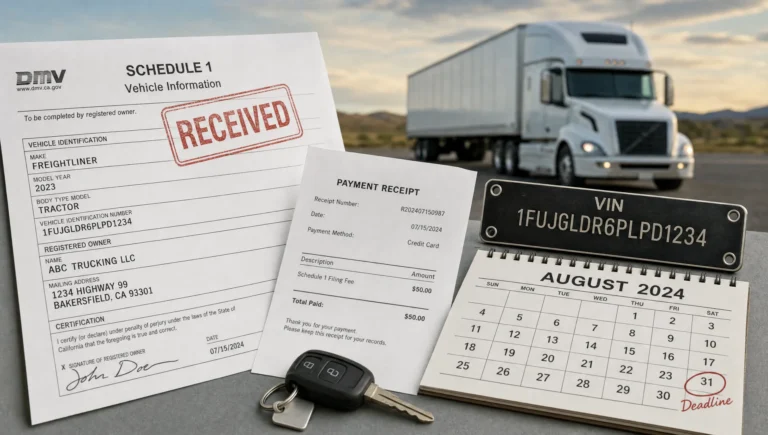
For truckers, that distinction matters because Schedule 1 is often needed for DMV or IRP registration. A free blank Schedule 1 is not proof of payment by itself. It becomes useful only after the IRS accepts your Form 2290 and returns a stamped Schedule 1.
Safe sources truckers can use for free tax forms
The safest place to start is always an official government website. For federal forms, look for IRS.gov. For state fuel tax, IFTA, sales tax, or registration-related forms, use your state revenue agency, DMV, or IRP portal.
| Safe source | Best for | Why it is safe | Watch out for |
|---|---|---|---|
| IRS Forms, Instructions & Publications | Federal tax forms and instructions | Official IRS source for current and prior-year forms | Always confirm the correct tax year and revision date |
| IRS Form 2290 page | Heavy Vehicle Use Tax forms and instructions | Direct IRS page for Form 2290 and related guidance | A blank Schedule 1 is not stamped proof until accepted by the IRS |
| IRS Trucking Tax Center | Trucking-specific federal tax information | IRS hub for truckers, HVUT, and related tax topics | It explains rules, but you still need to file correctly |
| EFTPS | Federal tax payments | Official U.S. Treasury payment system | Enrollment and payment settlement can take time |
| State revenue, DMV, IRP, or IFTA portals | State tax, fuel tax, and registration forms | Official state-level forms and instructions | Deadlines and rules vary by state |
| IRS Free File | Eligible individual income tax returns | IRS-partnered free filing for qualifying taxpayers | It is not a Form 2290 e-file solution |

Free tax forms truckers commonly need
Truckers and fleet owners may need more than just Form 2290. Some forms are for vehicle tax, some are for refunds or credits, and others support general business operations.
| Form | What truckers use it for | Free source | Important note |
|---|---|---|---|
| Form 2290 | Reporting and paying Heavy Vehicle Use Tax for taxable highway vehicles | IRS.gov or an IRS-authorized e-file provider | Required for many vehicles with taxable gross weight of 55,000 pounds or more |
| Schedule 1 | Proof that the IRS accepted Form 2290 | Returned by IRS after filing | DMV or IRP offices often require the stamped version |
| Form 8849, Schedule 6 | Claiming certain excise tax refunds or credits | IRS.gov | Common for sold, destroyed, stolen, or low-mileage vehicle claims |
| Form SS-4 | Applying for an EIN | IRS.gov | Form 2290 e-filing requires an EIN, not an SSN |
| Form W-9 | Requesting taxpayer information from contractors | IRS.gov | Useful when paying independent contractors |
| Forms 1099 | Reporting certain contractor or vendor payments | IRS.gov and IRS e-file systems | Some downloaded Copy A forms are informational only and should not be paper-filed |
| State IFTA forms | Reporting fuel use by jurisdiction | State IFTA or revenue portal | Your base jurisdiction controls the filing process |
For HVUT, Form 2290 is the main form to understand. It applies to highway motor vehicles with a taxable gross weight of 55,000 pounds or more. The HVUT tax year runs from July 1 through June 30, and deadlines depend on the vehicle’s first used month. If you are preparing for the 2026-2027 tax period, confirm that you are using the correct IRS form revision before mailing anything.
If you are unsure how the paper packet works, you can review this guide on how to download and use a printable 2290 form. Just remember that paper filing can be slower than e-filing when you need Schedule 1 quickly.
Red flags: when a “free” tax form is not safe
Not every website offering free tax forms is dangerous, but truckers should be careful. Your tax forms may include your EIN, legal business name, address, VINs, and payment details. That information should not be uploaded to a random site.
Be cautious if you see any of these warning signs:
- The site copies the IRS logo but does not use a .gov domain.
- The form download requires installing software or a browser extension.
- The form has no revision date or shows an old tax year.
- The website asks for EIN, VIN, or banking details before explaining who operates the service.
- The site promises “guaranteed refunds” or “no tax due” before reviewing your facts.
- The PDF looks modified, pre-filled, or different from the official IRS version.
A good rule for truckers is simple: use unofficial websites for education, not as the source of record. When you need a blank federal form, download it from IRS.gov. When you need to e-file, use an IRS-authorized provider with secure transmission, clear pricing, and accessible support.
Form 2290: free paper form vs. IRS-authorized e-filing
For Form 2290, the cheapest path is not always the best operational choice. A paper form may cost less upfront, but a delayed Schedule 1 can create registration problems, especially if your truck is waiting on plates, renewal, or IRP processing.
| Option | Upfront filing cost | Schedule 1 timing | Best for | Main risk |
|---|---|---|---|---|
| Download and mail Form 2290 yourself | No provider fee | Often several weeks, especially in busy periods | Non-urgent, simple filings | Manual errors, mailing delays, slow Schedule 1 |
| IRS-authorized e-file provider | Service fee applies | Often much faster after IRS acceptance | Truckers who need Schedule 1 quickly, fleets, corrections | Must choose a trusted provider |
The IRS generally requires e-filing when reporting 25 or more vehicles for a taxable period. Even below that threshold, many owner-operators choose e-filing because it reduces paperwork and speeds up Schedule 1 delivery.
Simple Form 2290 is an IRS-authorized online platform built for Form 2290 filing. It offers a guided portal, bulk vehicle filings, instant Schedule 1 delivery after acceptance, secure data retrieval, English and Spanish support, and professional customer support. If you need to file Form 2290 online and get Schedule 1 quickly, e-filing is usually the practical choice.
How to verify a tax form before using it
Before entering business or vehicle information, take a minute to verify the form. This small step can prevent rejections and registration delays.
First, confirm the source. Federal forms should come from IRS.gov or from a provider that is clearly preparing and transmitting the return through authorized e-file channels. For payments through EFTPS, use EFTPS.gov, not a lookalike payment site.
Second, check the form year and instructions. Form 2290 uses the HVUT tax period, not the calendar year. That means a form used for the July 1, 2026 to June 30, 2027 tax year must match the proper IRS instructions for that period.
Third, match the data before filing. For Form 2290, the biggest rejection triggers are EIN and legal name mismatches, VIN typos, incorrect first used month, and wrong taxable gross weight. If your EIN is new, allow time for IRS systems to recognize it before attempting e-filing.
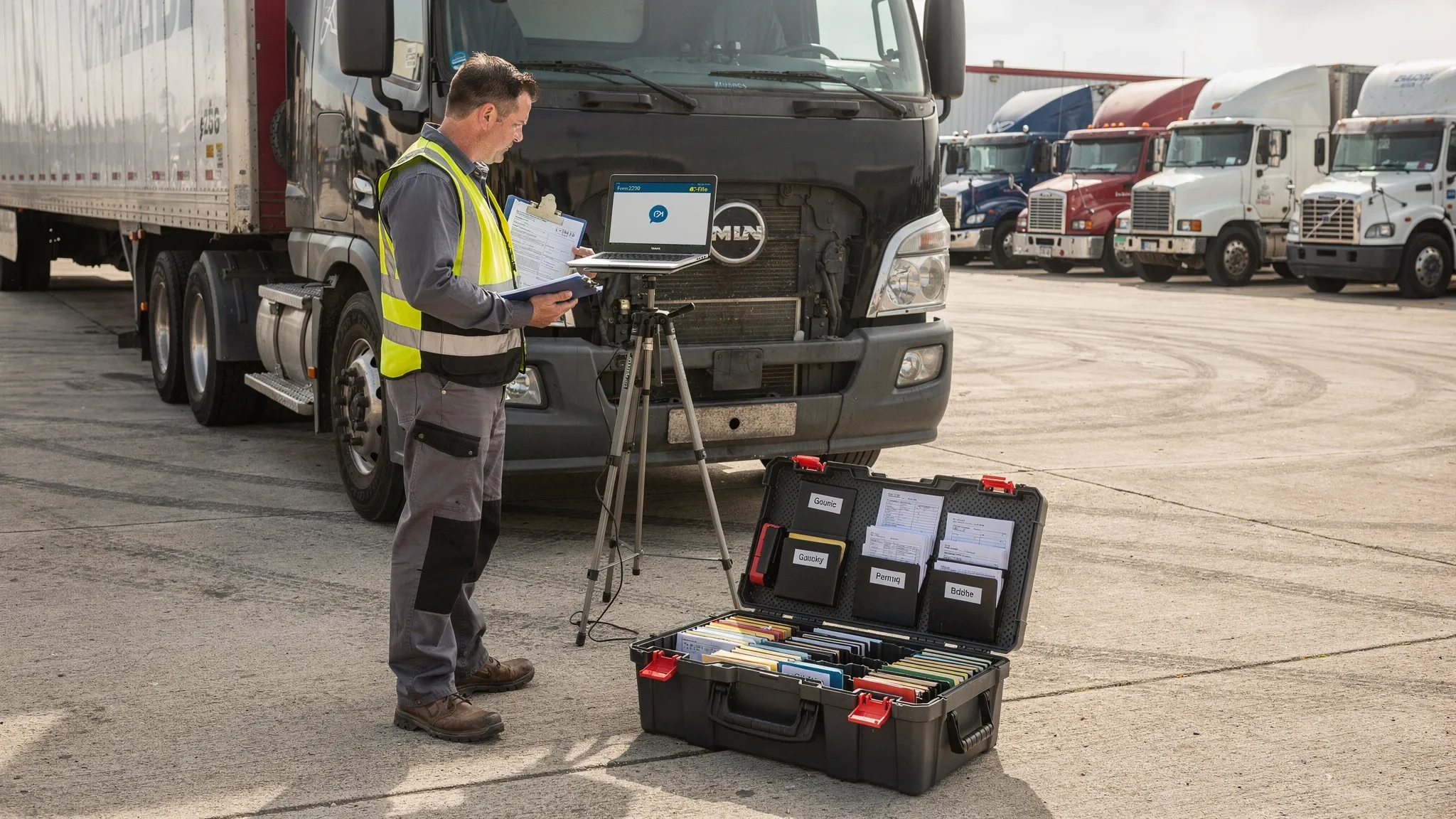
Finally, save your proof. Keep the accepted Schedule 1, payment confirmation, filing receipt, and any amendment records in one place. If you operate multiple trucks, a central dashboard or organized folder system can save hours during IRP renewal.
When free forms are enough, and when they are not
Free forms are enough when you are researching requirements, preparing a draft, checking what information is needed, or filing a non-urgent paper return. They are also useful for reviewing instructions before speaking with a tax professional.
Free forms are usually not enough when you need fast proof for registration, have multiple vehicles, are close to a deadline, need to correct a VIN, or must avoid a rejected return. In those situations, e-filing through an IRS-authorized provider is often worth the service fee because the goal is not just getting a form. The goal is getting IRS acceptance and a stamped Schedule 1 without delays.
If you still prefer mailing a paper Form 2290, make sure you use the current IRS address for your payment situation. You can review the IRS mailing address for Form 2290 before sending your return.
Practical tips for owner-operators and fleets
Owner-operators should keep a reusable filing checklist with EIN, legal business name, VIN, taxable gross weight, first used month, and payment method. This reduces last-minute errors when the annual HVUT season opens.
Fleet managers should standardize vehicle records before filing. Use one source of truth for VINs, weight categories, suspended vehicles, sold units, and newly added trucks. Bulk filing can save time, but only if your source data is clean.
Leased operators should clarify who is responsible for Form 2290 before registration deadlines arrive. The person or entity in whose name the vehicle is registered is usually the one responsible for filing. If your business name on registration does not match the EIN name control used by the IRS, resolve that before filing.
Spanish-speaking truckers should also confirm that support is available in the language they prefer. For Form 2290, a small misunderstanding about first used month, weight category, or suspended vehicle status can affect taxes and Schedule 1 timing.
Frequently Asked Questions
Can I get tax forms for free from the IRS? Yes. Most IRS forms and instructions are free to download from IRS.gov. You can also access official guidance for trucking taxes through the IRS Trucking Tax Center.
Is Form 2290 free to download? Yes. The blank Form 2290 PDF and instructions are free from the IRS. However, downloading the form is not the same as receiving an IRS-stamped Schedule 1. The IRS must accept your filing first.
Can I file Form 2290 for free? You can mail a paper Form 2290 without paying an e-file provider, but you still owe any HVUT due and may wait weeks for processing. E-filing through an IRS-authorized provider usually includes a service fee but is much faster.
Is IRS Free File available for Form 2290? No. IRS Free File is mainly for eligible individual income tax returns. It is not a Form 2290 HVUT e-filing solution for truckers.
Where do I get a stamped Schedule 1? You receive a stamped Schedule 1 after the IRS accepts your Form 2290. E-filing is the fastest way for most truckers to get it. Paper filing can take significantly longer.
Are tax forms from non-government websites safe? Some may be legitimate, but the safest source for blank federal tax forms is IRS.gov. Avoid sites that require software downloads, hide their identity, or ask for sensitive data before explaining how your information is protected.
Need a faster Schedule 1 than paper filing?
Free IRS forms are useful, but when your truck registration depends on a stamped Schedule 1, speed and accuracy matter. Simple Form 2290 helps truckers and fleet owners e-file Form 2290 through an IRS-authorized platform with a guided process, secure data handling, bulk filing support, and customer support in English and Spanish.
If you want to avoid paper delays, start your Form 2290 filing with Simple Form 2290 and get your Schedule 1 quickly after IRS acceptance.