IRS Account for Business: What Trucking Owners Can Do
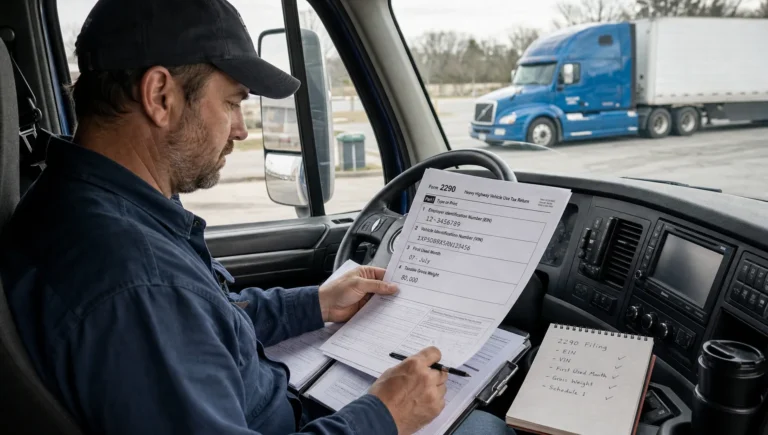
For trucking businesses, taxes are not just an annual paperwork problem. Your EIN, IRS records, Form 2290, EFTPS payments, Schedule 1, IRP renewals, and fleet records all connect in practical ways. That is why many owner-operators and fleet owners search for an IRS account for business and wonder whether it can help them stay compliant.
The short answer: an IRS business account can be useful, but it does not replace Form 2290 e-filing. It is best understood as one part of your tax management system, while your Form 2290 filing workflow still needs to produce a valid IRS-stamped Schedule 1 for registration and IRP purposes.
Below is a clear guide to what trucking owners can do with an IRS business account, what it cannot do, and how it fits with HVUT filing.
What is an IRS account for business?
An IRS account for business usually refers to the IRS Business Tax Account, an online portal on IRS.gov that allows eligible business taxpayers to access certain tax account information digitally. The IRS has continued expanding online business account features, but availability can depend on your entity type, role, and IRS records.
You can learn more directly from the IRS on its Business Tax Account page.
For trucking owners, the main value is organization. Your IRS business profile helps you keep track of information tied to your business identity, especially your Employer Identification Number (EIN), legal business name, tax records, notices, and certain payment information when available.
However, it is important to separate this from Form 2290 filing. The IRS business account is not the same thing as a Form 2290 e-file portal, and it is not the same thing as EFTPS.
What trucking owners can do with an IRS business account
A trucking company’s IRS records affect more than income tax. They can also affect how smoothly your Heavy Vehicle Use Tax filings are accepted, especially because Form 2290 requires an EIN and a business name that match IRS records.
Here are the most useful ways trucking businesses can use an IRS business account.
Confirm and organize business tax identity information
For Form 2290, your EIN and legal business name must match IRS records. If you use a trade name, nickname, old company name, incorrect punctuation, or a recently changed business name, your 2290 return may be rejected.
An IRS business account can help eligible users review business account details and keep the IRS side of the business organized. This is especially valuable if you operate under an LLC, corporation, partnership, or growing fleet structure.
If you recently applied for an EIN, remember that Form 2290 e-filing may fail if the EIN has not yet fully updated in IRS systems. Many new EIN filers need to wait up to two weeks before e-filing Form 2290. For a deeper walkthrough, see this guide on how to apply for an EIN online for Form 2290 filing.
View available tax account information
Depending on your eligibility and the IRS features available to your business type, a business tax account may allow you to view certain balances, payment history, transcripts, or notices.
For trucking businesses, that can help with recordkeeping. If you are managing several units, multiple tax payments, different filing deadlines, or more than one business entity, having IRS account access can reduce confusion when tax season arrives.
That said, do not rely on the IRS business account alone as your trucking compliance archive. Keep separate copies of:
- IRS-stamped Form 2290 Schedule 1
- Form 2290 filing confirmations
- HVUT payment confirmations
- VIN lists and vehicle weight categories
- IRP and registration documents
- EFTPS confirmations, if you use EFTPS
Manage notices and reduce mail delays
IRS notices can be easy to miss when your business address changes, your fleet operates across state lines, or your back office is small. Online IRS account access may help eligible business users see certain IRS communications more quickly than relying only on mailed notices.
This matters for trucking companies because a missed IRS notice can turn into a bigger issue later, especially if it relates to a balance, identity verification, payment posting, or tax account mismatch.
Coordinate better with tax professionals
Many trucking owners use a tax preparer, accountant, or enrolled agent for annual tax returns, payroll, excise tax issues, or business tax planning. An IRS business account can make it easier to understand what the IRS has on file before you speak with a professional.
For formal representation, your tax professional may still need proper IRS authorization, such as a Power of Attorney or Tax Information Authorization. The IRS also offers separate online tools for tax professionals, so do not assume your business account automatically gives a preparer access to everything.
Prepare for fleet growth
When you own one truck, tax records may feel manageable. When you operate five, twenty, or one hundred vehicles, small data problems can multiply quickly.
An IRS business account can support better fleet administration by helping you keep the tax identity side of the business organized. But your Form 2290 workflow still needs a reliable way to handle VINs, taxable gross weights, first-used months, suspended vehicles, amendments, and Schedule 1 retrieval.
That is where an IRS-authorized 2290 e-file provider becomes important.
What an IRS business account does not do for Form 2290
An IRS account for business is helpful, but truck owners should not confuse it with the tools required for HVUT filing.
Most importantly, it does not replace Form 2290 e-filing. Form 2290 is the Heavy Highway Vehicle Use Tax return used for taxable vehicles with a gross weight of 55,000 pounds or more. After the IRS accepts the return, the stamped Schedule 1 serves as proof of filing for DMV, IRP, and registration purposes.
The IRS notes that Form 2290 must be e-filed when reporting 25 or more vehicles for a tax period, although any truck owner can e-file. You can review the IRS overview on About Form 2290.
An IRS business account generally does not:
- File your Form 2290 through a guided truck tax workflow
- Instantly generate your stamped Schedule 1 after 2290 acceptance
- Validate each VIN for common entry mistakes before submission
- Manage bulk 2290 vehicle filings like a fleet dashboard
- Replace EFTPS enrollment if you choose EFTPS as your HVUT payment method
- Automatically correct rejected Form 2290 returns
If your goal is to get Schedule 1 quickly for registration, your better path is usually to e-file Form 2290 through an IRS-authorized provider.
IRS business account vs. EFTPS vs. Form 2290 e-file provider
Truck owners often hear several IRS-related terms and assume they all do the same thing. They do not. Here is the practical difference.
| Tool | Best for | Form 2290 role for truckers |
|---|---|---|
| IRS Business Tax Account | Viewing available business tax account information, certain balances, notices, and records when eligible | Helpful for business tax organization, but not a dedicated 2290 filing system |
| EFTPS | Scheduling federal tax payments electronically | Used when you choose EFTPS as your Form 2290 payment method, but it does not file Form 2290 for you |
| IRS-authorized 2290 e-file provider | Filing Form 2290 online and receiving stamped Schedule 1 after IRS acceptance | The fastest and most practical option for most truck owners and fleets |
| IRS paper filing | Mailing Form 2290 to the IRS | Slower, often takes weeks, and not allowed when reporting 25 or more vehicles |
The key takeaway is simple: an IRS business account may help you manage tax information, EFTPS helps you pay, and a 2290 e-file provider helps you file Form 2290 and get Schedule 1.
If you use EFTPS for HVUT, the return and the payment are still separate steps. You file Form 2290 first, then schedule the payment through EFTPS. For detailed instructions, read this step-by-step guide to paying Form 2290 on EFTPS.
How trucking owners can set up an IRS account for business
The exact setup process may vary as the IRS updates its systems, but the general process is straightforward.
- Go to the official IRS page: Start from the IRS Business Tax Account page to avoid fake login pages or third-party scams.
- Use the IRS sign-in option shown on the page: The IRS will guide you through identity verification using its approved sign-in process.
- Verify your identity and role: You may need to confirm that you are an authorized person for the business, such as the owner, responsible party, partner, officer, or other eligible user.
- Connect the business information: Be ready with the legal business name, EIN, address, and other identifying information that matches IRS records.
- Review available features: Once inside, check what information and actions are available for your entity type, since the IRS may offer different features to different business users.
- Keep separate trucking compliance records: Even if your IRS account shows useful information, save your stamped Schedule 1, payment confirmations, VIN lists, and vehicle records in your own files.
Do not use unofficial websites to create an IRS account. IRS login and identity verification should always begin from IRS.gov.
Where Form 2290 fits into your business tax workflow
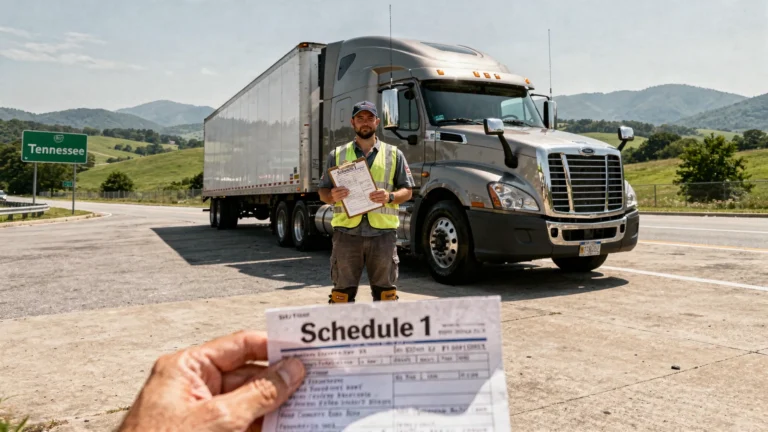
For truck owners, Form 2290 is not just another tax form. It directly affects whether you can register or renew a heavy vehicle. Your stamped Schedule 1 is commonly required by state DMVs and IRP offices as proof that the HVUT filing requirement has been met.
A strong workflow looks like this:
- Verify your EIN and business name: Make sure the EIN is active and the legal name matches IRS records before filing.
- Prepare vehicle details: Gather VINs, taxable gross weight, first-used month, logging status, and suspended vehicle details if applicable.
- E-file Form 2290: Use an IRS-authorized provider to reduce errors and speed up Schedule 1 delivery.
- Choose the HVUT payment method: Options commonly include Electronic Funds Withdrawal, EFTPS, debit or credit card, or check or money order.
- Download and store Schedule 1: Keep the stamped Schedule 1 with registration and IRP documents.
- Monitor deadlines: Form 2290 is generally due by the last day of the month after the vehicle’s first use month.
For deadline planning, use this guide to Form 2290 due dates.
Common mistakes trucking owners should avoid
An IRS account for business can improve organization, but it will not prevent every filing issue. Truck owners should pay close attention to the details that most often cause Form 2290 delays.
One common mistake is filing with a newly issued EIN too soon. If the EIN is not yet available in the IRS e-file system, the return may be rejected even if the EIN is valid.
Another common issue is using a business name that does not match IRS records. For example, if the IRS has “ABC Trucking LLC” but the return says “ABC Trucking,” the mismatch can create a rejection.
VIN errors are also frequent. A single wrong digit can cause problems when the Schedule 1 is presented for registration. The good news is that VIN corrections can often be filed if the original Form 2290 was accepted with an incorrect VIN.
Weight category mistakes can lead to overpayment, underpayment, or amendments. Your taxable gross weight is not always just the truck’s empty weight. It generally includes the vehicle, trailers customarily used with it, and the maximum load customarily carried.
Finally, do not confuse payment with filing. Scheduling an EFTPS payment does not file Form 2290, and filing Form 2290 does not automatically mean EFTPS payment has been scheduled unless you selected and completed the correct payment process.
Why many trucking owners still use a 2290 e-file provider
The IRS business account is useful for tax account access, but truckers usually need speed and proof. That proof is the IRS-stamped Schedule 1.
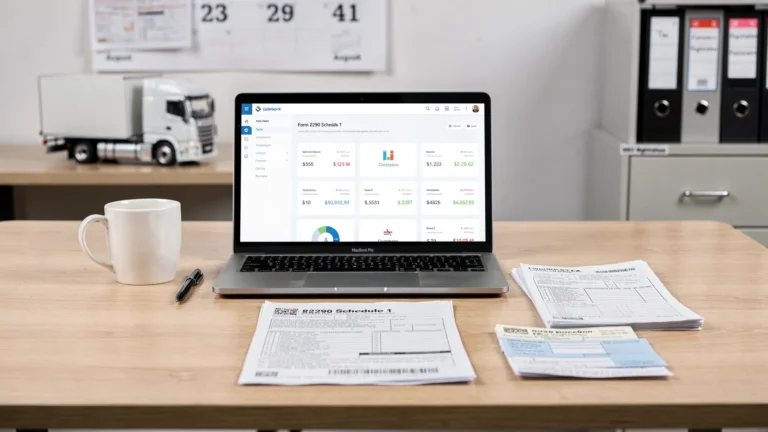
Simple Form 2290 is an IRS-authorized online platform built specifically for HVUT filing. Truck owners and fleet managers can file Form 2290 online through a guided process, submit bulk vehicle filings, access professional customer support, and receive Schedule 1 after IRS acceptance.
This matters when you are facing an IRP renewal, adding a vehicle, correcting a VIN, or filing close to a deadline. Instead of waiting weeks for paper processing, e-filing helps you move faster and keep your trucks on the road.
To learn more about what appears on your proof of filing, read this guide to Schedule 1 Form 2290.
FAQ
Is an IRS account for business required to file Form 2290? No. You do not need an IRS business account to file Form 2290. You do need a valid EIN, accurate business information, vehicle details, and a proper filing method. E-filing through an IRS-authorized 2290 provider is often the fastest option.
Can I get my stamped Schedule 1 from an IRS business account? In most trucking workflows, your stamped Schedule 1 is delivered through your Form 2290 e-file provider after IRS acceptance, or returned by the IRS if you file on paper. Do not assume the IRS business account will be your primary Schedule 1 retrieval tool.
Is EFTPS the same as an IRS account for business? No. EFTPS is a federal tax payment system used to schedule payments. An IRS business account is for accessing certain business tax account information. If you choose EFTPS for Form 2290, you still need to file the 2290 return separately.
Can I use a new EIN right away for Form 2290? Not always. A newly issued EIN may take time to become active in IRS e-file systems. Many Form 2290 filers wait up to two weeks after receiving a new EIN before e-filing to reduce rejection risk.
Should owner-operators create an IRS account for business? It can be helpful, especially if you want better access to available IRS business tax information. However, it is not a substitute for proper bookkeeping, HVUT records, Schedule 1 storage, or Form 2290 e-filing.
File Form 2290 without confusing IRS tools
An IRS account for business can help you stay organized, but it is not the fastest way to file Form 2290 or get Schedule 1. If you need HVUT filing done quickly and accurately, use a dedicated IRS-authorized 2290 e-file provider.
With Simple Form 2290, trucking owners can e-file online, follow a step-by-step guided process, handle bulk vehicle filings, and receive their IRS-stamped Schedule 1 after acceptance. Whether you are an owner-operator or managing a fleet, a clean filing workflow helps protect your registration timeline and keeps your business moving.