How to Obtain a TIN Number Before Filing Form 2290?
A Taxpayer Identification Number (TIN) is a unique number issued by the IRS or the Social Security Administration to identify individuals and businesses for tax purposes. Knowing how to obtain a TIN number is the first essential step every truck owner-operator and fleet manager must complete before filing federal heavy vehicle use taxes.
Without a valid TIN, the IRS will reject your Form 2290 filing outright. Whether you are a first-time filer or a seasoned fleet operator, this guide walks you through every route to get your TIN in place, explains how it connects to your HVUT obligations, and shows you how platforms like SimpleForm2290 make the entire process faster and error-free.

What Is a TIN Number and Why Does It Matter for Truckers?
A TIN tax identification number is a broad term that covers several types of IDs the IRS accepts:
| TIN Type | Issued By | Who Uses It |
|---|---|---|
| SSN (Social Security Number) | Social Security Administration | Individual sole proprietors |
| EIN (Employer Identification Number) | IRS | LLCs, corporations, partnerships, fleets |
| ITIN (Individual Taxpayer Identification Number) | IRS | Non-resident aliens without SSN eligibility |
Key stat: According to IRS data, over 800,000 Form 2290 returns are filed annually for heavy vehicles. Every single one requires a valid US TIN number at the time of submission. Filings with mismatched or missing TINs are among the top three reasons for IRS rejection.
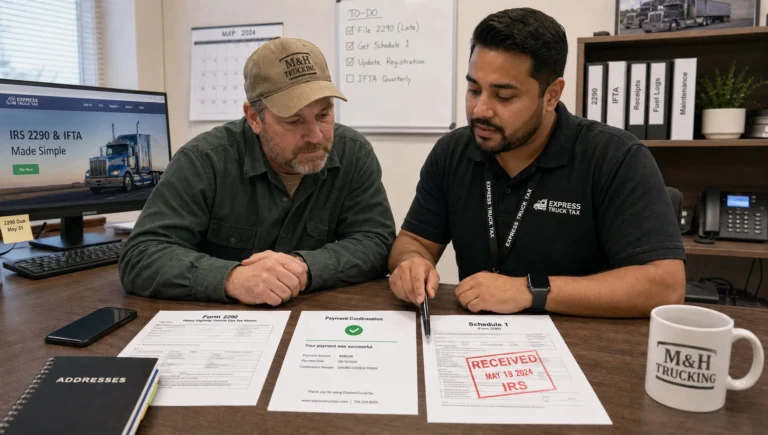
For truckers, the TIN number means more than just tax compliance. It links directly to your IRP truck registration, your vehicle identification number records, and your ability to receive a stamped Form 2290 Schedule 1 — the proof of payment you need to renew your plates.
TIN Number vs EIN: Which One Do You Need?
This is one of the most common points of confusion among owner-operators. Here is a straight comparison:
Use your SSN if:
-
You operate as a sole proprietor under your personal name
-
You have no employees and have not formed a business entity
Apply for an EIN if:
-
You operate under a business name (LLC, Inc., partnership)
-
You have employees or plan to hire drivers
-
You want to keep business and personal tax records separate (strongly recommended)
The IRS recommends that even sole proprietors apply for EIN to protect their SSN from potential fraud and simplify business filings. An EIN is free, takes about 15 minutes to obtain online, and is effective immediately for most filers.
Pro tip from real operators: Many independent owner-operators who initially filed Form 2290 using their SSN later switched to an EIN after experiencing identity theft concerns. Once you have an EIN, update it consistently across your Form 2290 and IRP registration records to avoid mismatches.
How to Obtain a TIN Number: Step-by-Step
Here are the four main paths to obtain a TIN number, depending on your situation.
Option 1: Apply for an EIN Online (Fastest for Businesses)
This is the most common method for trucking businesses.
-
Go to the IRS website and navigate to the EIN online application (available Monday through Friday, 7 a.m. to 10 p.m. ET).
-
Select your entity type (sole proprietor, LLC, corporation, etc.).
-
Complete the online form SS-4 interview.
-
Receive your EIN immediately upon completion.
No fees. No waiting. Your EIN is active the same day.
Option 2: Apply by Fax or Mail (For Non-Online Filers)
Complete IRS Form SS-4 and fax it to the appropriate IRS number for your state. Fax processing typically takes four business days. Mail applications can take four to six weeks, so this route is not recommended if your Form 2290 due date is approaching.
Option 3: Apply by Phone (International Applicants)
If you are a foreign entity or non-US resident filing as a trucking operator in the US, call the IRS Business and Specialty Tax Line. This is also a valid path for those who need help understanding how to find their TIN number if they previously had one but cannot locate it.
Option 4: Use Your Existing SSN
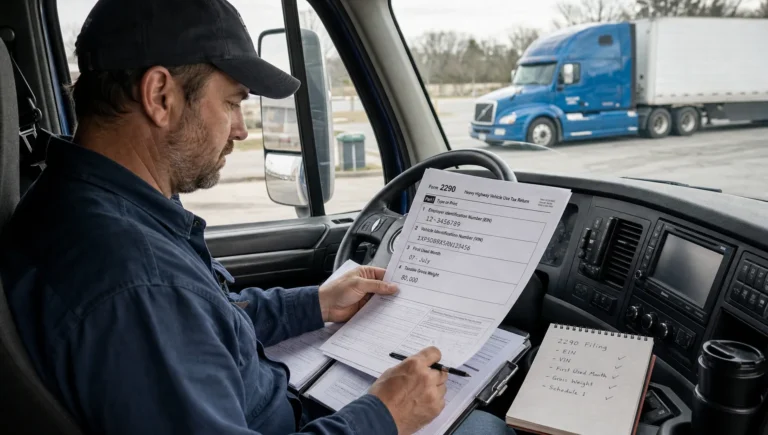
If you are already operating as a sole proprietor under your Social Security Number, you technically already have a US TIN number. You can use it directly on Form 2290 — just ensure the name on the form matches your SSN records exactly.
How to Find Your TIN Number If You Already Have One
Many operators ask "how do I find my TIN number" because they have an EIN from years ago but cannot locate it. Here are the fastest ways:
-
Check prior tax returns: Your EIN appears on every previously filed Form 2290, business tax return, or Schedule C.
-
Check IRS notices or letters: Any letter from the IRS referencing your business will include your EIN.
-
Call the IRS: The Business and Specialty Tax Line (1-800-829-4933) can verify your EIN after confirming your identity.
-
Check your bank: Most business bank accounts require an EIN at opening. Your bank records or original account documents will have it.
-
Use a TIN number lookup through your e-file provider: Platforms like SimpleForm2290 store your EIN securely and pre-populate it on future filings, eliminating the "how to find my TIN number" headache entirely.
What Happens If You File Form 2290 Without the Correct TIN?
The IRS will reject your return. This creates a cascade of problems:
-
Your 2290 Schedule 1 for IRP will not be issued, blocking your plate renewal.
-
Penalties begin accruing if the corrected filing arrives after your due date.
-
Re-filing requires correcting the TIN mismatch, which adds processing time.
According to IRS Publication 510, failure to file Form 2290 on time carries a penalty of 4.5% of the total tax due per month, up to five months — plus an additional 0.5% per month for failure to pay. Getting your TIN right the first time is far cheaper than correcting a rejected filing under deadline pressure.
How SimpleForm2290 Makes TIN Verification Effortless
Once you have your TIN, the next step is electronic filing of Form 2290. SimpleForm2290, an IRS Authorized E-file Provider, validates your TIN at the point of entry before your return is transmitted to the IRS.
Here is what that means in practice:
-
Real-time TIN validation flags mismatches before submission, not after.
-
Secure EIN storage lets returning filers skip re-entry entirely.
-
Bulk and fleet filing support means operators with dozens of vehicles can file under a single TIN in minutes.
-
Instant Schedule 1 delivery once IRS acceptance is confirmed.
For fleets managing HVUT tax rates by weight across multiple vehicles, having a single verified EIN on file eliminates the risk of inconsistent TIN entries across the fleet.
Pricing context: SimpleForm2290 is among the cheapest 2290 e-file options on the market, starting at a flat rate per vehicle with no hidden fees. Compared to tax preparer fees that can run $75 to $150 per filing, the savings add up quickly for owner-operators watching margins.
TIN Number Timeline: Plan Around Your 2290 Due Date
Understanding when your Schedule 1 Form 2290 is due helps you plan your TIN application correctly.
| Scenario | TIN Application Deadline |
|---|---|
| New vehicle, first use in July | Apply by July 31 (filing deadline is August 31) |
| Mid-year first use (e.g., November) | Apply at least 2 weeks before the last day of the following month |
| EIN by mail | Allow 4 to 6 weeks — apply early |
| EIN online or by phone | Same-day issuance — safest option |
If you are filing for a vehicle based on its first use month IRS 2290 rules, remember that the TIN on your filing must already be active in the IRS system. A brand-new EIN issued the same morning as your filing may occasionally cause a temporary delay if IRS systems have not yet synchronized — another reason to apply a few days in advance when possible.
Frequently Asked Questions
Q1: What does TIN number mean for a truck owner-operator? A TIN (Taxpayer Identification Number) is the number the IRS uses to identify you or your business on tax filings. For truckers, it appears on Form 2290 and links your heavy vehicle use tax payment to your specific tax account. It can be your Social Security Number, EIN, or ITIN depending on your business structure.
Q2: How do I obtain a TIN number if I just started my trucking business? The fastest way is to apply for an EIN online through the IRS website. The application takes about 15 minutes, and your EIN is issued immediately. You can then use it to file Form 2290 the same day through an e-file provider like SimpleForm2290.
Q3: Is a TIN number the same as an EIN? Not exactly. An EIN is one type of TIN. The term "TIN" covers SSNs, EINs, and ITINs. For most trucking businesses, the relevant TIN is either an SSN (sole proprietors) or an EIN (business entities). When people refer to a TIN number USA context for HVUT filing, they almost always mean the EIN.
Q4: Can I use my SSN instead of an EIN to file Form 2290? Yes, sole proprietors can file using their SSN. However, the IRS and most tax professionals recommend obtaining an EIN to protect your SSN and maintain cleaner business records. SimpleForm2290 supports filing under either type.
Q5: What if my TIN number lookup shows a mismatch with IRS records? A mismatch usually means the business name on your filing does not exactly match what the IRS has on file for that EIN. Common causes include abbreviations, punctuation differences, or using a trade name instead of the legal business name. Contact the IRS Business and Specialty Tax Line to verify your exact registered name, then update your filing accordingly. SimpleForm2290's validation step catches this before your return is submitted.
Final Takeaway
Knowing how to obtain a TIN number is the foundation of smooth, penalty-free Form 2290 filing. Whether you use your SSN or apply for a fresh EIN, the process is straightforward when you plan ahead. The IRS offers same-day EIN issuance online, which means there is no reason to file without one.
Once your TIN is in place, platforms like SimpleForm2290 handle the rest — validating your number, calculating your taxable gross weight category, and delivering your stamped Schedule 1 in minutes. Do not let a missing or incorrect TIN stand between you and the road.
File Form 2290 online today with SimpleForm2290 and get your Schedule 1 fast.