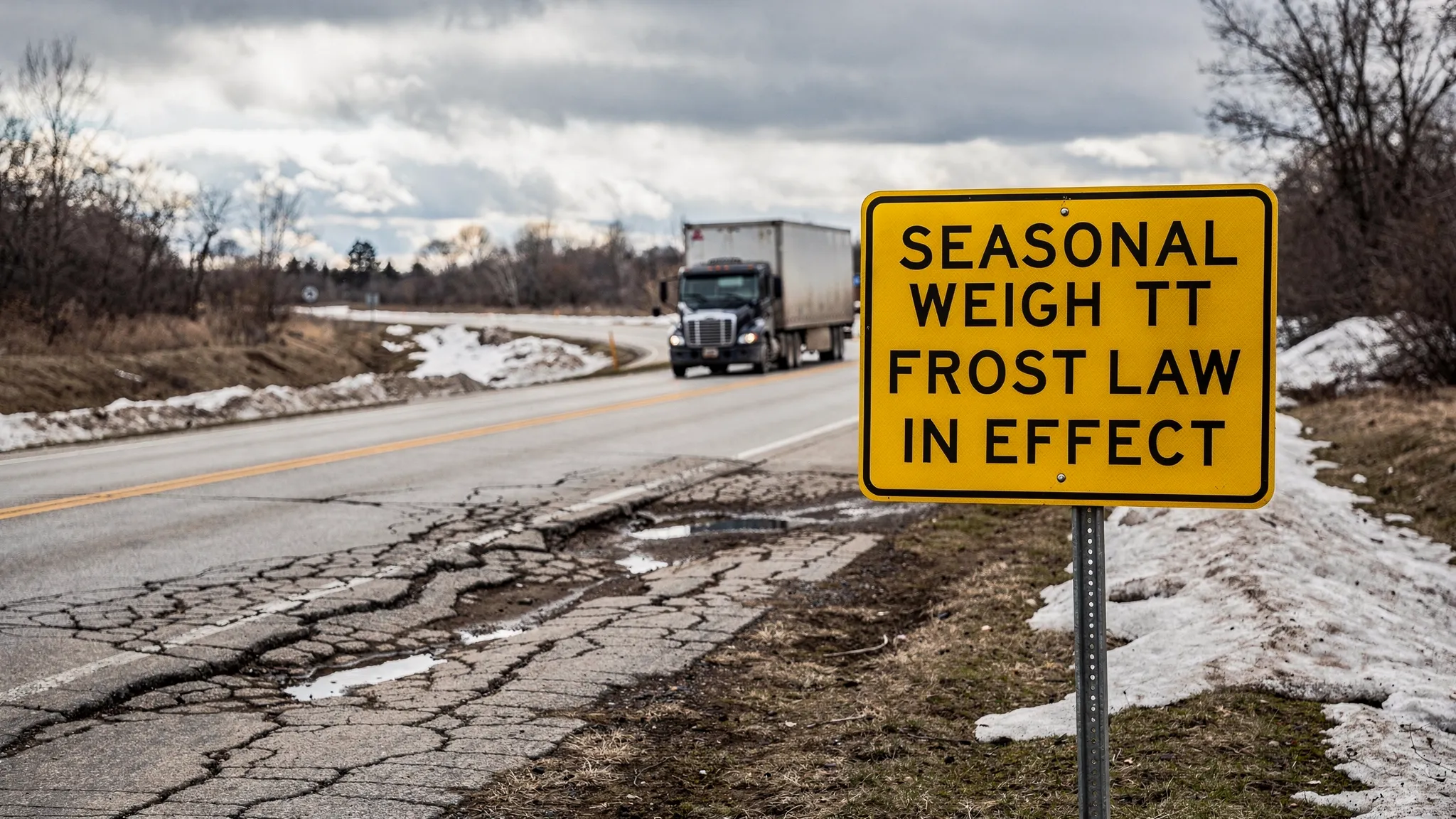
What is the Frost Law? Understanding Its Impact on Form 2290 Filing
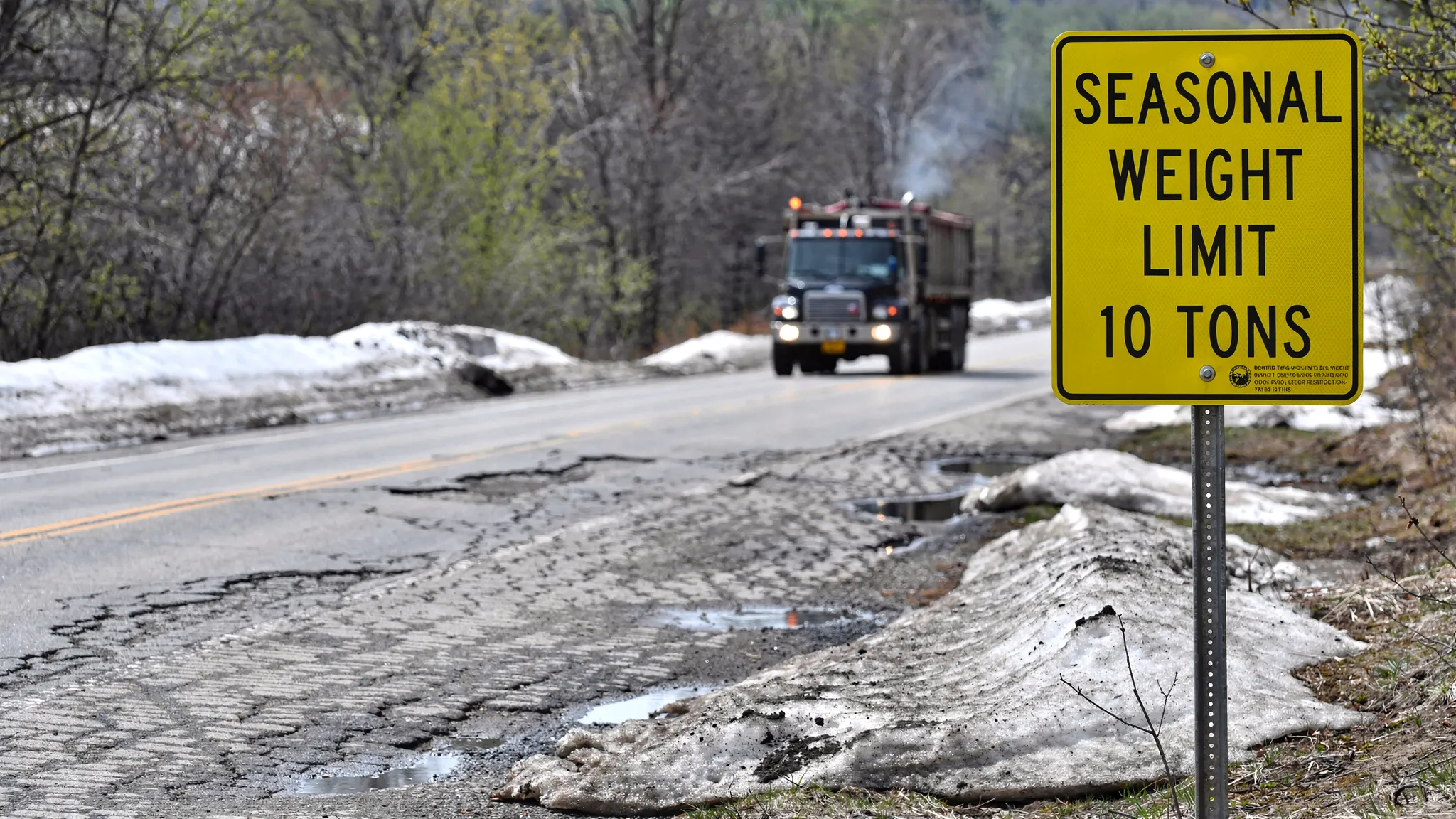
What is a frost law? It is a seasonal road weight restriction that temporarily limits how heavy trucks can be on certain roads when frost and thaw cycles make pavement weak.
In plain terms, the same load that is safe in midsummer can cause outsized road damage in late winter and early spring, when “frost heave” and water in the base layers reduce pavement strength. This guide explains what is a frost law, how frost restrictions affect routing and payload decisions, and what they do (and do not) change about Form 2290 (HVUT) compliance. You will also see practical comparisons, planning lessons, and numbers you can use to make better operational and tax decisions.
Why frost laws exist (and what “frost heave” really means)
The core reason why frost laws are implemented is simple: when the ground freezes and thaws, moisture expands and contracts. That movement can lift pavement (frost heave) and then leave it structurally vulnerable during the thaw. State and local agencies use frost heave road restrictions to prevent heavy axle loads from accelerating cracking, rutting, and base failure.
From an engineering standpoint, pavement damage is not linear. A commonly used rule in pavement engineering (often discussed as the “fourth power law”) is that incremental axle weight increases can cause disproportionate increases in pavement wear. That is why many agencies impose seasonal weight restrictions trucking operators must follow.
A quick damage model you can use for planning
The table below is not a legal limit chart. It is a planning model to illustrate why small weight changes matter so much during thaw periods.
| Approx. axle load increase | Relative pavement damage (illustrative) | What it means operationally |
|---|---|---|
| No increase (baseline) | 1.0x | Normal wear assumptions |
| +10% axle load | ~1.46x | “A little heavier” can be meaningfully more damaging |
| +20% axle load | ~2.07x | Damage can roughly double |
| +30% axle load | ~2.86x | Damage can nearly triple |
This is why agencies enforce road weight limits winter and spring thaw restrictions, even if the road looks fine from the cab.
Frost laws USA: where they show up, and how dates work
If you are asking what is a frost law in trucking, the most important detail is that there is no single national frost-law calendar. Frost laws USA are set and enforced by states, counties, townships, and sometimes specific corridors.
In many northern states, restrictions are most common from late winter through spring thaw, but frost law dates USA can shift year to year based on weather and local road conditions. The best practice is to check the governing DOT or local road authority before dispatching heavy loads.
For reference, agencies publish seasonal updates and restriction maps, for example:
- Minnesota DOT Spring Load Restrictions
- Wisconsin DOT Seasonal Weight Restrictions
Typical pattern (not a guarantee)
| Region (general) | Common timing window | Typical trigger |
|---|---|---|
| Upper Midwest / Northern Plains | Late winter through spring | Thaw weakens base layers, moisture increases |
| Northern New England | Late winter through spring | Freeze-thaw and saturated shoulders |
| Local gravel/low-volume roads (many states) | Varies widely | Surface softness after thaw or rain |
Frost law trucking impacts: payload, routing, contracts, and risk
When frost restrictions trucking policies kick in, the impact is rarely just “we haul less.” It cascades into pricing, service levels, and compliance risk.
Operational trade-offs (comparison)
| Option | Upside | Downside | Best for |
|---|---|---|---|
| Reduce payload and run as usual | Lowest compliance risk | More trips, higher cost per ton | Essential lanes, tight customer windows |
| Reroute to higher-class roads | Maintain payload on approved routes | Longer miles, more fuel/time | High-value freight, time-flexible deliveries |
| Stage freight (inventory buffer) | Avoid peak restriction weeks | Requires yard space/cash tied in inventory | Bulk commodities, construction materials |
| Transload to smaller units | Keeps freight moving | Handling costs, complexity | Last-mile or restricted county roads |
“Investor” lessons from the field (equipment and capacity bets)
Trucking decisions are capital decisions. Every trailer spec, axle configuration, and customer contract is an “investment” that either pays off across seasons or gets squeezed during restrictions.
-
Lesson 1: Don’t underwrite revenue assuming full legal gross year-round. A common mistake is pricing a lane based on summer payload, then eating margin when a key county road posts limits for several weeks. The result looks like a “sudden cost spike,” but it is really a planning miss.
-
Lesson 2: Heavy-spec assets can become underutilized on restricted networks. A carrier financing heavier configurations may still be able to run on primary corridors, but if origin or destination sits on posted roads, the business may need transload partners or buffer yards to keep utilization stable.
These are not tax issues by themselves, but they often lead people to ask: does frost law affect Form 2290?
Frost law and Form 2290: what changes and what stays the same
Here is the key compliance point: frost law and Form 2290 are related operationally, but not because frost laws change the IRS rules. Form 2290 (HVUT) is a federal tax based primarily on a vehicle’s taxable gross weight category and when it is first used on public highways during the tax period.
So, what is a frost law’s impact on filing? Mostly indirect:
- Frost laws may reduce payloads and miles.
- Reduced miles could influence whether a vehicle is treated as suspended (low mileage) for HVUT purposes, but you generally still file Form 2290 and report it appropriately.
- Frost laws can change your registration and dispatch timing, which affects when you need an IRS-stamped Schedule 1 for plates and IRP transactions.
If your question is essentially “IRS do I need to file?” the practical answer is: if your vehicle is required to file based on HVUT rules (commonly 55,000 lbs and up, when used on public highways), winter restrictions do not eliminate that requirement.
Actionable tax numbers: HVUT weight category planning
HVUT is not priced like a permit, it is a weight-category tax. The IRS rate structure makes some weight choices more meaningful than others.
| Taxable gross weight (example) | HVUT amount (example) | Planning takeaway |
|---|---|---|
| 55,000 lbs | $100 | Entry point for HVUT |
| 60,000 lbs | $210 | Weight increases add cost in steps |
| 70,000 lbs | $430 | Mid-range weights can materially change HVUT |
| 75,000 lbs | $540 | Near the top bracket |
| Over 75,000 lbs | $550 | Only a small jump above 75k |
Operationally, frost limits might push you to run lighter, but unless you permanently operate and register at a lower taxable weight category (and structure your operations accordingly), you should not assume a tax reduction. Also note that IRS rules commonly focus on increases in taxable weight as amendment events, which is why fleets track weight changes closely.
If you need help understanding weight changes, see Taxable Weight Amendments.
Strategic compliance playbook for winter and spring restrictions
Use the restriction season to tighten your compliance workflow, not just your dispatch plan.
- Separate “posted road limits” from “taxable gross weight.” Posted limits are seasonal and local, HVUT is federal and weight-category based.
- Pre-plan plate and IRP needs around thaw season. Many fleets discover too late that they need Form 2290 Schedule 1 during a period when operations are already constrained.
- Treat VIN accuracy as non-negotiable. One digit off in a vehicle identification number can delay your stamped Schedule 1 and disrupt registration timelines.
- Align HVUT timing with registration workflows. If you run apportioned fleets, review IRP truck registration requirements so you are not solving taxes and plates in a panic.
For fast filing when you need proof quickly, use an IRS Authorized E-file Provider.
Where Simple Form 2290 fits in
Seasonal restrictions create enough moving pieces, route changes, payload adjustments, customer expectations, and compliance deadlines. Simple Form 2290 is an IRS-authorized platform designed to make the Form 2290 side predictable: guided e-filing, fast delivery of your stamped Schedule 1, bulk and fleet workflows, secure data retrieval, and bilingual support.
If you want the most direct path from “I need to file” to “I have my proof for registration,” start with electronic file Form 2290 and pay online.
Frequently Asked Questions
What is a frost law in trucking and why is it important? A frost law is a seasonal rule that limits truck weights on certain roads when freeze-thaw conditions weaken pavement. It is important because it prevents costly road damage and reduces the risk of fines and out-of-service events for carriers.
Do frost laws affect Form 2290 filing or heavy vehicle use tax (HVUT)? Frost laws do not change IRS HVUT rules. If you are required to file Form 2290 based on your vehicle’s taxable gross weight and highway use, you still file, even during restrictions. The main impact is operational timing, you may need your stamped Schedule 1 for IRP or registration while also managing seasonal routing and payload limits.
How do winter weight restrictions impact truck operations and taxes? Winter and spring restrictions typically reduce payload on posted roads, increase trip counts, and change route economics. Taxes usually do not drop just because you hauled lighter for a few weeks, since HVUT is based on taxable gross weight categories, not day-to-day payload.
When do frost laws start and end in the United States? Dates vary by state and even by county. Many restrictions occur in late winter through spring thaw, but the exact start and end are weather-driven and published by the responsible DOT or local road authority.
Do truck drivers still need to file Form 2290 during frost restrictions? Yes, if your vehicle meets the filing requirement, you still file. Frost restrictions are separate from the federal obligation to file Form 2290 and obtain Schedule 1 proof for registration.
File Form 2290 with less guesswork
Seasonal limits can change your routes overnight, but your HVUT compliance cannot slip. File with Simple Form 2290 to e-file quickly, reduce rejection risk, and get your stamped Schedule 1 when you need it. Visit Simple Form 2290 to get started.