IRS Payment Options for HVUT and Form 2290
Paying the Heavy Vehicle Use Tax (HVUT) can be the part of Form 2290 filing that creates the most confusion, especially when you need your stamped Schedule 1 quickly for IRP or registration. The good news is that the IRS offers several payment options for Form 2290, and once you understand how each one works, you can choose the method that fits your timing, cash flow, and filing situation.
HVUT payment basics (what the IRS cares about)
Form 2290 is the tax return used to report and pay HVUT for taxable heavy highway motor vehicles (generally 55,000 pounds and above). Your payment must cover the HVUT amount for the period you are filing.
A few practical points to keep in mind:
- The due date depends on your First Used Month (FUM). For most vehicles in service in July, the deadline is typically August 31 (moved if it falls on a weekend or holiday). For newly purchased or newly used vehicles, the due date is usually the last day of the month following the month of first use.
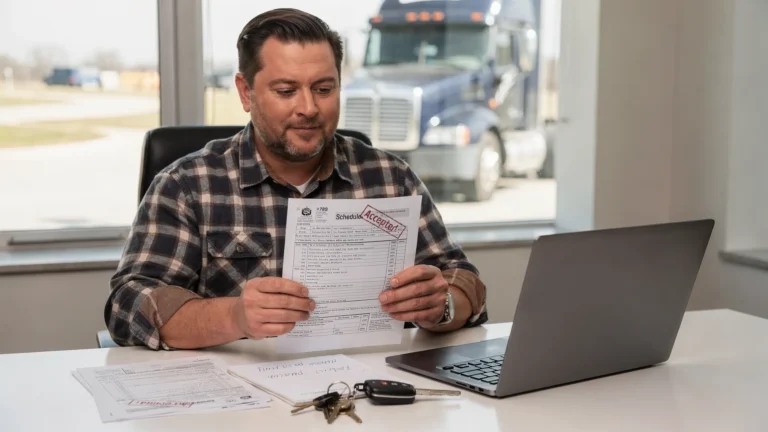
- Schedule 1 is the proof you need. State DMVs and IRP offices commonly require an IRS-stamped Schedule 1 as proof of HVUT filing.
- Payment method choice affects your workflow. Some payment methods require setup time (like EFTPS), while others are better for last-minute payments (like debit/credit card or same-day wire).
If you want a deadline refresher by scenario, see the guide on Form 2290 due dates.
IRS payment options for HVUT and Form 2290
Below are the most common IRS payment methods used for Form 2290, plus what to watch for with each.
Electronic Funds Withdrawal (direct debit from your bank account)
With Electronic Funds Withdrawal (EFW), you authorize the IRS to pull the HVUT amount directly from your bank account. This option is typically available when you e-file through an IRS-authorized provider.
Why truckers and fleets like it:
- No separate login system to manage
- You can often choose a payment date (depending on the filing flow)
- Clear bank record once it drafts
What to double-check:
- The routing and account numbers must be correct
- Make sure funds are available on the draft date
- Confirm the tax period and amount before you submit
EFTPS (Electronic Federal Tax Payment System)
EFTPS is the U.S. Treasury’s electronic payment system and is widely used by businesses to pay federal taxes.
Best for:
- Fleet businesses that want a consistent payment system year after year
- Taxpayers who prefer to schedule payments in advance
Key considerations:
- Enrollment can take time. If you have never used EFTPS, do not wait until the deadline week.
- You must schedule the payment correctly for the right form/tax type.
Official resource: EFTPS.
Debit or credit card (through an IRS-approved card processor)
The IRS allows Form 2290 payments by card through third-party processors.
Best for:
- Last-minute payments when you need speed
- Owner-operators who prefer to pay by card for tracking or cash flow
Important notes:
- Processing fees apply (charged by the payment processor, not by the IRS).
- Keep the confirmation/receipt from the processor for your records.
Official resource: Pay by card.
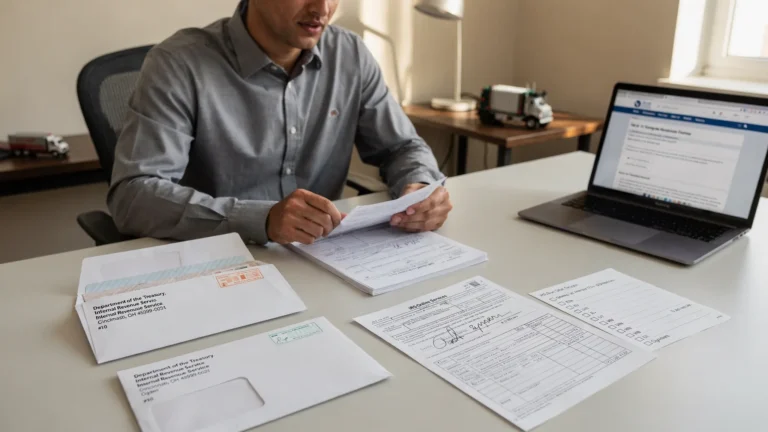
Check or money order (with Form 2290-V voucher)
If you file by mail, or if you choose to mail a payment, you can generally pay by check or money order made payable to the “United States Treasury.” This method typically uses a payment voucher (Form 2290-V) and must be mailed to the IRS.
Best for:
- Taxpayers who prefer paper payments
- Situations where electronic payment options are not available
What to watch out for:
- Mailing time and delivery tracking (paper methods can create delays)
- Incorrect address or missing voucher information
- Waiting too long, especially during peak HVUT season
If you’re considering paper filing, review the current IRS mailing address for Form 2290 to avoid sending it to the wrong location.
Same-day wire transfer
A same-day wire is generally used for urgent, high-priority payments. It can be helpful if you’re close to a deadline and need a time-sensitive option.
Best for:
- Last-minute, time-critical payments
- Larger payments where speed matters
Important notes:
- Banks may charge wire fees
- The instructions must be followed carefully (wire format matters)
Official resource: Same-day wire federal tax payments.
Quick comparison table: which IRS payment option fits your situation?
| IRS payment option | Typical best use | Setup time | Potential extra fees | Key risk to avoid |
|---|---|---|---|---|
| Electronic Funds Withdrawal (direct debit) | Simple pay-and-file flow when e-filing | Low | Usually none from IRS | Wrong bank details or insufficient funds on draft date |
| EFTPS | Ongoing business process, repeat yearly payments | Medium to high | Usually none from IRS | Waiting too long to enroll, scheduling wrong tax type |
| Debit/credit card | Speed and convenience, especially near deadlines | Low | Yes (processor fee) | Forgetting to save the payment confirmation |
| Check/money order | Paper payment preference | Low | Postage, possible bank fees | Mailing delays, wrong address, missing voucher info |
| Same-day wire | Urgent payments and deadline pressure | Medium | Yes (bank wire fee) | Incorrect wire instructions or cut-off time issues |
When should you pay HVUT to avoid delays with Schedule 1?
In most cases, truck owners want two things: file correctly and get the stamped Schedule 1 fast.
To keep the process smooth:
- Do not wait until the deadline day if you can avoid it, especially if you need EFTPS enrollment or you’re filing for multiple vehicles.
- If you are using EFTPS, schedule the payment early enough to ensure it is initiated properly by the due date.
- If you pay by card, keep your receipt and make sure the payment amount matches your Form 2290 tax.
If you’re unsure whether your return made it through, you can follow this guide on how to check 2290 filing status.
Common Form 2290 payment mistakes (and how to prevent them)
Most HVUT payment problems come down to timing or mismatched details. Here are the issues that cause the most rework:
- Trying to enroll in EFTPS too late. If you want to use EFTPS, start setup well before HVUT peak season.
- Name or EIN mismatch. If your EIN, business name, or IRS records don’t match, your filing can be rejected or delayed. If you still need an EIN, see how to apply for an EIN online for Form 2290 filing.
- Paying the wrong amount because of FUM or weight category errors. HVUT is prorated based on first use month and based on taxable gross weight. If you want to sanity-check your numbers, review how to calculate HVUT tax for Form 2290.
- Not saving proof of payment. Keep confirmations (EFTPS confirmation, card receipt, bank draft record) along with your stamped Schedule 1.

How payment works when you e-file Form 2290 online
E-filing simplifies the payment step because your filing flow can guide you to the IRS payment method that fits your situation.
A typical e-file process looks like this:
- Enter your business information (including EIN) and vehicle details (VIN, weight category, logging status if applicable)
- Review the calculated HVUT (including prorated months when applicable)
- Choose an IRS payment method (for example, direct debit, EFTPS, or card)
- Transmit your Form 2290 and receive your IRS-stamped Schedule 1 after acceptance
If you want a full walkthrough of the filing flow, use the Form 2290 instructions.
What if you need help with an IRS payment issue?
If your question is specifically about payment systems (like EFTPS access) or an excise tax issue tied to Form 2290, contacting the right IRS line can save time.
This resource lists the most relevant lines and what to have ready before calling: IRS customer support phone numbers.
Frequently Asked Questions
Can I pay HVUT (Form 2290) with a credit card? Yes. The IRS allows Form 2290 payments by debit or credit card through IRS-approved payment processors. Processor fees typically apply, so be sure to save your receipt.
Is EFTPS required for Form 2290? No. EFTPS is one option, but not the only one. Many taxpayers pay using direct debit (electronic funds withdrawal), debit/credit card, check/money order, or same-day wire, depending on their situation.
What is the fastest IRS payment option for Form 2290? For many filers, debit/credit card payments or direct debit (when e-filing) are among the fastest to initiate. The best option depends on whether you already have systems set up (for example, EFTPS enrollment).
Can I file Form 2290 first and pay later? You must pay the HVUT amount that applies to your filing by the due date. If you choose a method like EFTPS, you may file and then schedule the payment, but you should plan ahead so payment is initiated correctly and on time.
What proof should I keep after making an IRS HVUT payment? Keep your IRS-stamped Schedule 1 and your payment confirmation (EFTPS confirmation number, card processor receipt, or bank draft record). These documents help with registration and with resolving payment questions.
File Form 2290 and choose the right IRS payment option in one guided flow
If you want a simpler way to e-file Form 2290 and select an IRS payment method without guesswork, Simple Form 2290 is an IRS-authorized e-file provider built for owner-operators and fleets. You can file online through a guided process and receive your stamped Schedule 1 quickly after IRS acceptance.
Get started here: SimpleForm2290.com