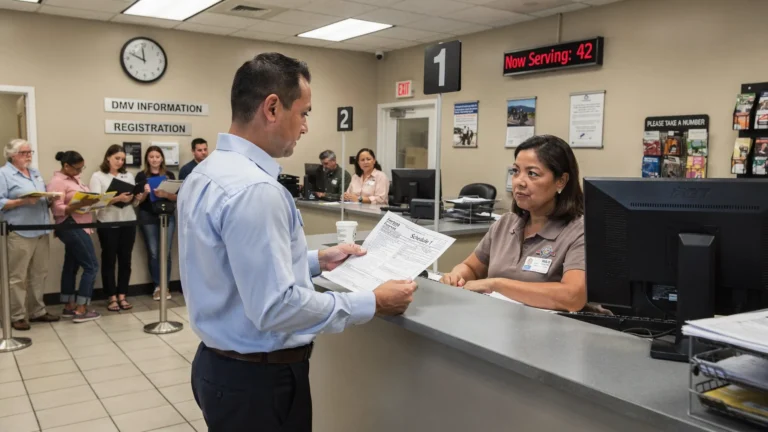
HVUT Filing Deadlines and Penalties Explained
Missing an HVUT deadline can sideline your truck at the DMV, delay tag renewals, and add avoidable IRS penalties. If you run vehicles at 55,000 pounds or more, Form 2290 is not optional, and your proof of payment is the IRS stamped Schedule 1. This guide explains exactly when HVUT is due, how first used month drives your deadline, what penalties apply if you miss it, and practical steps to stay compliant.

The HVUT clock, tax year and first used month
Form 2290 covers the federal Heavy Vehicle Use Tax for vehicles with taxable gross weight of 55,000 pounds or more. The HVUT tax year runs from July 1 to June 30. Your filing deadline is based on the vehicle’s first used month, not the registration renewal date.
- General rule, file Form 2290 by the last day of the month following the first month the vehicle is put on public highways for the tax period.
- Example, a truck first used in July is due by August 31 for that tax year.
If you are unsure that your vehicle is subject to HVUT, review who must file and the exemptions, including low mileage suspensions and certain exempt entities. See our quick guide, Who Must File Form 2290, and Form 2290 Exemption.
For official IRS guidance, see About Form 2290 and the Form 2290 Instructions.
Your due date by first used month
The rule stays the same every month, file by the last day of the next month. Here is a quick reference for the current tax year.
| First used month in the 2025–2026 period | Form 2290 due date |
|---|---|
| July 2025 | August 31, 2025 |
| August 2025 | September 30, 2025 |
| September 2025 | October 31, 2025 |
| October 2025 | November 30, 2025 |
| November 2025 | December 31, 2025 |
| December 2025 | January 31, 2026 |
| January 2026 | February 28, 2026 |
| February 2026 | March 31, 2026 |
| March 2026 | April 30, 2026 |
| April 2026 | May 31, 2026 |
| May 2026 | June 30, 2026 |
| June 2026 | July 31, 2026 |
Note, if a due date falls on a weekend or federal holiday, the deadline moves to the next business day.
HVUT penalties, how they work and how much they cost
The IRS can assess separate penalties for filing late and for paying late. Both can apply for the same period, and interest accrues on unpaid balances.
| Item | What it means |
|---|---|
| Failure to file | 4.5 percent of the total tax due for each month or part of a month the return is late, up to 25 percent. |
| Failure to pay | 0.5 percent of the unpaid tax for each month or part of a month after the due date, up to 25 percent. |
| Interest | Accrues on unpaid tax and penalties at the federal rate, calculated daily until paid. |
Source, IRS penalty rules. See the IRS overview of penalties and interest.
Quick example, tax due is 550 dollars and you file and pay 3 months late. Failure to file equals 13.5 percent of 550 dollars, which is 74.25 dollars. Failure to pay equals 1.5 percent of 550 dollars, which is 8.25 dollars. Total penalties equal 82.50 dollars, plus interest until paid. The longer you wait, the more it costs.
Important, many state DMVs will not register a heavy vehicle without a current Schedule 1. Even if no tax is due because the vehicle is suspended for low mileage, you should file on time to keep registration moving.
Special filing situations that change timing
- Suspended vehicles, Category W, if you expect to stay under 5,000 miles for commercial use, or 7,500 miles for agricultural use, you still file Form 2290 by your due date to report suspension. If you later exceed the mileage limit, file an amendment and pay the tax by the last day of the month following the month you exceeded the limit. Learn more in Form 2290 Category W and Form 2290 Amendments.
- Weight increase, if your taxable gross weight moves to a higher category during the period, file an amended Form 2290 and pay the difference by the last day of the month following the increase.
- VIN correction, if you mistyped a VIN on a previously filed return, correct it promptly. You can file a VIN correction with us at no additional cost. See How to do VIN Correction for Free.
- Sold, destroyed, or stolen vehicle, you may be eligible for a credit on your next Form 2290 or a refund on Form 8849. See Form 2290 Refund.
- Purchased a used truck midyear, your first used month is when you put it on the road under your name. The prior owner’s due date does not carry over to you.
Extensions and penalty relief
- Extensions to file, the IRS may grant additional time to file when requested in writing before the due date, usually for reasonable cause. An extension to file does not extend time to pay.
- Extensions to pay, you can request more time to pay by writing to the IRS, but penalties and interest generally continue to accrue until the balance is paid.
- Reasonable cause relief, if you missed a deadline due to circumstances outside your control, you can request penalty abatement with a written explanation and documentation. The IRS reviews these on a case by case basis.
For the most current rules and mailing details, always check the Form 2290 Instructions.
How to avoid HVUT penalties
- File based on the first used month, not the renewal month.
- E-file to get a faster IRS acceptance and Schedule 1 in minutes. Paper filings can take weeks.
- Pay electronically to meet the deadline. Options include direct debit with your e-file, EFTPS, or card payment. See the IRS page for About Form 2290 for payment options.
- Keep your EIN ready. New EINs can take time to appear in IRS systems, so apply early and avoid last minute filing.
- Double check VINs and weight categories. These are common reject reasons.
- Keep your Schedule 1 for at least three years for audits and registration.
If you want a refresher on the tax math, including prorated amounts when first use is not in July, see How to Calculate Form 2290.
What to do if you are already late
- File now. Penalties are calculated by month or part of a month, so filing sooner reduces the cost.
- Pay as much as you can. This lowers both penalties and interest on the remaining balance.
- If you qualify, request penalty relief and provide documentation.
- Switch to e-file going forward so you get immediate IRS acknowledgments and do not miss dates.

File on time with Simple Form 2290
Simple Form 2290 is an IRS authorized e-file provider built for truckers and fleets. You can file in a few steps and get your Schedule 1 fast after IRS acceptance.
- Easy online filing portal with a step by step guided process
- Instant Schedule 1 delivery after IRS acceptance, sent to your email
- Bulk vehicle filings and a fleet dashboard for multi unit operations
- Professional, bilingual support in English and Spanish
- Secure data handling with safe retrieval of prior returns
- Affordable flat pricing
Ready to file now, start your return at SimpleForm2290.com. If you prefer to compare paper steps, see our guide, How to File Form 2290.
Frequently Asked Questions
When is Form 2290 due for trucks first used in July? August 31 for that tax year, or the next business day if August 31 falls on a weekend or federal holiday.
How are HVUT penalties calculated if I am late? The IRS may assess 4.5 percent per month for filing late and 0.5 percent per month for paying late, both up to 25 percent, plus interest until the balance is paid.
Do I still need to file if my truck will be under the mileage limit? Yes, file on time and report suspension if you will stay under 5,000 miles for commercial use or 7,500 miles for agricultural use. If you exceed the limit later, file an amendment and pay the tax.
What counts as the first used month? It is the month the vehicle is first operated on public highways during the tax period under your ownership. Buying a used truck midyear creates a new first used month for you.
Can I e-file if I have a large fleet? Yes, and if you are reporting 25 or more vehicles on Schedule 1, the IRS requires you to e-file.
How quickly will I get Schedule 1 if I e-file? In most cases you receive your stamped Schedule 1 within minutes of IRS acceptance. Processing can take longer during peak hours or if the IRS system is under maintenance.
What if I entered the wrong VIN? File a VIN correction as soon as possible. You can submit a VIN correction through our portal at no additional cost. See How to do VIN Correction for Free.
What are my payment options when e-filing? You can pay by direct debit as part of e-file, by scheduling through EFTPS, or by card payment through an IRS approved processor. Paying electronically helps ensure you meet the deadline.
This article is for general information only and is not legal or tax advice. Always consult the official IRS instructions and, if needed, a qualified tax professional.
Stay penalty free and keep your trucks rolling. Start your HVUT filing now at Simple Form 2290.