How to Pay Form 2290 on EFTPS: Step-by-Step Guide for Truck Owners
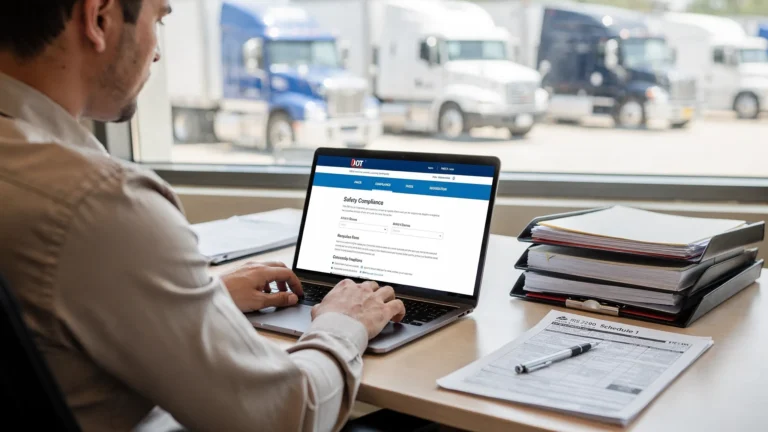
Truck owners often prefer EFTPS for Form 2290 because it is free, secure, and puts you in control of the payment date. The key is knowing that paying HVUT through EFTPS is different from filing Form 2290. You still need to e-file to receive your stamped Schedule 1, the proof most DMVs and IRP offices require. This guide walks you through how to pay Form 2290 on EFTPS, the timelines that matter for IRP and IFTA, and practical tips to avoid costly penalties.
Why use EFTPS for your 2290 payment
- EFTPS is the U.S. Treasury’s electronic tax payment system, there are no processing fees.
- You can schedule the payment for a future date and receive a confirmation number.
- EFTPS works well when you e-file Form 2290 with an IRS Authorized E-file Provider like Simple Form 2290, then pay the calculated HVUT separately.
According to the IRS, e-filing is required if you are reporting 25 or more vehicles and strongly encouraged for everyone else for faster acceptance and fewer errors. Penalties for failing to file on time are usually 5 percent per month of the unpaid tax, up to 25 percent, plus a 0.5 percent per month penalty for late payment and interest. See the IRS Instructions for Form 2290 for full details.
- IRS source: IRS Instructions for Form 2290
- EFTPS source: EFTPS

Step-by-step, how to pay Form 2290 on EFTPS
Before you start
- Have an EIN, not an SSN. EFTPS and Form 2290 both require an EIN.
- Enroll in EFTPS if you have not already. Enrollment can take several days to complete because a PIN is mailed for security. Start early.
- Gather details from your e-filed return, including your calculated HVUT amount, business name and EIN, and each vehicle identification number that you reported.
Step 1, e-file your 2290 and choose EFTPS as the payment method
- Sign in to Simple Form 2290 and start a new Form 2290 return. Enter your business info, first used month, each vehicle identification number, and taxable gross weight.
- At the payment step, choose EFTPS as your IRS payment method. You will not enter bank details on the e-file.
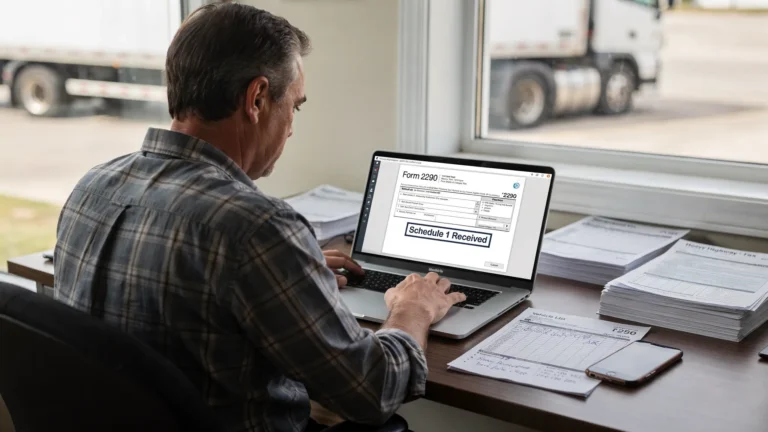
- Transmit to the IRS. After acceptance, Simple Form 2290 delivers your watermarked Form 2290 Schedule 1, typically in minutes.
- Helpful reference: How to File Form 2290
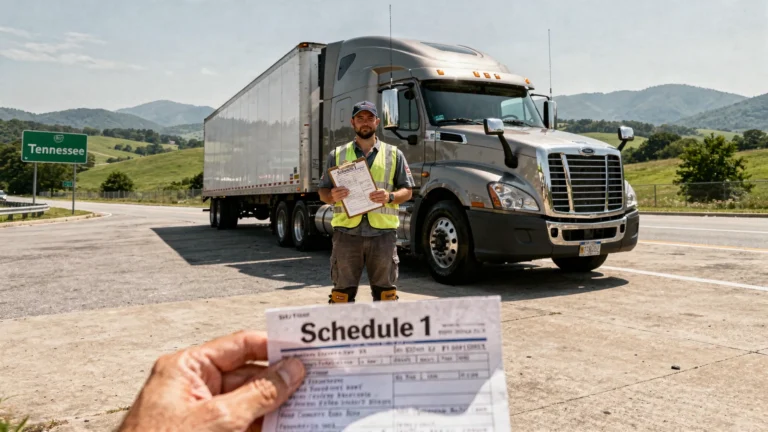
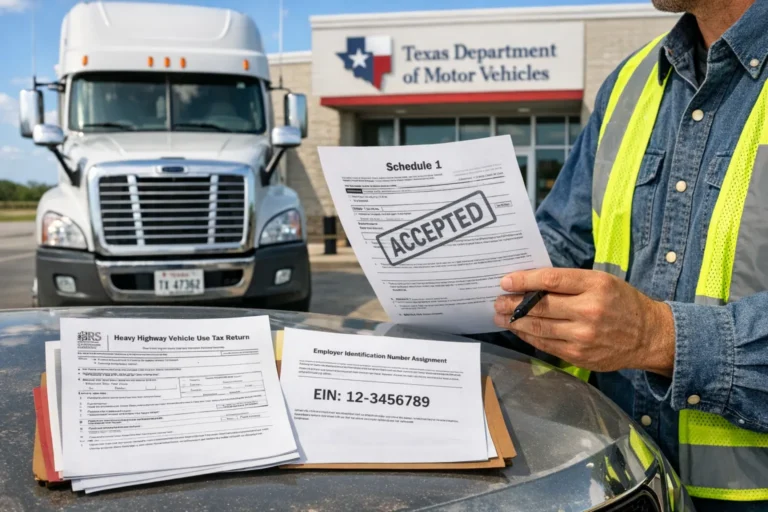
Why this order matters, IRP truck registration and many DMVs require the stamped Schedule 1 to issue or renew apportioned plates. EFTPS payment alone will not produce Schedule 1. E-file first to secure your proof, then finish the EFTPS 2290 payment.
Step 2, schedule your HVUT payment in EFTPS
- Log in to EFTPS and select Make a Payment.
- Choose Business Tax Payment, then select Form 2290.
- Enter the payment amount that matches your accepted 2290 return.
- Select the tax period shown in the EFTPS screen that matches your Form 2290 return. The 2290 tax year runs July 1 to June 30. For vehicles first used in July, the annual filing corresponds to that tax year. For vehicles first used later, the period aligns with your first used month. If in doubt, follow the EFTPS prompt or confirm with your tax advisor.
- Pick the settlement date. To be on time, EFTPS generally requires you to schedule by 8 p.m. Eastern Time at least one calendar day before the due date.
- Confirm the bank account, review, and submit. Save the EFTPS confirmation number.
- Reference, timing: EFTPS
Step 3, keep your proof together
- Keep two records, the watermarked Schedule 1 from Simple Form 2290 and your EFTPS confirmation. This pairing satisfies most audits and helps with IRP and IFTA and HVUT filing record checks.
Deadlines that affect IRP and IFTA
Form 2290 is due by the last day of the month following the first used month. If your trucks first hit public roads in July, your due date is August 31. If a vehicle is first used in October, the due date is November 30. When the date lands on a weekend or federal holiday, the deadline moves to the next business day.
| First used month (FUM) | HVUT due date |
|---|---|
| July | August 31 |
| August | September 30 |
| September | October 31 |
| October | November 30 |
| January | Last day of February |
| March | April 30 |
Why this matters for Form 2290 and IRP registration, most IRP offices will not issue apportioned plates without a current Schedule 1 that lists your vehicle identification number. Align your e-filing and EFTPS payment with renewal dates so your registration does not stall.
EFTPS vs other 2290 payment options
| Payment method | Fee | Speed to schedule | Control of payment date | Common use case |
|---|---|---|---|---|
| EFTPS | No Treasury fee | Immediate scheduling | High | Businesses that want zero card fees and flexible dating |
| EFW, direct debit with e-file | No Treasury fee | Automatic on IRS acceptance | Medium | One-step filing and payment |
| Credit or debit card | Third party fees apply | Immediate | High | When EFTPS is not available or miles-based adjustments are planned, see IRS pay by card guidance |
| Check or money order | Postage, mail time | Slow | Low | Last resort when electronic options are not possible |
Strategic takeaway, EFTPS is often the most economical for fleets and owner-operators. If you need a true one-and-done workflow, EFW is convenient. If you need same-day payment after bank hours, a card can work, but fees apply.
Pro tips to avoid rejects and delays
- Match your EIN and legal name exactly on both Simple Form 2290 and EFTPS. Name control mismatches are a frequent cause of IRS issues.
- Enroll in EFTPS before the July to August peak. Mailing time for PINs can cut it close if you wait until late August.
- Schedule EFTPS at least one day before the due date, by 8 p.m. Eastern Time.
- If your bank uses ACH debit blocks, ask for the correct company ID allow-list for IRS debits before you pay.
- Double check the vehicle identification number and taxable gross weight in your return. If you need to amend for weight increase or mileage limit exceeded, file a 2290 amendment promptly.
Helpful resources:
Examples from the road
- Owner-operator renewing IRP, July first use, A single tractor first used in July. They e-file through Simple Form 2290, choose EFTPS as the payment method, receive Schedule 1 within minutes, then schedule EFTPS for August 30. They walk into IRP renewal with a valid watermarked Schedule 1 and avoid a last-minute card fee.
- Regional fleet adding units mid-year, October first use, A fleet adds three vehicles in October. They file a new 2290 with October as FUM and select EFTPS. They schedule the payment for November 27 to keep cash flow aligned with receivables, and still meet the November 30 deadline.
These patterns also support IFTA and HVUT filing hygiene, your records now include the 2290 Schedule 1 and the matching EFTPS confirmation, which simplifies audit responses.

File fast, pay smart, and keep rolling
Simple Form 2290 is an IRS Authorized E-file Provider built for truckers and fleets. The platform offers a guided, step-by-step workflow, instant Schedule 1 delivery after IRS acceptance, bulk vehicle filings, data security and retrieval, bilingual support, and a fleet dashboard. E-file your return in minutes, then complete your EFTPS 2290 payment on your schedule.
Get started now at Simple Form 2290. File accurately, pay on time, and keep your IRP and IFTA timelines on track.
Disclaimer, This article is for general information only and is not tax advice. Always review the latest IRS guidance or consult your advisor for your specific situation.