Form 2290 in Illinois
Form 2290 in Illinois
Form 2290 in Illinois refers to filing IRS Form 2290 (Heavy Highway Vehicle Use Tax, or HVUT) for heavy vehicles that are registered in Illinois or operated on public highways in and from Illinois. While HVUT is a federal tax, Illinois-based truck owners and fleets commonly need proof of filing (Schedule 1) to complete vehicle registration, renewals, and other compliance steps.
Filing correctly matters because the IRS uses Form 2290 to determine whether HVUT is owed for each vehicle and to issue the stamped Schedule 1 after acceptance. This page explains who must file, what information Illinois filers need, and how to file accurately online.
Who Needs to File Form 2290 in Illinois
Illinois truck owners, owner-operators, and businesses generally need to file Form 2290 when they have a heavy highway motor vehicle that:
- Has a taxable gross weight of 55,000 pounds or more, and
- Is used on public highways during the tax period, and
- Is registered (or required to be registered) in the owner’s name, including many vehicles registered through apportioned registration.
In practical terms, you may need to file if you are:
- An Illinois owner-operator with a qualifying tractor, straight truck, or other heavy vehicle
- A fleet manager for a trucking company based in Illinois
- A business that registers or operates heavy vehicles in Illinois, even if those vehicles run interstate routes
You may still need to file Form 2290 even if no tax is due for a vehicle, such as when a vehicle is expected to stay under the annual mileage limit for suspension. In those cases, the vehicle is typically reported as suspended on Form 2290, and you still receive a Schedule 1 after IRS acceptance.
For background on HVUT and how the IRS defines the filing requirement, see the SimpleForm2290 explanation of HVUT.
Illinois Form 2290 Filing Requirements
Even though the form is federal, Illinois filers must meet the same IRS requirements as filers in any state. The most common issues come from choosing the wrong taxable weight category, entering an incorrect VIN, or selecting the wrong first used month.
Taxable gross weight (what the IRS looks for)
The IRS bases HVUT on the vehicle’s taxable gross weight, which generally includes:
- The unloaded weight of the vehicle
- The unloaded weight of any trailers customarily used with it
- The maximum load customarily carried on the vehicle and trailers
Weight is typically reported in weight categories on Form 2290, and the tax amount depends on the category and whether the vehicle is used for logging.
First used month (FUM) and when the return is due
One of the most important Form 2290 Illinois instructions points is choosing the correct first used month. The first used month is the month the vehicle is first used on public highways during the tax period.
- If the vehicle is first used in July, the typical annual filing deadline is August 31.
- If a vehicle is first used later in the year (for example, you put a newly purchased truck on the road in October), the HVUT is generally prorated, and the filing deadline typically shifts based on that first used month.
Here is a simplified view of the due-date rule used for Form 2290 filings:
| Filing situation | What you file for | Typical due date rule (IRS) |
|---|---|---|
| Vehicle first used in July | Full-year HVUT (or suspension) | Due by August 31 |
| Vehicle first used in any other month | Prorated HVUT (or suspension) | Due by the last day of the month following the first used month |
Always verify dates using the official IRS instructions when needed. The IRS maintains the form and instructions on its Form 2290 page.
Who pays and signs
Form 2290 is filed by the person or business that is liable for the tax, typically the party in whose name the vehicle is registered (or required to be registered). Businesses usually file using an EIN.
Information Illinois filers commonly need
If you are preparing to file and want to understand how to fill out Form 2290 Illinois filings correctly, gather the following before you start:
- Legal business name (or individual name) and current address
- EIN
- Vehicle Identification Number (VIN) for each vehicle
- Taxable gross weight category for each vehicle
- First used month for each vehicle
- Logging vehicle status (if applicable)
Keeping this information consistent with your registration documents helps reduce the chance of an IRS rejection.
How to File Form 2290 in Illinois
Illinois filers generally have two ways to submit Form 2290 to the IRS:
- E-file through an IRS-authorized provider
- Mail a paper return to the IRS
For most owner-operators and fleets, Illinois Form 2290 eFile is the most practical option because it provides faster IRS acknowledgment and quicker access to Schedule 1 after acceptance.
E-file (recommended for most Illinois truck owners and fleets)
When you file Form 2290 in Illinois electronically, you submit your return to the IRS through an approved e-file system. After the IRS accepts the filing, you receive a stamped Schedule 1 that you can use for registration and compliance needs.
SimpleForm2290 is an IRS Authorized 2290 Efile Provider offering a guided online filing process for owner-operators and fleets. If you are ready to file electronically, you can start here: E-File Form 2290 Online.
Paper filing by mail (available, but slower)
Some taxpayers still mail Form 2290 to the IRS. Paper filing may be used in special situations, but it usually involves more manual steps and longer processing times. If you choose to mail your return, be sure to use the correct address for your payment method and filing situation.
SimpleForm2290 maintains a helpful reference page for the IRS Mailing Address, which can reduce the chance of sending your return to the wrong location.
Printable Form 2290 Illinois vs Online Filing
Some Illinois truck owners search for a “printable Form 2290 Illinois” option because they want to fill out the return on paper and mail it in. That approach can work, but it is important to understand the tradeoffs.
Paper (print and mail)
Paper filing is a manual process. You complete the form, double-check calculations and entries, print it, and mail it to the IRS. Common reasons paper returns get delayed include:
- Missing signatures or incomplete fields
- Incorrect taxable gross weight category selection
- VIN typos that do not match registration documents
- Mailing to the wrong IRS address
- Extra time needed for IRS handling and processing
Paper filers may also need to wait longer for proof of filing, because Schedule 1 is generally issued after the IRS processes the return.
Online filing (e-file)
E-filing is designed to reduce friction. You enter vehicle and taxpayer details, submit electronically, and receive an IRS acknowledgment. After acceptance, you can access your stamped Schedule 1 without waiting for mail delivery.
For Illinois-based fleets filing multiple vehicles, e-filing can also be easier to manage than preparing and mailing large paper packets.

Schedule 1 and Proof of Filing in Illinois
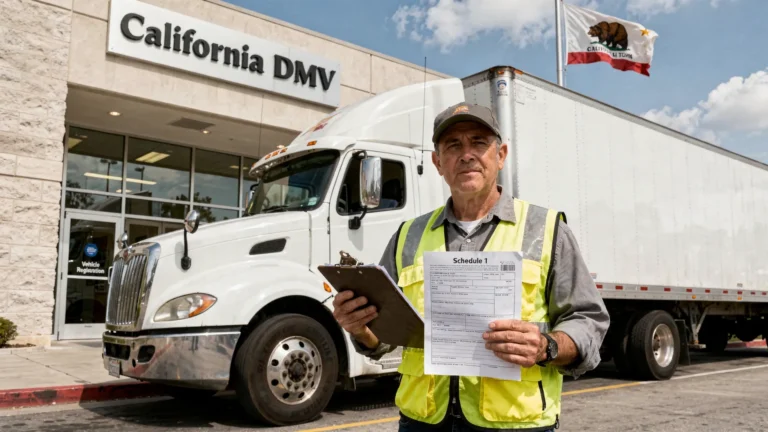
Schedule 1 (Form 2290) is your proof of filing and payment status for HVUT. After the IRS accepts your Form 2290 return, the IRS issues a stamped Schedule 1.
Illinois truck owners commonly use Schedule 1 to:
- Support vehicle registration and renewals
- Provide proof of HVUT filing when requested as part of compliance steps
- Maintain records for the tax period, especially for fleets
If you want a clearer overview of what Schedule 1 is and why it matters, see Form 2290 Schedule 1.
How long does it take to get Schedule 1?
Timing depends on IRS acceptance. E-filing typically provides faster confirmation than paper filing, and once accepted, Schedule 1 is issued electronically. Paper filing requires IRS processing first, which may take longer.
Checking your filing status
If you have recently submitted and need to check 2290 status, the key is to confirm whether the IRS has accepted the return. Many e-file systems provide status updates such as submitted, accepted, or rejected. If a return is rejected, it is important to address the rejection reason and resubmit promptly to avoid delays.
Related Form 2290 Filings for Illinois Truck Owners
Illinois fleets and owner-operators often run into situations where additional Form 2290 filings are needed after the original return is submitted. These are legitimate, IRS-recognized scenarios, and handling them correctly helps keep your Schedule 1 and records aligned.
Bulk fleet filings for multiple vehicles
If you are filing for several trucks at once, bulk filing can simplify data entry and management. SimpleForm2290 supports fleet needs through Bulk Fleet Filings, which can be useful for Illinois-based carriers managing many units.
VIN correction
A VIN error is one of the most common problems, and even a single incorrect character can cause issues when matching against registration records. If you filed with the wrong VIN, you may need a VIN correction filing.
For that situation, see: VIN Correction.
Taxable weight amendments
If your vehicle’s taxable gross weight increases during the tax period (for example, you change configuration or start hauling heavier loads that put you into a higher category), the IRS may require a taxable gross weight amendment. This filing reports the increase and pays any additional tax due for the remaining months.
Details are available here: Taxable Weight Amendments.
Other amendments and specialized filings
Other scenarios can require additional action, including certain corrections, changes, or special HVUT-related filings based on IRS rules.
For a general overview of these options, visit: Amendments, Corrections & Specialized Filings.
How SimpleForm2290 Helps Illinois Filers
Illinois truck owners and fleets usually want three things when filing: accuracy, IRS compliance, and proof of filing without unnecessary delays. SimpleForm2290 is built to support those goals with a guided online process.
Here is how the platform can help Illinois filers complete Form 2290 more smoothly:
- IRS-authorized e-filing through an approved provider, which supports compliant electronic submission
- Step-by-step guided filing to help you enter business and vehicle details in the right places
- Error checks that help catch common issues like incomplete fields or incorrect formatting before submission
- Timely access to Schedule 1 after IRS acceptance, which you can use for Illinois registration and renewal needs
- Support for fleets, including bulk filings and tools for corrections when needed
- Bilingual assistance (English/Spanish) for filers who prefer to communicate in Spanish
If you want to start an online filing, use the SimpleForm2290 e-file page: E-File Form 2290 Online. If you are evaluating providers, you can also review the main site as an IRS Authorized 2290 Efile Provider.
FAQs
Who needs to file Form 2290 in Illinois? Illinois owners of heavy highway vehicles generally must file if the vehicle has a taxable gross weight of 55,000 pounds or more and is used on public highways. This commonly includes owner-operators, fleets, and businesses that register or operate qualifying vehicles in Illinois.
When is Form 2290 due for Illinois truck owners? For many filers, the annual HVUT return for vehicles first used in July is due by August 31. If a vehicle is first used in another month, the due date is typically the last day of the month following the first used month, and the tax is generally prorated.
Can I e-file Form 2290 in Illinois? Yes. Illinois truck owners can e-file Form 2290 through an IRS-authorized provider, which is often faster and more convenient than mailing a paper return. You can file online through SimpleForm2290 here: E-File Form 2290 Online.
How do I fill out Form 2290 Illinois correctly? Start by confirming the correct EIN, VIN, taxable gross weight category, and first used month for each vehicle. Many errors come from VIN typos or choosing the wrong first used month, so matching your entries to registration documents can help reduce issues.
When will I receive my Schedule 1 after filing? You receive a stamped Schedule 1 after the IRS accepts your Form 2290 filing. With e-filing, acceptance and delivery are generally faster than paper filing, since you do not have to wait for mail processing.
What if I filed Form 2290 and need to correct something later? Depending on the issue, you may need a correction or amendment, such as a VIN correction or a taxable weight amendment. SimpleForm2290 provides options for VIN Correction and other Amendments, Corrections & Specialized Filings.
File Form 2290 in Illinois online with SimpleForm2290
If you are an Illinois-based truck owner, owner-operator, or fleet manager and need to stay compliant with federal HVUT requirements, filing accurately and on time is essential for avoiding delays and securing your proof of filing.
Complete your Form 2290 in Illinois online with SimpleForm2290 to submit through an IRS-authorized e-file provider, follow a guided filing process, and receive your Schedule 1 after IRS acceptance. Start here: E-File Form 2290 Online.