E File IRS Free: Options, Risks, and Safer Alternatives
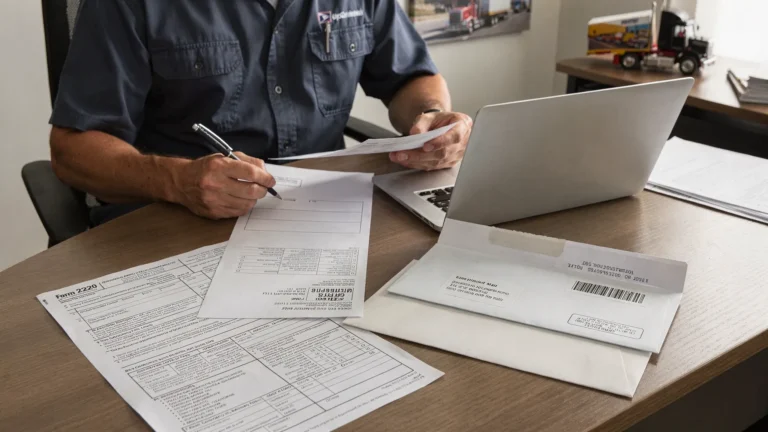
“E file IRS free” sounds simple, but it often means very different things depending on what you’re filing, and which website or app you’re using. For many taxpayers, free electronic filing is real and legitimate. For others, especially trucking businesses that need to file Form 2290 (HVUT), “free IRS e-file” can lead to confusion, delays, or even scams.
This guide breaks down:
- Legit ways to e-file with the IRS for free (and who qualifies)
- The most common “free” traps and risks
- Safer alternatives when free e-file is not available, including what truckers should do for Form 2290
What “E File IRS Free” really means (and what it does not)
When people search “e file IRS free,” they’re usually trying to do one of these:
- File a federal income tax return (Form 1040) without paying for software
- Respond to an IRS notice or submit a simple form online
- File a business or specialty tax form and avoid provider fees
Here’s the key point: the IRS does not offer one universal free e-file portal for every tax form.
- For individual federal income taxes, free options may be available through IRS programs.
- For specialty filings (like Form 2290 HVUT), e-filing typically goes through IRS-authorized e-file providers, and those providers may charge a fee.
To avoid wasting time, start by identifying which form you need to file and whether the IRS supports a free path for that specific filing.
Legit “free IRS e-file” options (by situation)
1) IRS Free File (income tax return, eligible taxpayers)
IRS Free File is the long-running program that lets eligible taxpayers file federal returns at no cost using participating software providers.
- Official IRS page: IRS Free File
- Typically aimed at taxpayers under certain income thresholds and with relatively standard filing situations
Important: Free File availability depends on eligibility rules and the provider you choose inside the program.
2) IRS Direct File (income tax return, limited eligibility and states)
IRS Direct File is the IRS’s own filing tool for certain straightforward returns, available only in participating states and for taxpayers who meet the program criteria.
- Official IRS page: IRS Direct File
Because Direct File rules can change year to year, always confirm eligibility on IRS.gov.
3) Free in-person help: VITA and TCE
If you qualify, you may be able to file with help from IRS-sponsored volunteers.
- Official IRS page: Free tax return preparation (VITA/TCE)
This is a strong option if you prefer help from a real person and want to reduce errors.
4) MilTax (free for eligible military households)
If you’re eligible, MilTax can be a no-cost filing option.
- Program info: MilTax on Military OneSource
5) Free e-filing is not guaranteed for business and excise forms
Business returns and excise tax filings often have different e-file rules. If you’re trying to file a form like Form 2290, you should assume that:
- You may need an IRS-authorized provider
- You may still need to pay the tax (HVUT) even if the software were free
For reference, here is the IRS’s overview page for HVUT:
Quick comparison: free options vs paid options
| What you’re trying to do | Is “free IRS e-file” commonly available? | Typical best starting point |
|---|---|---|
| File Form 1040 (individual income tax) | Yes, often | IRS Free File or IRS Direct File |
| Need guided help filing a basic return | Yes, if eligible | VITA/TCE |
| File as eligible military household | Yes | MilTax |
| File Form 2290 (HVUT) for heavy vehicles | Usually not free | IRS-authorized 2290 e-file provider |
The biggest risks behind “free e-file” searches
Searching for a free option is smart, but it’s also exactly what scammers and shady marketers target. Here are the most common problems people run into.
“Free” that turns into paid at checkout
Many tax sites advertise “free” but only for a narrow scenario (for example, a very simple return). Once you add common items, you may get hit with charges.
This is not always fraud, but it can waste time if you discover the true cost late.
Lookalike IRS websites and phishing
Criminals build sites that resemble IRS branding to steal:
- Social Security numbers
- EINs
- Bank account details
- Identity documents
Use IRS pages (IRS.gov) to navigate to trusted tools, and be cautious with ads and “sponsored” results.
Non-authorized e-file providers (especially for specialty forms)
For filings that require IRS authorization (including many business and excise filings), using an unknown provider can create serious issues:
- Submission failures or delays
- Poor data handling practices
- No reliable proof of acceptance
- Limited support when something is rejected
For truckers, the practical risk is simple: no accepted filing, no stamped Schedule 1, and that can delay registration and operations.
Data privacy problems
Even legitimate-looking “free” software can monetize your data through marketing partnerships. If you’re entering sensitive business details (like VINs, EIN, fleet lists), data handling matters.
Special note for truckers: can you e-file Form 2290 for free?
In most cases, you should not expect to e-file Form 2290 for free.
Why?
- Form 2290 e-filing is typically done through IRS-authorized e-file providers, not through a universal IRS “free e-file” portal.
- Even if a platform charged $0 to transmit the return, you may still owe HVUT payment to the IRS.
You can file Form 2290 by mail (paper filing), but paper filing can be much slower, especially during peak season, and you still need to wait for proof of filing.

Safer alternatives when “free” isn’t truly free
If you determine you don’t qualify for a legitimate free program, or you’re filing something like HVUT Form 2290, the goal shifts from “free” to safe, fast, and mistake-resistant.
Alternative 1: Use an IRS-authorized e-file provider (best for Form 2290)
For truck tax filings, the safest approach is usually choosing a provider that is explicitly an IRS-authorized e-file provider, and that can deliver an IRS-stamped Schedule 1 quickly after acceptance.
If you’re comparing providers, look for:
- Clear statement of IRS authorization
- Upfront pricing (not “free” with surprise upgrades)
- Strong validation to reduce rejections (VIN, EIN, tax period)
- Secure storage so you can re-download Schedule 1 later
- Support that can help quickly if you get a rejection
Alternative 2: Paper file only if timing is not critical
Paper filing may avoid software fees, but it can cost you in other ways:
- Longer processing time
- Higher chance of delays during busy periods
- Harder to correct mistakes quickly
If you need proof fast for registration, e-filing is typically the operationally safer path.
Alternative 3: Use free help programs (income tax), then pay for specialty filings separately
Some taxpayers try to find one “free” tool that does everything. In reality, many businesses do better with a split approach:
- Use a legitimate free program (like VITA or IRS Free File) for personal income tax if eligible
- Use specialized tools for specialized forms (like Form 2290)
A practical checklist: how to avoid “free e-file” traps
Before you enter any tax data, run through this short checklist:
- Start from IRS.gov when possible, especially for Free File and Direct File.
- Confirm you’re filing the right form (1040 vs 2290 matters).
- Verify the provider is IRS-authorized when authorization is relevant.
- Read pricing carefully, especially what makes the filing “not free.”
- Confirm how you will receive proof of filing (for truckers, that means stamped Schedule 1 after acceptance).
If you’re filing HVUT: what “safe and fast” should look like
For Form 2290, mistakes are expensive because they create rejections, delays, and last-minute stress near deadlines. “Safe and fast” typically includes:
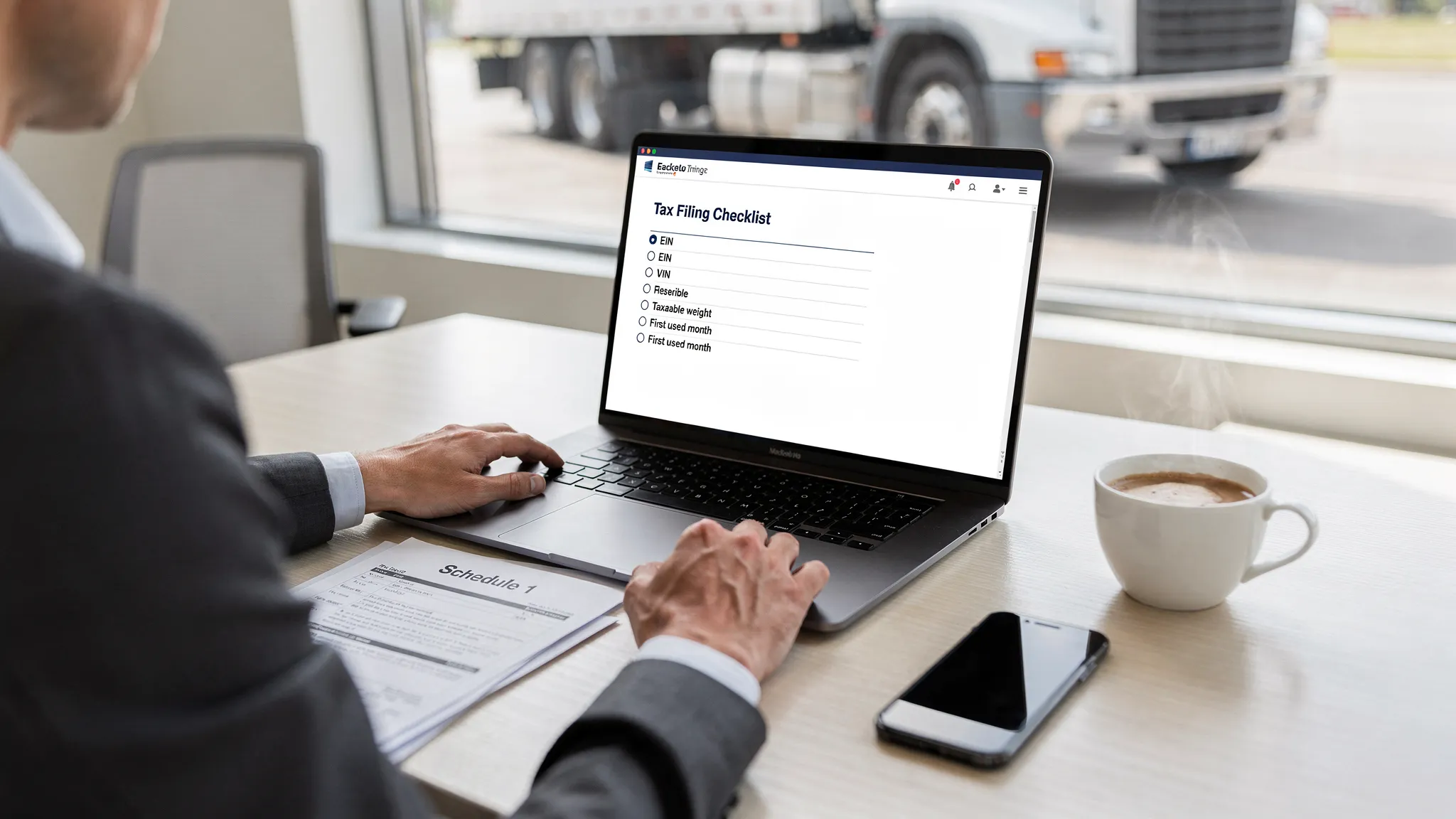
- A guided workflow that helps you enter EIN, VIN, taxable gross weight, and First Used Month correctly
- Quick access to your IRS-stamped Schedule 1 after the IRS accepts the return
- Fleet-friendly options if you’re filing multiple vehicles
- Support that can help you fix issues fast if the IRS rejects your return
If you want to double-check the official scope of the form, the IRS overview is here: About Form 2290 (IRS).
Frequently Asked Questions
Is IRS Free File actually free? Yes, IRS Free File is a legitimate IRS program, but eligibility and “free” features depend on the specific participating provider and your tax situation.
Is IRS Direct File available everywhere? No. IRS Direct File eligibility depends on your state and your tax situation. Check the current rules on the IRS Direct File page before you start.
Can I e-file Form 2290 directly with the IRS for free? Generally, no. Form 2290 e-filing is typically done through IRS-authorized e-file providers, and provider fees may apply even though the tax itself is paid to the IRS.
What is the biggest risk of using a random “free e-file” site? The biggest risks are scams, data theft, and filing problems that leave you without IRS acceptance. For truckers, that can mean delays getting the stamped Schedule 1 you need for registration.
What should I look for in a safe Form 2290 e-file provider? Look for IRS authorization, transparent pricing, strong error checks, secure document storage, and responsive support for rejections or corrections.
File Form 2290 online with a safer alternative
If you’re searching “e file IRS free” because you need a fast, reliable way to file Form 2290 (HVUT), the safer route is usually an IRS-authorized provider built specifically for truck tax filings.
Simple Form 2290 is an IRS-authorized e-file platform designed for truckers and fleet owners, with a guided online filing process, bulk filing support, secure data handling, and fast delivery of your IRS-stamped Schedule 1 after acceptance.
Get started here: SimpleForm2290.com