E-File Florida Form 2290 Online
E-File Florida Form 2290 Online
Florida’s trucking industry runs on tight schedules, from Florida City to Pensacola and along I-95, I-75, and I-10. If your heavy vehicle is registered in Florida or operates on Florida public highways, the federal Heavy Vehicle Use Tax, reported on IRS Form 2290, likely applies. Filing correctly and on time keeps you compliant and helps you register or renew with the state. This page explains who must file, what Florida-based owners need to know, and how to e-file quickly and accurately with SimpleForm2290.com, an IRS Authorized 2290 Efile Provider.

Who Needs to File Form 2290 in Florida
IRS Form 2290 is required for most owners of heavy highway motor vehicles used on public roads. In Florida, that generally includes:
- Individuals, owner-operators, fleets, and businesses that register or operate a vehicle in Florida with a taxable gross weight of 55,000 pounds or more.
- Vehicles that are used on public highways during the tax period that runs from July 1 through June 30 of the following year.
- New or newly acquired vehicles, once they first operate on a public highway.
Key points for Florida truck owners and businesses:
- Taxable gross weight is the combined weight of the vehicle, trailer, and the heaviest load typically carried. If this total is 55,000 pounds or more, Form 2290 applies.
- Some vehicles are taxed at a reduced rate, such as certain logging vehicles. Some vehicles are suspended from tax if they do not exceed the mileage limit, typically 5,000 miles for the year, or 7,500 miles for certain agricultural vehicles. Suspended vehicles still require filing to report the suspension.
- Certain government and nonprofit entities may be exempt from paying the tax. However, filings are often still required to claim exemption or to report suspended status. When in doubt, review IRS rules or consult a tax professional.
For a refresher on the Heavy Vehicle Use Tax rules, see our overview of HVUT.
Florida Form 2290 Filing Requirements
Florida filers follow federal IRS rules. The most important requirements are taxable gross weight, the first used month, accurate identification details, and correct payment.
- Taxable gross weight: Determine your vehicle’s weight category based on the combined weight with the heaviest typical load. Your category drives the HVUT amount owed. Vehicles under 55,000 pounds generally do not owe HVUT.
- First used month, FUM: The due date is the last day of the month after the month your vehicle first operates on a public highway in the tax year. Example, if you first used a vehicle in December 2025, your return and any tax are due by January 31, 2026.
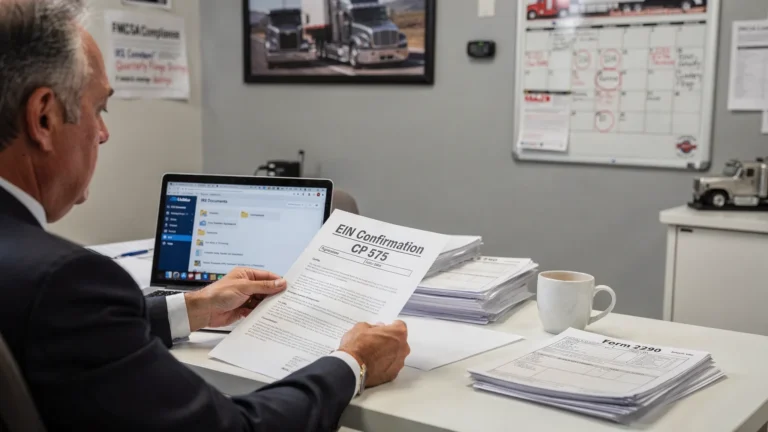
- Identification details: You must use an EIN, not an SSN. You also need your business name and address, VINs, weight category, logging status if applicable, and the month first used for each vehicle.
- Form 2290 Florida payment: You can pay the IRS by direct debit from your bank account when you e-file, through EFTPS, or by credit or debit card using IRS-authorized processors. Paper filers can mail a check or money order with the voucher if applicable.
Below is a quick view of how first used month ties to due date. This schedule applies to Florida and every state since HVUT is federal.
| First used month | Filing and payment due date |
|---|---|
| July | August 31 |
| August | September 30 |
| September | October 31 |
| October | November 30 |
| November | December 31 |
| December | January 31 |
| January | February 28 or 29 |
| February | March 31 |
| March | April 30 |
| April | May 31 |
| May | June 30 |
| June | July 31 |
Follow these plain-language Form 2290 Florida instructions to stay compliant: determine vehicle weight and usage status, identify the first used month, complete the form with your EIN and VINs, choose an IRS payment method, submit the return, then keep your Schedule 1 for registrations and audits.
How to File Form 2290 in Florida
Florida truck owners can file by mail or online. Paper filing is allowed, but electronic filing is faster and provides quicker proof of payment. The IRS requires e-filing if you are reporting 25 or more vehicles on a single return. Even for one truck, e-filing is the practical choice.
To e-file, use our IRS authorized Form 2290 e-file Florida service at E-File Form 2290 Online. The process is straightforward:
- Create or sign in to your SimpleForm2290 account.
- Enter business details and EIN, then add vehicles, VINs, first used month, and weight categories, including logging status if applicable.
- Review your calculated HVUT for accuracy and select how you want to pay the IRS, for example direct debit or EFTPS.
- Submit securely to the IRS. After IRS acceptance, your Schedule 1 is delivered to your dashboard and email in minutes.
If you prefer to mail a paper return, see our guide to the IRS Mailing Address for Form 2290. Allow additional time for mailing and processing, and remember to retain proof of timely mailing if you are close to a deadline.
Printable Form 2290 Florida vs Online Filing
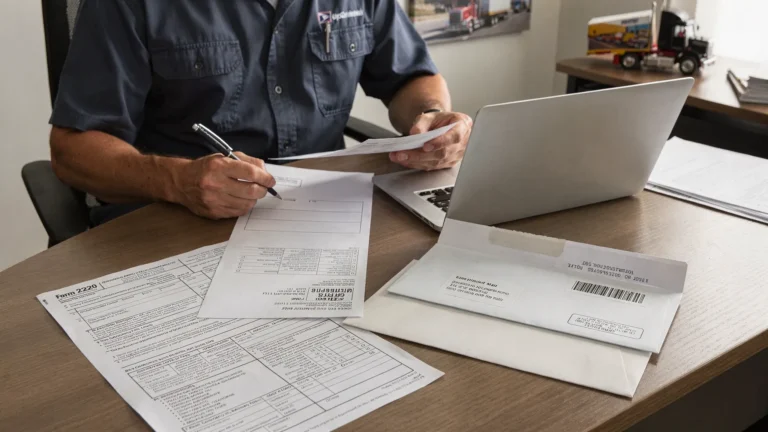
Some Florida filers ask for a printable Form 2290 Florida packet. Paper filing remains an option, but it requires manual form completion, printing, and mailing to the IRS, and typically takes longer to process. You will also need to include the proper payment voucher if paying by check or money order.
Online filing offers faster acknowledgements, automated error checks, and quicker access to proof of payment. With SimpleForm2290, you can complete your Florida Form 2290 filing online, pay the IRS through accepted methods, and receive your Schedule 1 electronically as soon as the IRS accepts your return. If you still want to maintain a paper copy for your records or for a Florida registration visit, you can download and print the Schedule 1 from your account at any time.
For those who must or choose to mail, verify the correct IRS processing address on our IRS Mailing Address page and allow sufficient mailing time.
Schedule 1 and Proof of Filing in Florida
Schedule 1 is the official IRS proof that your Form 2290 was filed and accepted. It includes your business information, the vehicle identification numbers you reported, the tax year, and an IRS e-file watermark if filed electronically. Florida truck owners use this document when registering vehicles, renewing plates, or updating IRP accounts. Keep a digital copy and a printed copy readily available.
- After the IRS accepts your return, Schedule 1 is available within minutes when you e-file.
- You can present the digital or printed Schedule 1 at Florida tag and tax collector offices that request proof of HVUT payment.
- If you amend a return or correct a VIN, you will receive an updated Schedule 1 after the IRS processes the change.
Learn more about what appears on the document and how it is used at Form 2290 Schedule 1.
How SimpleForm2290 Helps Florida Filers
SimpleForm2290.com provides a secure, guided way to complete HVUT Form 2290 Florida filings accurately and on time. As an IRS Authorized 2290 Efile Provider, our platform is designed for Florida owner-operators, fleets, and businesses that value speed and compliance.
What you can expect when you file 2290 in Florida with SimpleForm2290:
- Easy online filing portal with step-by-step prompts that reduce common errors.
- Instant Schedule 1 delivery in minutes after IRS acceptance, ready to print for Florida registration needs.
- Bulk vehicle filings and a fleet management dashboard that help Florida carriers keep multiple trucks up to date.
- Professional customer support and bilingual help in English and Spanish.
- Secure data storage and retrieval, so prior-year returns and Schedule 1 documents are available when you need them.
- Affordable flat pricing and clear, IRS-compliant workflows.
If you are looking for clear, Florida-ready instructions and a fast path to your Schedule 1, our E-File Form 2290 Online service is built for you.
FAQs
Who needs to file Form 2290 in Florida? Owners of heavy highway vehicles used on public roads with a taxable gross weight of 55,000 pounds or more must file. This includes Florida-based owner-operators, fleets, and businesses that register or operate qualifying vehicles in the state.
When is Form 2290 due for Florida truck owners? The due date is the last day of the month after the month the vehicle is first used on a public highway in the tax year. For example, a truck first used in July is due by August 31, and a truck first used in December is due by January 31 of the following year.
Can I e-file Florida Form 2290 online? Yes. E-filing is the fastest and most reliable method. Florida filers can submit through our IRS-authorized service at E-File Form 2290 Online and receive Schedule 1 in minutes after IRS acceptance.
Is a printable Form 2290 Florida still accepted by the IRS? Paper filing is allowed. If you mail a paper return, use the correct IRS processing address, which you can find on our IRS Mailing Address page, and allow extra time for delivery and processing.
When will I receive my Schedule 1 after filing? With e-file, most accepted returns generate an electronic Schedule 1 within minutes. Paper filings take longer because of mailing and manual IRS processing.
What information do I need to file 2290 in Florida? Have your EIN, business details, VINs, taxable gross weight categories, logging or agricultural status if applicable, the first used month, and your chosen IRS payment method ready. Accurate information helps prevent IRS rejects and delays.
File 2290 Florida with Confidence
Stay compliant and keep your Florida trucks on the road. E-File Florida Form 2290 Online today with SimpleForm2290.com, an IRS Authorized 2290 Efile Provider. Our guided workflow helps you enter the right details, choose a valid IRS payment option, and access your Schedule 1 quickly after IRS acceptance. Start now at E-File Form 2290 Online to complete an accurate, IRS-compliant filing on time.