Where to Find Your VIN Number for Form 2290 Filing
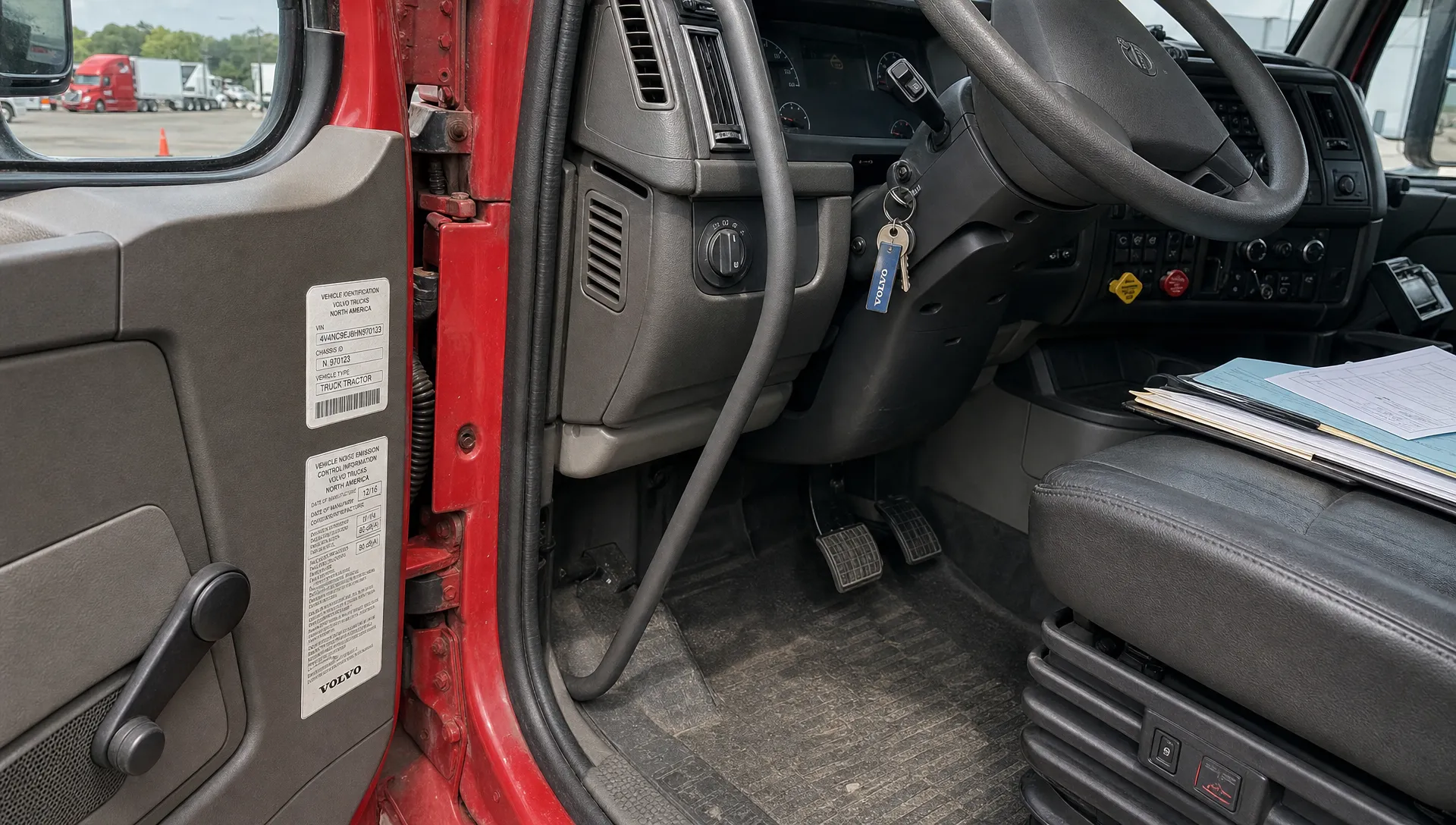
If you are filing Form 2290 and the portal asks for your VIN, do not guess from memory. One wrong character can delay your stamped Schedule 1 or force you to file a correction later. The fastest answer is simple: for most trucks, the VIN is on the lower driver-side dashboard, visible through the windshield, or on the driver’s side door jamb.
That said, heavy trucks, older tractors and paperwork records can make the search a little less obvious. This guide explains where to find vin number details for Form 2290 filing, how to verify the number before you submit and what to do if you already filed with a mistake.
Quick answer: where to find vin number for Form 2290
For Form 2290, the VIN you enter should match the truck’s official vehicle identification number, not the license plate, unit number, engine serial number or trailer VIN. On most trucks, check these places first:
| VIN location | Where to look | Best for |
|---|---|---|
| Dashboard | Lower-left corner on the driver’s side, visible through the windshield | Fastest physical check |
| Driver’s door jamb | Sticker or metal plate on the door post, latch area or inside edge of the door | Clear copy for filing |
| Registration | State registration card or cab card | Matching DMV records |
| Title | Vehicle title document | Official ownership record |
| Insurance card | Current insurance policy card or app | Quick paperwork check |
| Under the hood | Plate near the firewall or front engine area | Older or heavy-duty trucks |
| Frame stamp | Stamped into the frame, often near front wheels | Older trucks, rebuilds or unclear plates |
If you are wondering where to find vin number information while sitting in the cab, start with the dashboard and door jamb. If the plate is faded, dirty or blocked, compare it with your title, registration and insurance card before you file.
Why the VIN matters for Form 2290
Form 2290 is used to report and pay the Heavy Vehicle Use Tax, often shortened to HVUT, for taxable highway motor vehicles. If your vehicle has a taxable gross weight of 55,000 pounds or more and is used on public highways, you generally need to file Form 2290 and get a stamped Schedule 1.
That stamped Schedule 1 is often required when you renew tags, register a truck or complete IRP-related work. If the VIN is wrong, the Schedule 1 may not match your registration record. That is why where to find vin number is more than a basic lookup question. It can affect whether your registration office accepts your proof of payment.
The IRS Form 2290 tax period generally runs from July 1 through June 30. For a vehicle first used in July, the usual filing deadline is August 31. For a truck first used in another month, the deadline is generally the last day of the month after the month of first use. You can review the official form 2290 irs instructions before filing if your truck has a special situation.
What your truck VIN should look like
A VIN is usually a 17-character code made up of letters and numbers. Vehicles made before the 1981 model year may have a shorter VIN, but modern commercial trucks normally use the 17-character format. According to NHTSA’s VIN guidance, the VIN helps identify the vehicle’s manufacturer, attributes and unique serial sequence.
A few practical tips help avoid common Form 2290 errors:
- VINs do not use the letters I, O or Q in the standard 17-character format.
- A zero and the letter O are easy to confuse on paperwork, but the letter O should not appear in a modern VIN.
- A VIN is not the same as a license plate number, DOT number, unit number or engine number.
- If your title and dashboard do not match, pause and verify the record before filing.
If you are filing for multiple units, build a clean spreadsheet from official records rather than copying old tax filings from memory. This is especially helpful for fleet owners using bulk vehicle filings.
Common truck VIN locations to check first
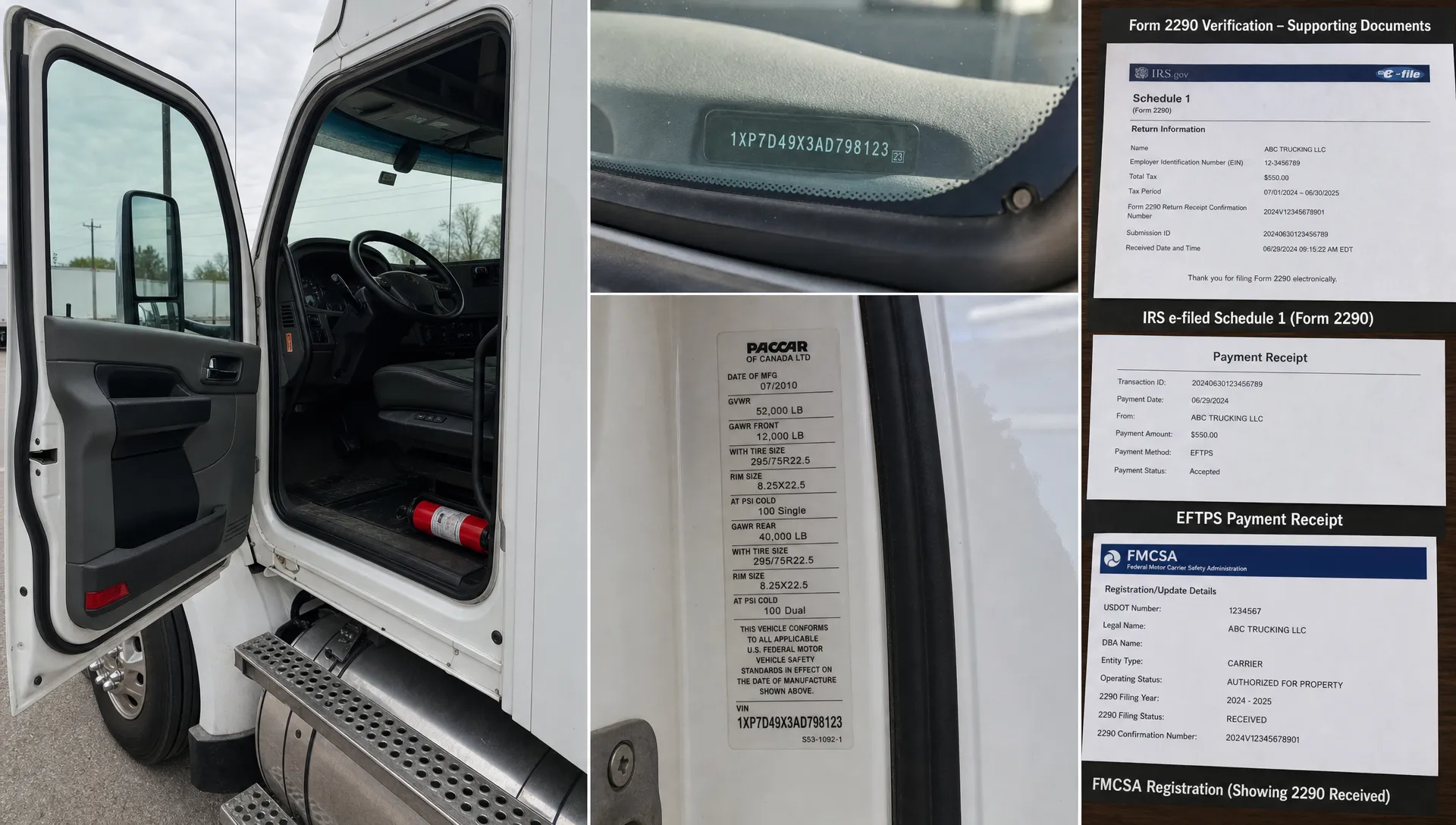
When a truck is parked outdoors, the dashboard VIN is usually the easiest place to start. Stand outside the driver’s side windshield and look down at the lower corner of the dashboard. You should see a metal plate or printed tag.
Next, open the driver’s door. Look along the door jamb, door post and latch area. Many trucks have a manufacturer label there with the VIN, weight ratings and other vehicle information. The Texas Department of Motor Vehicles also lists the dashboard and driver-side door frame among the common places to find a VIN, which is consistent with most passenger and commercial vehicles.
If those spots are unreadable, move to secondary physical locations. Some heavy-duty trucks and older vehicles may have a plate under the hood near the firewall, a tag near the engine compartment or a frame stamp. Frame stamps can be dirty, painted over or partially hidden, so use good lighting and clean the area carefully.
For a semi truck vin number, the door jamb label is often the cleanest source because it may show the VIN along with GVWR and manufacturer details. If you cannot read that label, the title and registration become more important.
Paperwork and digital records that usually show the VIN
If you are not near the truck, your paperwork can save time. The VIN usually appears on your registration, vehicle title, insurance card, purchase documents and sometimes inside fleet management records. For owner-operators, the insurance card may be the quickest option. For fleets, your dispatch or maintenance system may already store each unit’s VIN.
This is often the easiest answer to where to find vin number when the truck is on the road and you are filing from home or the office. Just make sure the document belongs to the correct power unit. Trailers have their own VINs, and you should not enter a trailer VIN on Form 2290 for the truck.
Before filing, compare at least two sources if possible. A good check is dashboard VIN plus registration, or door jamb label plus title. If all sources match, you can file with more confidence.
How to verify a VIN before filing Form 2290
A quick VIN review can prevent a correction later. You do not need to be a mechanic to do it. Read the VIN slowly, type it once, then compare every character against a second record.
For trucks with unclear plates or inconsistent documents, a semi truck vin search can help you confirm basic vehicle details. A heavy truck vin decoder may show manufacturer and model information, which can help catch obvious typing errors. A decoder is not a replacement for official DMV or title records, but it is useful when you want a quick sanity check before filing.
Some owner-operators also use a vin check for semi trucks before buying a used truck or adding it to a fleet. If the VIN returns details that do not line up with the vehicle in front of you, stop and investigate. You may be looking at a paperwork error, a replaced cab, a rebuilt unit or simply the wrong document.
Here is a simple pre-filing check:
| What to check | Why it matters for Form 2290 |
|---|---|
| VIN has 17 characters for most modern trucks | Helps catch missing or extra characters |
| VIN on truck matches title or registration | Helps prevent Schedule 1 mismatch |
| EIN is active and correct | The IRS uses EIN for Form 2290, not SSN |
| First used month is correct | Determines filing period and deadline |
| Taxable gross weight is correct | Determines tax amount or suspended status |
If you still need an EIN before filing, you can review how to apply for ein. If the truck’s weight category or suspended status is your concern, double-check the taxable gross weight before submitting.
Florida truckers: VIN checks and DMV verification
If your truck is titled, registered or inspected in Florida, you may see terms like vin check florida or florida dmv vin verification while searching for help. These searches usually relate to confirming that the VIN on the vehicle matches DMV paperwork, especially when a vehicle comes from out of state or has a title issue.
A vin check florida can be useful when your Form 2290 Schedule 1, title and registration do not line up. Florida agencies may require specific verification steps depending on the transaction, so use official Florida DMV or tax collector guidance for your registration work.
For Form 2290 filing, your goal is simpler: enter the VIN exactly as it appears on the official truck record. If you complete a florida dmv vin verification for registration purposes, keep a copy of that verified record with your tax documents. It can help if you later need to prove that the VIN on your stamped Schedule 1 is correct.
What if you typed the wrong VIN on Form 2290?
Mistakes happen, especially when filing late at night or entering a long list of vehicles. If you discover the VIN is wrong after the IRS accepts your return, you usually need a VIN correction rather than a brand-new regular filing for the same truck.
A 2290 vin correction is used when the tax was filed and paid under the right vehicle but one or more VIN characters were entered incorrectly. For example, you may have typed 5 instead of S, skipped a digit or copied the wrong line from a spreadsheet. Simple Form 2290 offers a dedicated VIN Correction option if you need to fix a submitted VIN.
A 2290 vin correction is not the same as adding a new vehicle, changing ownership or correcting the taxable weight after the truck’s category changed. If the taxable gross weight increased or a suspended vehicle exceeded the mileage limit, that is a different amendment type.
VIN and Form 2290 terms you may see online
Truck tax language can get messy because people search for the same filing in different ways. You may see “heavy highway use tax form 2290,” “hvut form 2290,” “hvut 2290 form,” “hvut 2290,” “2290 highway tax” or “form 2290 heavy highway vehicle use tax return.” These all point to the same general federal truck tax filing handled through IRS Form 2290.
You may also see searches like “what is 2290 form” and “what is form 2290.” In plain English, Form 2290 is the return used to report and pay heavy vehicle use tax for qualifying highway motor vehicles. The IRS-stamped Schedule 1 is your proof that the return was accepted.
Some searches are about filing method, such as “form 2290 e file,” “e file 2290” and “irs form 2290 online.” If you want to file quickly, an IRS-authorized online provider is usually the fastest path. If you prefer reviewing a printable version first, you can look at the IRS Form 2290 PDF, but mailing a paper return is generally slower than e-filing.
You may also run into related tax terms like EFTPS, IFTA and Form 720. EFTPS is the Electronic Federal Tax Payment System. IFTA is separate from HVUT and deals with interstate fuel tax reporting. Form 720 is a different federal excise tax return. None of those replace Form 2290 when your heavy highway vehicle is subject to HVUT.
Filing Form 2290 after you confirm your VIN
Once you know where to find vin number details and have verified the truck record, filing is straightforward. You will usually need your business name, EIN, address, VIN, first used month and taxable gross weight. If you are filing for a fleet, prepare the VIN list before you start so you do not have to switch between documents.
With Simple Form 2290, you can file online through an IRS-authorized e-file provider and receive your stamped Schedule 1 after IRS acceptance. If cost is your priority, you can use the cheapest 2290 e file online option and still keep the process guided. Once accepted, your form 2290 Schedule 1 is the document most DMVs and registration offices want to see.
The biggest filing tip is boring but valuable: slow down on the VIN entry screen. One careful minute can save you from a correction later.
When a semi truck VIN is hard to read
Older tractors, rebuilt trucks and work units with years of road grime can make the VIN harder to find. If the plate is faded, do not scrape aggressively or damage the label. Clean gently, use a flashlight and take a clear photo. Zooming in on a photo is often easier than bending over the windshield or door jamb while typing.
If you are still asking where to find vin number records after checking the dashboard and door, use the title or state registration as your next source. If the paperwork does not match the truck, contact the DMV, seller, lender or insurance company before filing.
A second semi truck vin search may help you compare the VIN against basic vehicle information, and another heavy truck vin decoder can catch a VIN that does not decode cleanly. For purchase due diligence, a vin check for semi trucks can also help identify record conflicts before they become tax or registration problems.
For a second semi truck vin number check, ask someone else to read the VIN aloud while you verify it on the filing screen. It sounds old-fashioned, but it works.
Frequently Asked Questions
Where do I find my truck VIN number? The most common locations are the lower driver-side dashboard visible through the windshield and the driver’s side door jamb. You can also find it on the title, registration or insurance card.
Where to find VIN number on paperwork? Check your vehicle registration, title, insurance card, purchase agreement or fleet records. For Form 2290, make sure the VIN belongs to the truck, not the trailer.
Where can I find a copy of my 2290? If you filed online, log in to the e-file account you used and download your accepted return or stamped Schedule 1. If you filed by mail, you may need to check your paper records or contact the IRS.
How to correct VIN on Form 2290? File a VIN correction if the return was accepted but the VIN was typed incorrectly. Do not file a duplicate regular return for the same vehicle just to fix a character.
How can I find out if my 2290 was paid? Your IRS-stamped Schedule 1 is the main proof that Form 2290 was accepted. You can also check your e-file account, bank record or EFTPS payment history if you paid through EFTPS.
Does Form 2290 need to be filed every year? Yes, if the vehicle is subject to HVUT for the tax period. The Form 2290 tax year generally runs July 1 through June 30, and the filing deadline depends on the vehicle’s first used month.
Where to find vin number if the dashboard plate is unreadable? Check the driver’s door jamb, title, registration, insurance card, under-hood plate or frame stamp. If records conflict, verify with your DMV or title office before filing.
File with the right VIN the first time
Knowing where to find vin number information before you start Form 2290 filing keeps the process smooth. Check the dashboard, door jamb and official paperwork, then compare every character before submitting.
When you are ready, Simple Form 2290 gives truckers and fleet owners a guided online filing process, affordable flat pricing, bulk vehicle filing support and fast Schedule 1 delivery after IRS acceptance. If you already found an error, use the VIN correction option instead of guessing your way through another return.