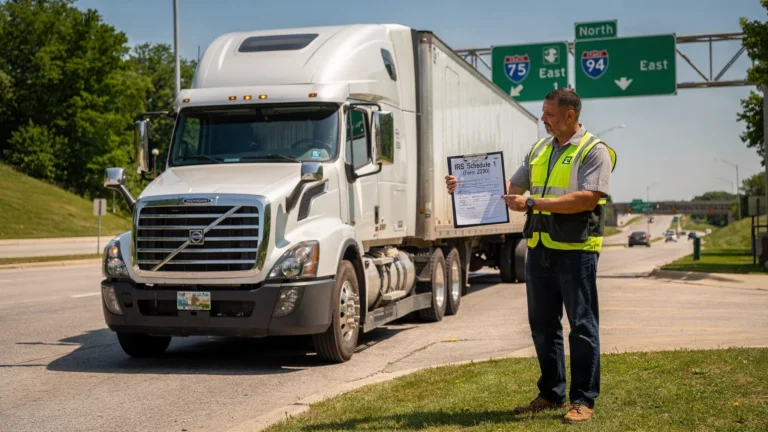
IRS Installment Form: Can You Use It for 2290 Tax?
If you are searching for an IRS installment form because your Form 2290 Heavy Vehicle Use Tax bill is more than you can pay right now, here is the key point: an installment agreement is not a normal payment option inside Form 2290 filing.
You still need to file Form 2290 by the deadline, even if you cannot pay the full HVUT amount immediately. After that, if a balance remains, you may need to work directly with the IRS to discuss available payment arrangements, eligibility, penalties, and interest.
This guide explains what the IRS installment form is, how it relates to Form 2290, what payment options are actually available for HVUT, and what truck owners should do if they cannot pay in full.
What Is the IRS Installment Form?
When people say “IRS installment form,” they are usually referring to IRS Form 9465, Installment Agreement Request. This form is used to ask the IRS for permission to pay certain federal tax balances over time.
The IRS also offers an Online Payment Agreement application for eligible taxpayers. Whether you qualify depends on the type of tax, the amount owed, your filing status, your business situation, and whether you are current with required IRS filings.
However, Form 9465 is not the same thing as Form 2290, and it is not one of the built-in payment methods when filing the Heavy Highway Vehicle Use Tax return.
Quick Answer: Can You Use an IRS Installment Form for 2290 Tax?
Not as a direct Form 2290 payment method. Form 2290 does not let you select “installment agreement” as the payment option when you file.
For Form 2290, the IRS recognizes standard HVUT payment methods such as:
- Electronic Funds Withdrawal, if supported during e-filing
- Electronic Federal Tax Payment System, known as EFTPS
- Credit or debit card through an IRS-approved card processor
- Check or money order with Form 2290-V, when mailing payment
If you cannot pay the full 2290 tax, the practical approach is usually to file Form 2290 on time anyway, pay as much as possible, and contact the IRS about any remaining balance or payment arrangement options.
An installment request does not replace Form 2290 filing. It also does not automatically remove penalties or interest.
Why Form 2290 Is Different From Many Other Tax Bills
Form 2290 is used to report and pay the Heavy Highway Vehicle Use Tax, or HVUT. It generally applies to highway motor vehicles with a taxable gross weight of 55,000 pounds or more that are used on public highways.
The IRS Form 2290 tax year runs from July 1 through June 30. For vehicles in use at the beginning of the tax year, the common annual deadline is typically August 31, unless the date shifts because of a weekend or legal holiday. For vehicles first used later in the tax year, the return is generally due by the last day of the month following the vehicle’s first-used month.
Form 2290 is also tied closely to truck registration. Most DMV and IRP offices require a stamped Schedule 1 as proof that the return was accepted by the IRS for the vehicle and tax period.
That is why delaying the return while you look for an installment option can create bigger problems. You may face IRS penalties, interest, and registration delays.
For deadline details, see our guide to Form 2290 due dates.
IRS Installment Form vs. Form 2290-V vs. Form 2290
These forms are often confused, but they do very different jobs.
| Form or method | Main purpose | Does it file Form 2290? | Does it create an installment plan? |
|---|---|---|---|
| Form 2290 | Reports HVUT and vehicle details to the IRS | Yes | No |
| Schedule 1 | Proof of IRS acceptance for listed vehicles | No | No |
| Form 2290-V | Payment voucher for check or money order payments | No | No |
| Form 9465 | Requests an IRS installment agreement for eligible tax debts | No | Potentially, if IRS approves |
| EFTPS | Pays federal taxes electronically | No | No |
The most important distinction is this: Form 2290-V is only a payment voucher, not an installment agreement request. If you mail Form 2290-V with a partial payment, that does not automatically mean the IRS has approved monthly payments.
What Happens If You File Form 2290 but Cannot Pay the Full Tax?
If you cannot pay the full HVUT amount, filing on time is still important. Late filing and late payment can both create additional costs.
The IRS generally encourages taxpayers to file required returns on time and pay as much as they can by the deadline. If the full amount is not paid, the IRS may send a balance-due notice. At that point, you may be able to contact the IRS to discuss payment options.
For Form 2290 issues, you can also contact the IRS excise tax support line listed in IRS resources. Keep your EIN, business name, VIN, tax period, and any IRS notice ready before calling.
A payment arrangement may help you manage cash flow, but it does not change the original filing deadline. Interest and penalties may continue until the balance is paid, depending on your situation.
Do You Need to Pay in Full to Get Schedule 1?
When you e-file Form 2290 through an IRS-authorized provider, the IRS typically returns a stamped Schedule 1 after accepting the return. That Schedule 1 is what truck owners usually need for DMV or IRP registration.
However, Schedule 1 should not be treated as a free pass to ignore the tax balance. If the payment fails, is not scheduled correctly, or remains unpaid, the IRS can still pursue the balance, penalties, and interest.
In other words, the filing process and payment process are connected, but they are not the same thing. A stamped Schedule 1 proves IRS acceptance of your Form 2290 return. It does not mean the IRS has approved an installment plan.
Best Steps If You Cannot Pay Your 2290 Tax in Full
If your HVUT bill is due and you are short on cash, do not wait until the deadline passes. Use a practical filing-first approach.
1. Confirm the correct HVUT amount
Before assuming the tax is unaffordable, make sure it is calculated correctly. HVUT depends on taxable gross weight, whether the vehicle is logging or non-logging, and the first-used month.
A vehicle at 75,000 pounds or more is generally in the highest non-logging tax category, while lower weight categories may owe less. A vehicle first used later in the tax year may qualify for a prorated amount.
You can review the calculation basics in our guide on how to calculate HVUT tax for Form 2290.
2. File Form 2290 by the deadline
Filing late can create penalties even if you later arrange payment. If you need your Schedule 1 for registration, filing on time is even more important.
E-filing is usually the fastest route because paper filing can take weeks, especially during peak HVUT season. With Simple Form 2290, truck owners and fleets can file online through an IRS-authorized platform and receive Schedule 1 after IRS acceptance.
3. Pay as much as you can by the due date
If you cannot pay the full amount, paying part of it may reduce the unpaid balance on which penalties and interest can accrue. Choose the payment option that fits your situation, such as EFTPS, card payment, or direct debit when available.
If you use EFTPS, remember that enrollment and payment scheduling can take time. Waiting until the final evening before a due date can create settlement timing problems.
For a detailed walkthrough, see our guide on how to pay Form 2290 on EFTPS.
4. Contact the IRS about the remaining balance
If a balance remains unpaid, contact the IRS or use official IRS payment-plan tools to see whether a payment arrangement is available for your situation.
Do not assume approval. IRS installment agreements are subject to IRS rules, and not every taxpayer or tax type is handled the same way. If you receive a notice, follow the instructions on the notice and respond by the stated deadline.
5. Keep all records together
Save your filed Form 2290, stamped Schedule 1, payment confirmation, EFTPS receipt if applicable, card payment receipt, IRS notice, and any installment agreement correspondence.
For fleets, this is especially important because registration offices may request Schedule 1 by VIN, and IRS notices may arrive weeks after the return was accepted.
Common Mistakes to Avoid
The biggest mistake is waiting to file Form 2290 because you are still figuring out how to pay. Filing and payment are both important, but missing the filing deadline can make the situation worse.
Another common mistake is mailing the wrong form. Form 9465 does not replace Form 2290. Form 2290-V does not create a payment plan. If you need Schedule 1, you must file Form 2290 correctly.
Truck owners also run into problems when they use the wrong EIN, enter an incorrect VIN, choose the wrong first-used month, or select the wrong taxable weight category. These errors can delay IRS acceptance and create registration problems, even if your payment plan question is separate.
If you are unsure whether your return has been accepted, learn how to check your 2290 filing status.
Payment Options for Form 2290 Compared
The IRS gives truck owners several ways to pay HVUT, but none of the standard filing payment methods are the same as an installment agreement.
| Payment option | Best for | Key point |
|---|---|---|
| Electronic Funds Withdrawal | Filers who want payment drafted from a bank account during e-filing | Payment information is submitted with the e-filed return |
| EFTPS | Businesses that already use federal electronic tax payments | Must be scheduled correctly and on time |
| Credit or debit card | Filers who want a card payment option | Processed through IRS-approved card processors, fees may apply |
| Check or money order with Form 2290-V | Filers mailing payment separately | Slower than electronic options and not an installment plan |
| IRS payment arrangement | Taxpayers with unpaid balances who qualify | Separate from filing Form 2290 and subject to IRS approval |
For most truck owners who need Schedule 1 quickly, the best workflow is to e-file Form 2290 first, choose a valid IRS payment method, and handle any unpaid balance directly with the IRS.
Can an Installment Agreement Help You Avoid Form 2290 Penalties?
An installment agreement may help you manage repayment of an IRS balance, but it does not erase the original Form 2290 due date.
If Form 2290 is filed late, the IRS may assess a late-filing penalty. If tax is paid late, the IRS may assess late-payment penalties and interest. Penalty rules can vary based on the facts, and relief may be available in certain situations, such as reasonable cause or first-time penalty relief.
The safest approach is to file on time, pay as much as possible, and communicate with the IRS before the issue grows. If you already received a penalty notice, review our guide to Form 2290 penalties and waiver options.
When You Should Contact the IRS Directly
You should contact the IRS directly if you need approval for a payment plan, have received a balance-due notice, believe a payment was misapplied, or need penalty relief.
Simple Form 2290 can help you prepare and e-file Form 2290, retrieve Schedule 1, manage vehicle filings, and avoid common filing errors. But payment-plan approval comes from the IRS, not from an e-file provider.
Before contacting the IRS, gather:
- Your EIN and legal business name
- The tax year and first-used month
- VINs connected to the return
- Amount paid and amount still owed
- EFTPS, card, or check payment confirmation
- Any IRS letter or notice number
Having this information ready can make the call more productive and reduce back-and-forth delays.
Bottom Line for Truck Owners
You cannot simply use an IRS installment form as a built-in payment option for Form 2290. The 2290 return must still be filed, and HVUT is still due by the applicable deadline.
If you cannot pay the full amount, file Form 2290 on time, pay as much as possible, keep your records, and contact the IRS about any available payment arrangement. Do not use Form 9465 or Form 2290-V as a substitute for filing the actual return.
For truckers and fleet owners, the priority is clear: protect your registration timeline by getting Form 2290 accepted and Schedule 1 issued, then address any remaining balance through official IRS channels.
Frequently Asked Questions
What is the IRS installment form called? The IRS installment form is commonly Form 9465, Installment Agreement Request. It is used to request monthly payments for certain eligible IRS tax balances, but it is not the same as Form 2290 or Form 2290-V.
Can I select an installment agreement when e-filing Form 2290? No. Installment agreement is not a standard Form 2290 payment option. When filing Form 2290, you generally choose from payment methods such as Electronic Funds Withdrawal, EFTPS, card payment, or check or money order with Form 2290-V.
Should I still file Form 2290 if I cannot pay the full HVUT amount? Yes. Filing on time is important even if you cannot pay in full. Late filing can create additional penalties, and you may need an accepted Schedule 1 for vehicle registration.
Is Form 2290-V an installment payment form? No. Form 2290-V is a payment voucher used when paying HVUT by check or money order. It does not request or approve a monthly IRS payment plan.
Will an IRS installment agreement stop interest on 2290 tax? Not necessarily. Interest and some penalties may continue until the balance is paid. The exact treatment depends on IRS rules and your specific situation.
Can Simple Form 2290 set up an IRS installment agreement for me? Simple Form 2290 helps truck owners and fleets e-file Form 2290 through an IRS-authorized platform and receive Schedule 1 after IRS acceptance. IRS installment agreement approval must be handled directly through the IRS.
File Form 2290 Online and Get Schedule 1 Fast
If you need to file Form 2290, do not let payment-plan questions delay your return. Simple Form 2290 gives truck owners and fleet managers an easy online filing portal, step-by-step guidance, secure data retrieval, bulk vehicle filing, bilingual support, and fast Schedule 1 delivery after IRS acceptance.
Start your Form 2290 e-file with Simple Form 2290 and keep your HVUT filing and registration process moving.