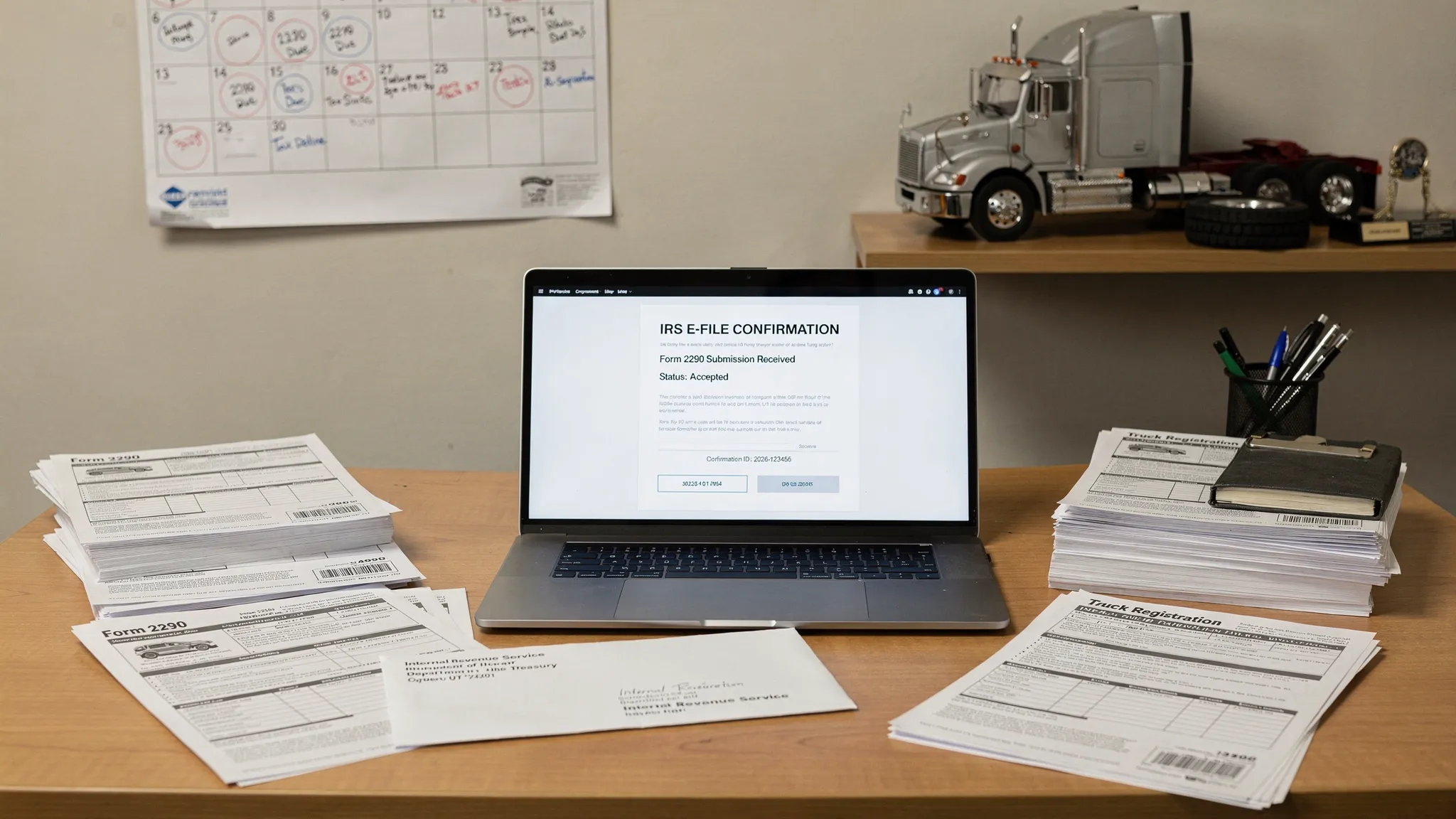
When to Mail In Tax Forms Instead of E-Filing
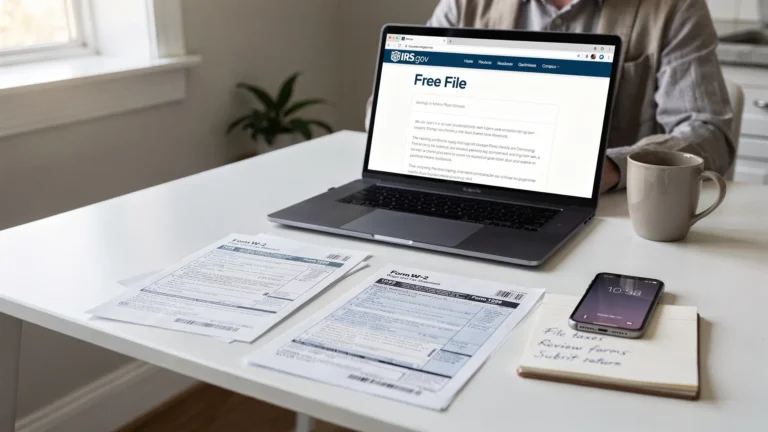
E-filing is the default choice for most truck tax situations because it is faster, easier to track, and less likely to create registration delays. Still, there are valid times when you may need to mail in tax forms instead of submitting them online.
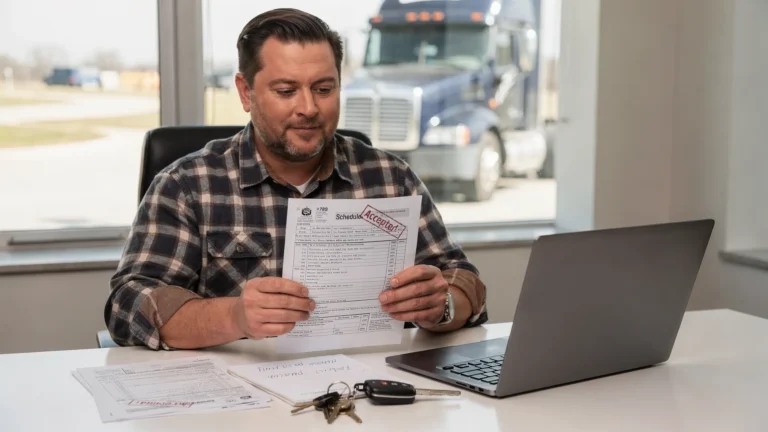
The key is knowing the difference between a smart paper-filing decision and a paper-filing mistake. For truck owners and fleet managers, that difference can affect when you receive your IRS-stamped Schedule 1, whether your DMV or IRP renewal moves forward, and how quickly you can correct a filing problem.
This guide explains when mailing tax forms makes sense, when e-filing is required or strongly recommended, and how Form 2290 filers can avoid unnecessary delays.
The short answer: mail only when paper is necessary or low-risk
You should mail in tax forms when the IRS instructions require paper filing, when an e-file option is unavailable for your specific form or situation, when you are responding to an IRS notice that asks for documents by mail, or when your filing is not time-sensitive.
For Form 2290, paper filing is usually a slower option. If you need a stamped Schedule 1 for registration, renewal, or IRP proof, e-filing through an IRS-authorized provider is almost always the better choice. The IRS also requires electronic filing for Form 2290 returns reporting 25 or more vehicles, according to the IRS Form 2290 information page.
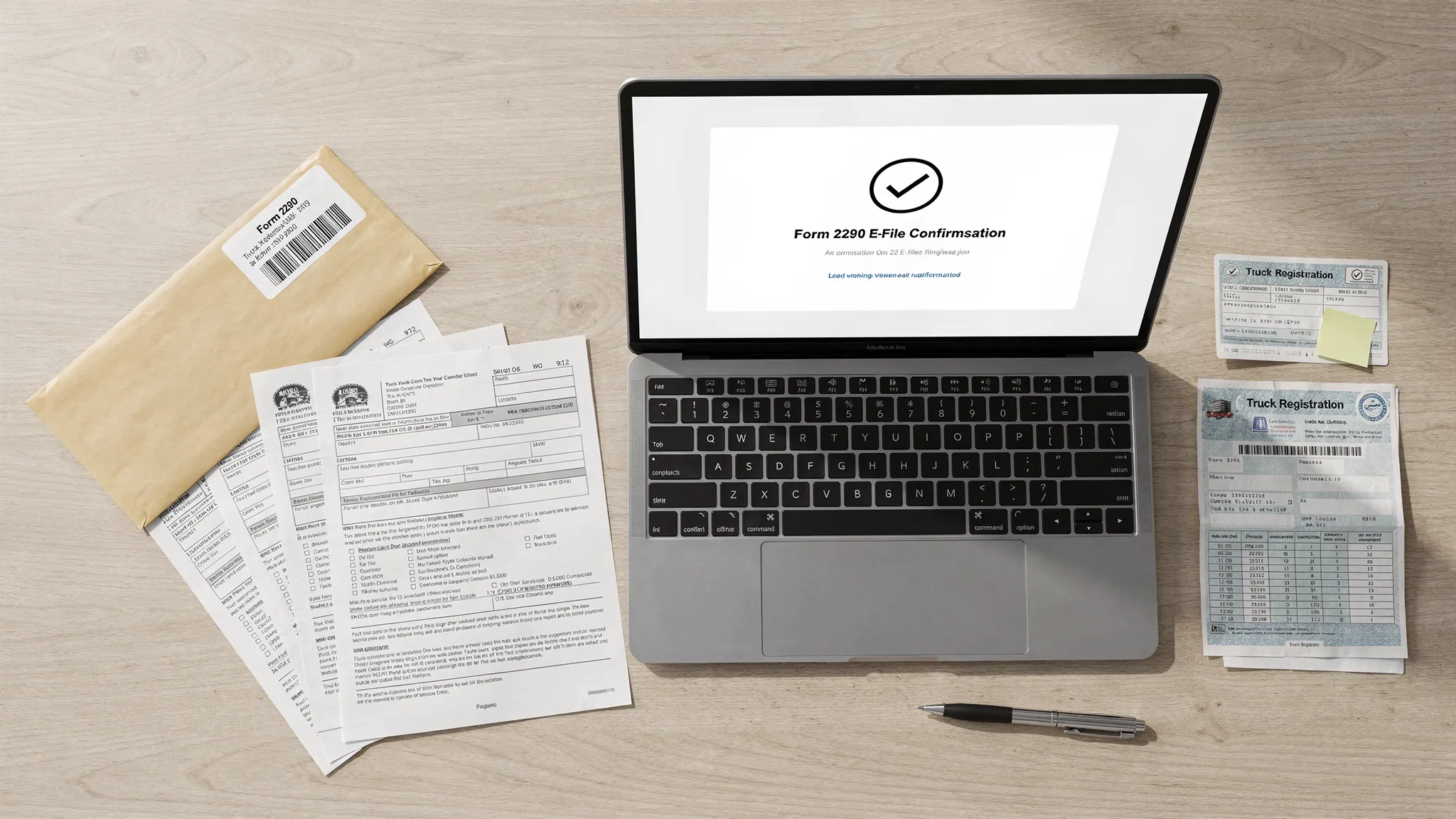
Quick decision table: e-file or mail?
| Situation | Better choice | Why |
|---|---|---|
| You need a Form 2290 Schedule 1 quickly | E-file | The stamped Schedule 1 is often available shortly after IRS acceptance |
| You are reporting 25 or more vehicles on Form 2290 | E-file | IRS rules require e-filing for 25 or more vehicles |
| The IRS notice specifically asks you to mail documents | Follow the notice instructions exactly | |
| The form or attachment cannot be filed electronically | Some tax situations still require paper submission | |
| You are filing fewer than 25 vehicles and have no registration urgency | Either, but e-file is still faster | Mailing may be allowed, but processing can take weeks |
| You want to pay by check or money order | Usually e-file the return and mail only the voucher | You may not need to mail the full return just to pay by check |
| You are filing close to the deadline | E-file | Paper filing can create proof and processing delays |
When it makes sense to mail in tax forms
1. The IRS specifically instructs you to mail the form
If an IRS notice, letter, or form instruction tells you to mail a response, follow that instruction. IRS notices often include a specific mailing address, department, or response deadline. Sending the documents through a different channel may delay processing or cause your response to be routed incorrectly.
This is especially important when you are replying to a tax notice, submitting supporting documents, or providing a signed explanation. In those cases, your goal is not speed alone. Your goal is to send exactly what the IRS requested in the format requested.
Before mailing, make a complete copy of the notice, your response, every attachment, and proof of delivery.
2. The form, attachment, or filing situation is not supported online
The IRS supports e-filing for many common returns, and it continues to encourage electronic filing through its IRS e-file options. However, not every form, attachment, or special situation can be handled electronically.
Paper filing may be necessary if the current IRS instructions say the form must be mailed, if a required supporting statement cannot be attached electronically, or if a certain amended or prior-period filing is not accepted through your e-file channel.
For truckers, this can come up when dealing with older records, special IRS correspondence, or documents that must be physically attached. Always check the current IRS instructions for the form year you are filing, not an old saved PDF.
3. You are filing Form 2290 for fewer than 25 vehicles and timing is not urgent
If you report fewer than 25 vehicles on Form 2290, paper filing may be allowed. That does not mean it is the best option.
The main drawback is processing time. Mailed Form 2290 returns can take several weeks to process, especially during the heavy filing season around July and August. If your DMV, IRP office, lender, or carrier onboarding process needs a stamped Schedule 1 soon, mailing the form can become a costly bottleneck.
Paper filing is more reasonable if your registration deadline is far away, you have no immediate need for Schedule 1, and you are comfortable waiting for IRS processing. If you are unsure where to send your paper return, review the current IRS instructions or this guide to the IRS mailing address for Form 2290.
4. You are responding to an IRS notice with supporting documents
Sometimes the issue is not the tax return itself. It is the proof behind the return.
For example, the IRS may ask for clarification, documentation, or a written explanation. If the notice gives a mailing address and asks for paper documents, mailing is the correct path. Use the notice address rather than a general IRS address, because notice responses are often routed differently than original returns.
Use a trackable mailing method, and do not send your only copy of an important business record unless the IRS specifically requires an original.
5. You cannot safely or reliably access an online filing option
E-filing requires internet access, accurate business data, and the ability to review and submit information securely. If you cannot access a secure connection, cannot verify the legitimacy of a website, or do not have enough information to complete the return correctly online, it may be better to pause rather than submit a rushed or unsafe filing.
That said, this should be a temporary reason, not a default strategy. For Form 2290, using an IRS-authorized e-file provider with guided filing and customer support is usually safer and faster than filling out a paper form by hand, especially if you are managing multiple VINs.
6. You are mailing a payment voucher, not the full return
A common misunderstanding is that paying by check means you must mail the entire tax return. For Form 2290, filing method and payment method are separate decisions.
Many filers can e-file Form 2290 and choose a payment option such as Electronic Funds Withdrawal, EFTPS, card payment through an IRS-approved processor, or check or money order with Form 2290-V. If you choose check or money order, you may only need to mail the payment voucher and payment, not the entire return.
This distinction matters because e-filing the return can help you receive Schedule 1 faster, while mailing only the payment keeps your preferred payment method. Follow the current Form 2290 instructions for the payment option you choose.
When you should not mail tax forms
Mailing is not ideal when speed, proof, or easy correction matters. For truck owners, these are often the exact things that matter most.
You should avoid mailing tax forms when you need a stamped Schedule 1 within days, when you are close to a Form 2290 deadline, when you are reporting 25 or more vehicles, or when a VIN error would create serious registration delays.
You should also avoid mailing duplicate paper forms after a return has already been accepted electronically. Duplicate filings can create confusion, extra IRS correspondence, or payment issues. If you made a mistake after e-filing Form 2290, handle it through the proper correction process, such as a VIN correction or amendment, rather than mailing a second original return.
For time-sensitive truck tax filings, see how online filing works in this guide to getting Form 2290 Schedule 1 in minutes.
How mailing affects Form 2290 and Schedule 1
Form 2290 is different from many other business tax forms because the stamped Schedule 1 is not just a tax record. It is often needed for DMV registration, IRP renewal, vehicle plating, and proof of HVUT compliance.
When you e-file Form 2290, the IRS can accept or reject the return electronically. If accepted, the stamped Schedule 1 can usually be delivered quickly through your e-file provider. If rejected, you can fix the issue and resubmit without waiting for mailed correspondence.
When you mail Form 2290, the timeline changes. The IRS must receive the paper return, process it, stamp Schedule 1, and return proof to you. That can take weeks. During peak filing season, delays can be longer.
| Factor | E-filing Form 2290 | Mailing Form 2290 |
|---|---|---|
| Schedule 1 delivery | Often shortly after IRS acceptance | Commonly several weeks |
| IRS rejection feedback | Faster electronic notice | Slower, often by mail or delayed follow-up |
| Best for fleets | Yes, especially with bulk filing | Not ideal for many VINs |
| Deadline pressure | Better for last-minute filing | Riskier if proof is needed quickly |
| Tracking | Provider dashboard or email updates | Mailing receipt only until IRS processes it |
| Record retrieval | Easier through online account storage | Depends on your paper records and IRS processing |
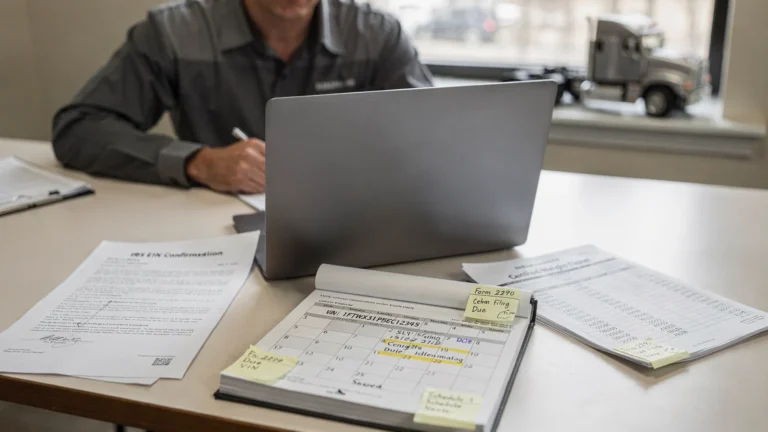
If your Form 2290 due date is approaching, check the current deadline rules before choosing paper. You can review the filing calendar in this Form 2290 due dates guide.
How to mail in tax forms correctly
If mailing is the right choice, treat it like a compliance process, not a simple envelope drop. Small mistakes can cause long delays.
Use this checklist before you mail:
- Download the current form and instructions directly from the IRS or a trusted source.
- Confirm the correct mailing address for your form, tax year, and payment method.
- Use your EIN and legal business name exactly as registered with the IRS.
- Review every VIN, taxable gross weight category, first-used month, and tax period for Form 2290.
- Sign and date the return where required.
- Include the correct payment voucher if you are mailing a check or money order.
- Make a complete copy of the return, payment, voucher, and all attachments.
- Use certified mail, tracking, or an IRS-designated private delivery service.
- Keep your delivery receipt with your tax records.
- Do not mail a duplicate return unless the IRS tells you to do so.
If you use a private delivery service, make sure it is one the IRS recognizes for timely filing purposes. The IRS maintains guidance on designated private delivery services.
A postmark may help show that you mailed on time, but it does not speed up Schedule 1 processing. If you need proof for registration, mailing on the due date is usually too late from an operational standpoint.
Paper filing vs. printable forms: know the difference
Downloading a printable tax form does not mean you must file by mail. Many truck owners use printable forms to understand the fields, gather VINs, or prepare information before filing electronically.
For Form 2290, a printable packet can be useful for planning, but e-filing is usually the better final submission method. If you want to review the paper version first, see this guide on how to download and use a printable 2290 form.
Think of the printable form as a worksheet when speed matters. Think of mailing as the final filing method only when paper is required, allowed, and not likely to hurt your timeline.
A practical three-question framework
Before you decide to mail in tax forms, ask these three questions.
- Is e-filing required? For Form 2290, if you report 25 or more vehicles, the answer is yes. You must e-file.
- Do I need proof quickly? If you need a stamped Schedule 1 for registration, IRP, or business operations, e-filing is the safer choice.
- Did the IRS specifically ask for paper? If a notice or form instruction requires mailing, follow that instruction and keep delivery proof.
If e-filing is not required, proof is not urgent, and the IRS allows paper filing, mailing can be acceptable. In almost every other Form 2290 situation, e-filing reduces risk.
Frequently Asked Questions
Is it better to mail in tax forms or e-file? E-filing is usually better when it is available because it is faster, easier to track, and reduces processing delays. Mailing makes sense when the IRS requires paper, when e-file is unavailable, or when you are responding to an IRS notice that asks for mailed documents.
Can I mail Form 2290 instead of e-filing? You may be able to mail Form 2290 if you are reporting fewer than 25 vehicles and the current IRS instructions allow paper filing. If you report 25 or more vehicles, the IRS requires e-filing.
How long does a mailed Form 2290 take to process? Mailed Form 2290 returns often take several weeks to process, and delays can be longer during peak filing season. If you need Schedule 1 quickly, e-filing is the better option.
Can I mail tax forms on the due date? A timely postmark may help show that a mailed return was sent by the deadline, but it does not mean the IRS will process it immediately. For Form 2290, mailing on the due date can still delay your stamped Schedule 1.
Do I have to mail the whole Form 2290 return if I want to pay by check? Not always. Many filers can e-file Form 2290 and mail only the payment voucher with a check or money order. Follow the current IRS instructions for your chosen payment method.
What is the biggest risk of mailing tax forms? The biggest risks are slow processing, limited status visibility, lost or misrouted mail, and delayed correction of errors. For Form 2290 filers, the most serious consequence is waiting too long for Schedule 1 when registration depends on it.
Get your Form 2290 Schedule 1 without mailing delays
If you need to file Form 2290 and receive your stamped Schedule 1 quickly, e-filing is the practical choice. Simple Form 2290 is an IRS-authorized online platform built for truckers, owner-operators, and fleet owners who want a guided filing process, secure data handling, bulk vehicle filing, bilingual support, and professional customer support.
Start your HVUT filing online with Simple Form 2290 and avoid the uncertainty of mailing paper forms when your registration timeline matters.