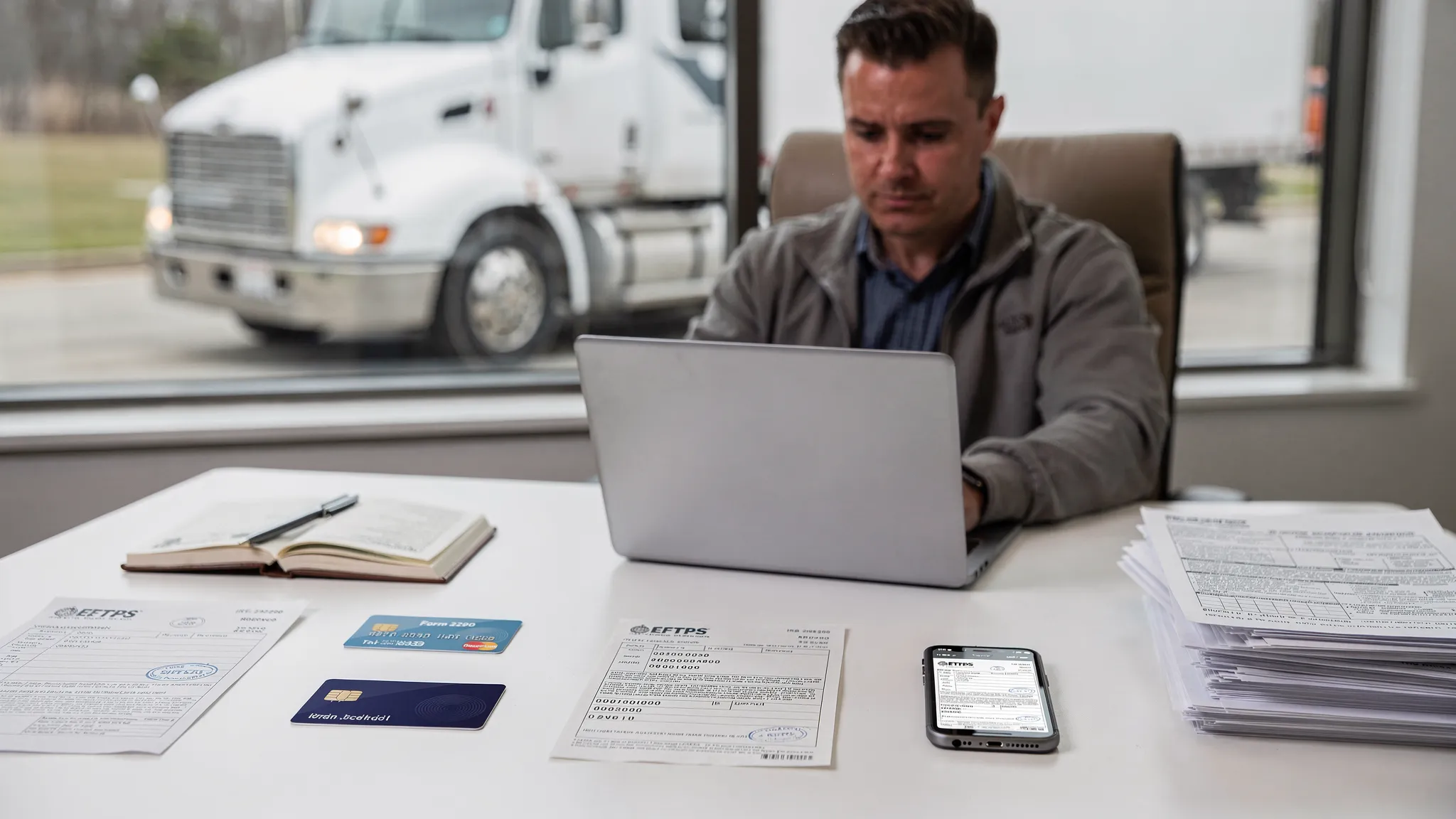
IRS 2290 Payment Methods Explained for Truck Owners
Choosing the right IRS 2290 payment method is not just an accounting preference. For truck owners, it can affect cash flow, deadline risk, IRS notices, and how smoothly you get the stamped Schedule 1 needed for registration or IRP renewal.
Form 2290 reports and pays the Heavy Vehicle Use Tax (HVUT) for taxable highway motor vehicles with a taxable gross weight of 55,000 pounds or more. The IRS gives truck owners several ways to pay: Electronic Funds Withdrawal, EFTPS, debit or credit card, and check or money order with Form 2290-V. Each option works, but the best choice depends on how soon your deadline is, whether you manage one truck or a fleet, and how you prefer to control payments.
Below is a practical breakdown of every IRS 2290 payment method, when to use it, what to watch for, and how to avoid delays.
First, understand the difference between filing and paying
Form 2290 has two separate responsibilities: filing the return and paying the HVUT tax due. You can file online through an IRS-authorized e-file provider and choose how you want to pay the tax to the IRS.
That distinction matters because paying the IRS does not automatically mean you filed Form 2290. Likewise, e-filing Form 2290 does not remove your responsibility to make sure the payment is made on time.
According to the IRS Form 2290 instructions, the return is generally due by the last day of the month after the vehicle is first used on public highways during the tax period. For the 2026-2027 HVUT tax year, a vehicle first used in July 2026 is generally due by August 31, 2026. If a due date falls on a weekend or legal holiday, the deadline moves to the next business day.
The key point: your filing and payment should both be completed by the applicable Form 2290 deadline.
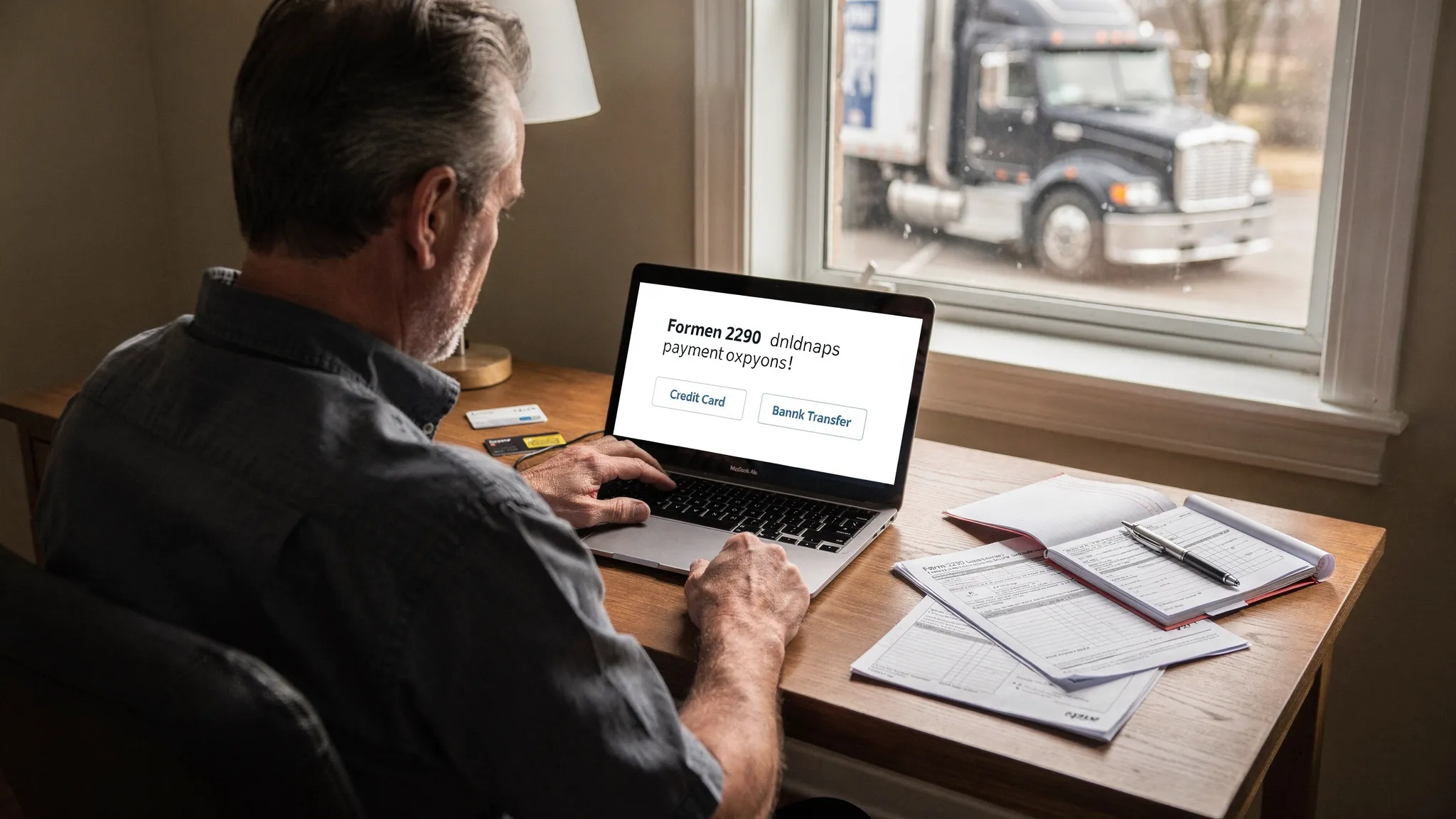
IRS 2290 payment methods at a glance
Here is a quick comparison of the main ways truck owners can pay HVUT after preparing Form 2290.
| IRS 2290 payment method | Best for | How it works | Main advantage | Watch out for |
|---|---|---|---|---|
| Electronic Funds Withdrawal (EFW) | Owner-operators and small fleets filing online | Enter bank routing and account details during e-filing | Simple, direct, and no separate payment login | Bank details must be correct and funds must be available |
| EFTPS | Fleets and businesses that want payment control | Schedule payment through the Electronic Federal Tax Payment System | Strong control over timing and payment records | Enrollment and scheduling take planning |
| Debit or credit card | Filers who want card convenience or urgent payment flexibility | Pay through an IRS-approved card processor | Fast and convenient | Processor fees apply |
| Check or money order with Form 2290-V | Filers who prefer paper payment | Mail payment with the voucher | Familiar option for non-electronic payments | Slower and easier to delay if mailed late |
No payment method changes the tax amount due. Your HVUT is calculated based on taxable gross weight, vehicle type, and first-used month. If you are unsure what you owe, review this guide on how to calculate HVUT tax for Form 2290 before choosing a payment option.
Option 1: Electronic Funds Withdrawal (EFW)
Electronic Funds Withdrawal is often the simplest IRS 2290 payment option for truck owners who e-file. When you prepare Form 2290 online, you provide your bank routing number, account number, account type, and the amount due. The IRS then withdraws the HVUT from that account.
EFW is popular because it keeps filing and payment in one workflow. You do not have to log in to a separate government payment system or mail a voucher after submitting your return.
This method is a good fit if you want a straightforward process and are comfortable entering bank information during filing. It also works well for owner-operators who want to file Form 2290 quickly and get their Schedule 1 after IRS acceptance.
Before choosing EFW, verify the bank account carefully. A transposed routing number, closed account, or insufficient funds can lead to a failed payment. If the tax is not paid by the due date, the IRS may charge penalties and interest even if the return itself was filed.
EFW is not the same as a debit card payment. It is an ACH-style withdrawal from a bank account. If you want to pay with a card, choose the debit or credit card option instead.
Option 2: EFTPS
EFTPS stands for Electronic Federal Tax Payment System. It is a secure federal payment system used by many businesses to schedule and track tax payments. You can learn more directly from EFTPS.gov, the official federal site.
For Form 2290, EFTPS is a strong option for fleet owners, accounting teams, and trucking businesses that already use the system for other tax payments. It gives you control over payment scheduling, lets you keep detailed confirmations, and can be useful when separating tax preparation from treasury or accounting approvals.
The main drawback is timing. If you are new to EFTPS, you must enroll before using it, and enrollment is not always instant. You also need to schedule payments early enough for the payment to be timely. As a practical rule, do not wait until the final evening before your deadline to figure out EFTPS.
When using EFTPS for HVUT, make sure the EIN, tax form, tax period, and payment amount match the Form 2290 return you filed. A payment posted under the wrong tax period or business identity can create IRS notice problems later.
For a detailed walkthrough, see our dedicated guide on how to pay Form 2290 on EFTPS.
Option 3: Debit or credit card
The IRS allows taxpayers to make certain federal tax payments by debit card, credit card, or digital wallet through approved payment processors. You can view current IRS card payment options on the official IRS debit and credit card payment page.
Card payment can be convenient if you need payment flexibility, want a quick confirmation, or prefer not to share bank account details through EFW. It can also help when cash flow is tight and you want to use a business credit card, provided that fits your financial policy.
The biggest trade-off is cost. Card processors charge convenience fees, and those fees can add up when you are paying HVUT for multiple trucks. For a single heavy vehicle, the fee may be acceptable. For a larger fleet, EFTPS or EFW may be more cost-effective.
Also remember that paying by card does not replace the filing requirement. You still must file Form 2290 and receive IRS acceptance. Keep both records: the Form 2290 Schedule 1 and the card payment confirmation.
Option 4: Check or money order with Form 2290-V
Truck owners can also pay HVUT by check or money order using Form 2290-V, the payment voucher. This method is most common when someone prefers paper payment or does not want to use electronic payment options.
If you pay by check or money order, make it payable to the United States Treasury and include the required identifying information, such as EIN, Form 2290, and the tax period. The voucher helps the IRS apply the payment correctly.
This option can work, but it is usually the slowest and most vulnerable to timing issues. Mail delays, incorrect voucher information, missing EIN details, or sending payment to the wrong address can create unnecessary problems. If you use this method near a deadline, consider trackable mailing and keep copies of everything.
If you want a deeper explanation of the voucher, read our guide on Form 2290-V and HVUT payment.
Which payment method should truck owners choose?
There is no single best method for every truck owner. The right choice depends on how you operate.
| Situation | Recommended payment method | Why it makes sense |
|---|---|---|
| One truck, straightforward filing | EFW | Keeps filing and payment together in one process |
| Fleet with accounting controls | EFTPS | Allows scheduled payments and clear payment records |
| Deadline is close and card fees are acceptable | Debit or credit card | Provides fast payment confirmation |
| You do not want electronic payment | Check or money order | Traditional option, but requires careful mailing |
| You are filing 25 or more vehicles | E-file the return, then choose the payment method that fits | IRS generally requires e-filing when reporting 25 or more vehicles |
For most owner-operators, EFW is the simplest choice. For larger fleets, EFTPS often provides better payment oversight. Card payment is useful when speed and flexibility matter more than fees. Check or money order should be used only when you are comfortable with the mailing timeline and recordkeeping.
How payment affects your stamped Schedule 1
The stamped Schedule 1 is the proof truck owners need for vehicle registration, DMV processing, and IRP renewal. When you e-file Form 2290 through an IRS-authorized provider, the IRS typically returns the watermarked Schedule 1 after accepting the return.
Your payment method can still affect your compliance record. A payment that fails, posts late, or is applied to the wrong tax period may lead to IRS notices, penalties, or interest. That is why it is important to keep your payment confirmation with your Schedule 1.
Paper filing is different. If you mail Form 2290 to the IRS, processing can take much longer, especially during peak filing season. That delay can create registration problems if you need Schedule 1 quickly. For time-sensitive filings, e-filing is usually the safer option.
If your main goal is speed, learn how to file Form 2290 online and get Schedule 1 in minutes after IRS acceptance.
Common IRS 2290 payment mistakes to avoid
Even experienced truck owners can run into avoidable payment problems. The most common issue is assuming that payment and filing are the same thing. They are not. You must file the return and pay the tax.
Other mistakes include using the wrong EIN, choosing the wrong tax period, missing the EFTPS scheduling cutoff, entering incorrect bank account details, forgetting card processing fees, mailing Form 2290-V late, or failing to save payment confirmations.
The simplest prevention step is to review everything before submission: business name, EIN, VIN, first-used month, taxable gross weight, tax amount, and payment method. Small errors can delay acceptance, create IRS notices, or cause unnecessary back-and-forth during registration.
A simple workflow for paying Form 2290 correctly
Use this process to reduce payment errors and deadline stress:
- Confirm your filing deadline based on the vehicle’s first-used month.
- Calculate HVUT using the correct taxable gross weight and vehicle category.
- E-file Form 2290 through an IRS-authorized provider.
- Choose EFW, EFTPS, card, or check based on timing and cash flow.
- Save your IRS-stamped Schedule 1 and payment confirmation.
- Keep records for DMV, IRP, audits, and future filings.
If you manage more than one truck, standardize this workflow for every vehicle. A repeatable process helps prevent duplicate filings, missed payments, and last-minute registration delays.
File and pay with more confidence
Simple Form 2290 is an IRS-authorized online platform built for truck owners, owner-operators, and fleet managers who need a faster way to file HVUT. The guided online process helps you enter business and vehicle details, submit Form 2290 electronically, and receive your stamped Schedule 1 after IRS acceptance.
You can use Simple Form 2290 for single-truck filings, bulk vehicle filings, data retrieval, and fleet management. The platform also offers professional customer support and bilingual support in English and Spanish, which can be especially helpful during peak filing season.
The HVUT tax itself is paid to the IRS through your selected IRS payment method. The e-file service fee is separate from the tax due. That separation keeps your filing clear and helps you understand exactly what you are paying and why.
Ready to file? Start your Form 2290 online with Simple Form 2290 and choose the IRS payment method that fits your operation.
Frequently Asked Questions
What are the IRS 2290 payment methods? The main IRS 2290 payment methods are Electronic Funds Withdrawal, EFTPS, debit or credit card through an IRS-approved processor, and check or money order with Form 2290-V.
Is paying Form 2290 the same as filing it? No. Payment and filing are separate. You must submit Form 2290 and also make sure the HVUT payment reaches the IRS by the deadline.
Can I pay Form 2290 with a credit card? Yes. The IRS allows card payments through approved processors. Processor fees apply, so compare the cost before using a card for large fleet payments.
Do I need EFTPS to pay Form 2290? No. EFTPS is optional, but it is useful for fleets and businesses that want scheduled payments and detailed payment records. New users should enroll before the filing deadline.
Will I get Schedule 1 immediately after payment? If you e-file, the stamped Schedule 1 is typically issued after IRS acceptance of your Form 2290 return. Your payment confirmation should be saved separately with your tax records.
What happens if my Form 2290 payment is late? The IRS may charge penalties and interest for late payment. File and pay on time, and verify that your selected payment method was completed successfully.