Address to Mail Tax Returns: The Correct IRS Addresses
Mailing a tax return sounds simple until it gets delayed because it went to the wrong IRS campus. Unfortunately, the “address to mail tax returns” is not one universal location. The correct IRS mailing address depends on what you are sending (a return, a payment voucher, an amended return, or an excise form), whether you include a payment, and sometimes which state you live in.
This guide shows you how to find the correct IRS addresses confidently, avoid common mailing mistakes, and (if you file HVUT) where Form 2290 fits into the picture.
Why the correct IRS mailing address matters
Using the wrong address can create real operational problems:
- Processing delays (your return can sit in the wrong mailroom, then get rerouted).
- Late notices and penalties if processing pushes you beyond deadlines.
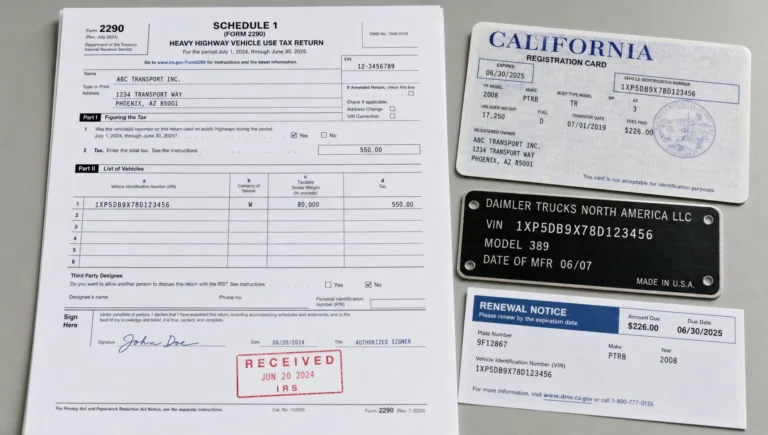
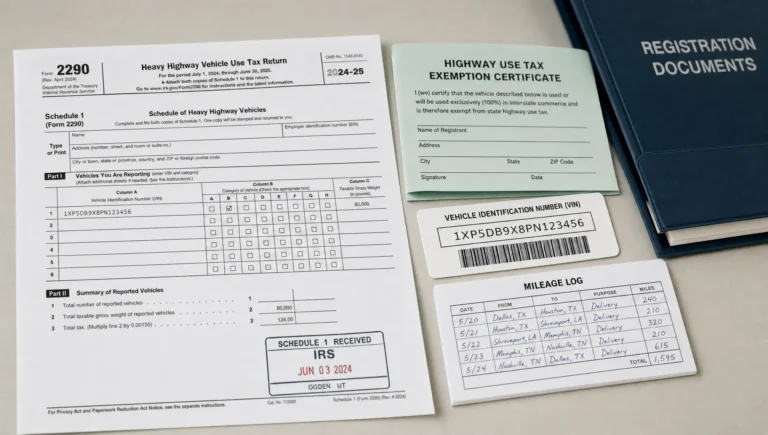
- Lost time for trucking compliance when you need proof fast (for example, an IRS-stamped Schedule 1 for IRP or registration when filing Form 2290).
Because IRS addresses can change from year to year (and they vary by form), the safest approach is to verify the address using IRS instructions for your exact form and tax year.
The quickest way to find the right IRS address to mail tax returns
Instead of guessing, use this simple decision process.
1) Identify what you are mailing
Different items go to different addresses.
- A tax return (for example, Form 1040 or a business return)
- An amended return (for example, Form 1040-X)
- A payment only (for example, a voucher with a check)
- An IRS notice response (addresses are usually printed on the notice)
- An excise tax return (for example, Form 2290)
2) Confirm whether you are including a payment
Many IRS “Where to file” instructions split addresses into:
- With payment enclosed (usually a check or money order)
- Without payment (including when you pay electronically)
Sending a “no payment” return to a “with payment” address (or the other way around) is one of the most common causes of misrouting.
3) Use the official IRS “Where to file” source for your exact form
The IRS publishes different address lists depending on the form type.
| What you’re filing | Best place to confirm the current IRS mailing address | Notes |
|---|---|---|
| Individual return (Form 1040 series) | IRS “Where to File Paper Tax Returns” page | Addresses can vary by state and payment status. |
| Amended individual return (Form 1040-X) | Form 1040-X instructions | Addresses differ from original filings in many cases. |
| Business income returns (1120, 1120-S, 1065, etc.) | The instructions for that specific form and tax year | The “Where to File” section is the source of truth. |
| Payroll returns (Form 941, 940) | Instructions for the form | These frequently split by state and payment method. |
| Excise tax forms (including Form 2290) | Instructions for Form 2290 and IRS guidance | Form 2290 mailing rules are unique (and e-file is often the better route). |
For individual filers, start with the IRS page: Where to File Paper Tax Returns.
IRS mailing addresses change, here’s how to verify you’re using the latest one
Before you mail anything, verify two things:
- Tax year: Use the instructions for the year you are filing (addresses can change).
- Delivery method: USPS vs a private delivery service can require different formatting or different addresses.
If you plan to use FedEx, UPS, or DHL, check the IRS list of approved carriers and the rules for using them: Private Delivery Services (PDS).
Common mailing scenarios (and what usually goes wrong)
Mailing a Form 1040 (individual return)
For Form 1040, the IRS assigns different mailing addresses based on:
- The state where you live
- Whether you include a payment
- Sometimes whether you are enclosing additional forms
Because there are many combinations, it is best to rely on the IRS “Where to file” page (linked above) or the current-year Form 1040 instructions.
Common mistake: Using an address from an old blog post, a prior-year instruction packet, or a friend’s state.
Mailing an amended return (Form 1040-X)
Amended returns are not mailed to the same address as original returns in every situation. The IRS directs filers to specific addresses in the Form 1040-X instructions.
Common mistake: Mailing Form 1040-X to the same IRS campus used for your original Form 1040.
Mailing a payment only (voucher + check)
If you already filed electronically and are mailing a check, make sure you are using the IRS address shown for payment vouchers for that specific form.
Common mistake: Mailing a check to the “return address” instead of the “payment address,” which can slow posting.
Form 2290 (HVUT) mailing addresses, what truckers should know
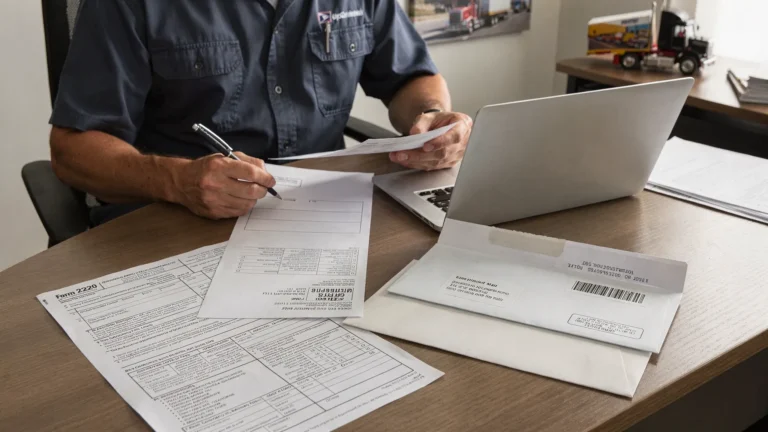
If you’re filing IRS Form 2290 (Heavy Vehicle Use Tax) on paper, the IRS mailing address typically depends on whether you’re including a payment.
Because addresses can change and Form 2290 is time-sensitive (Schedule 1 is often needed for IRP registration), use a dedicated, up-to-date reference.
- For the current Form 2290 paper mailing addresses and scenarios, see: IRS Mailing Address for Form 2290
If you want to avoid mail delays entirely, e-filing is usually faster and helps you get your IRS-stamped Schedule 1 quickly. The IRS also requires e-filing for filers reporting 25 or more vehicles.
To understand the IRS context for Form 2290, you can also review: About Form 2290 (IRS.gov).
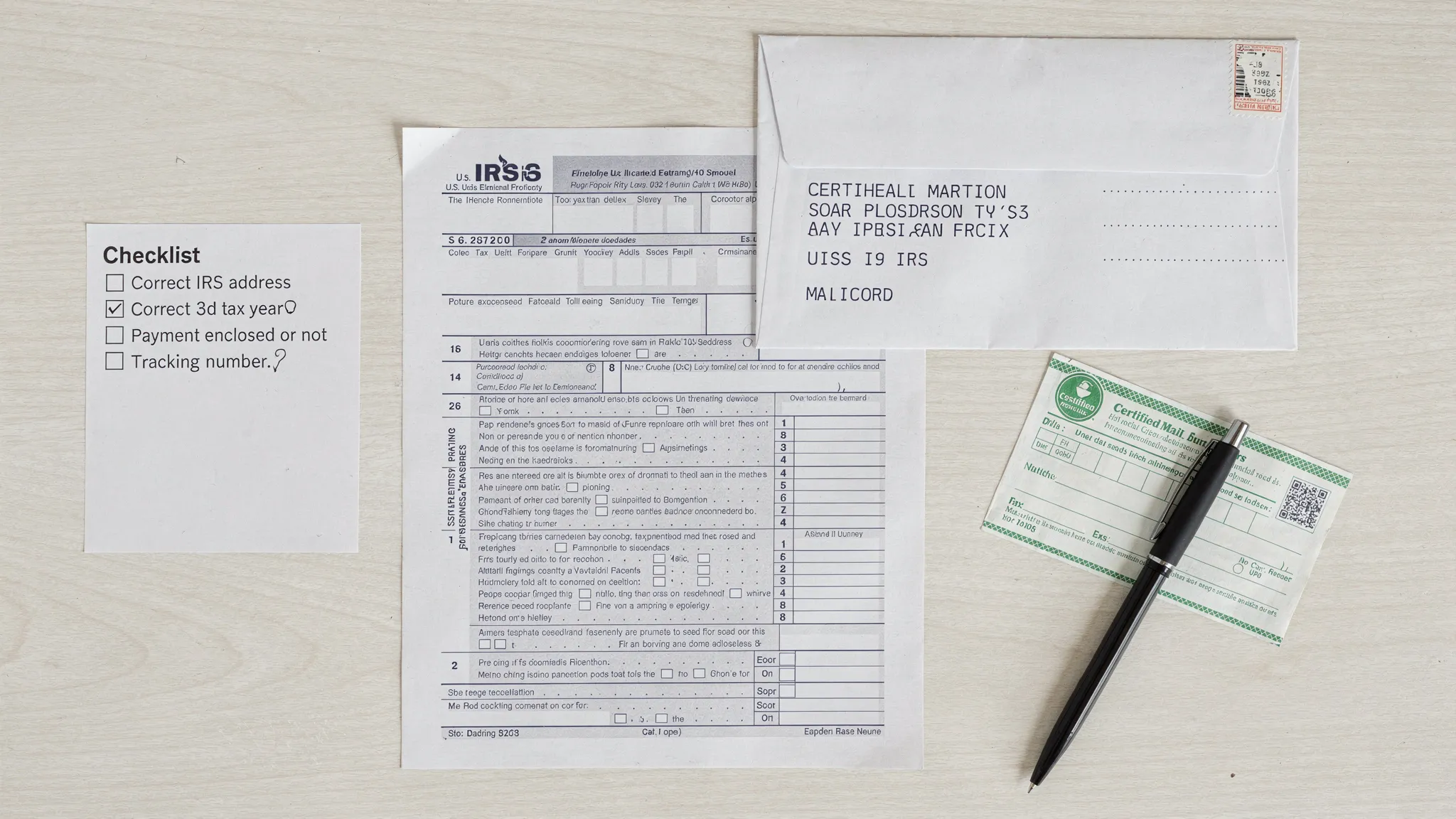
How to mail a tax return to the IRS correctly (best practices)
Correct address is step one. Step two is mailing in a way that protects you if anything goes missing.
Use tracking and keep proof of mailing
The IRS generally treats a return as filed on time if it is mailed on time (under the “timely mailing as timely filing” rule), but you need proof.
A practical approach:
- Use Certified Mail (USPS) or an approved private delivery service.
- Keep the receipt and tracking until your return is processed.
- Save a complete copy (PDF scan or photocopy) of what you sent.
Match the payment method to the right address
If you pay electronically, your return usually goes to a “without payment” address.
If you include a check or money order, it usually goes to a “with payment enclosed” address.
Double-check the basics that cause avoidable delays
| Checklist item | Why it matters |
|---|---|
| Correct tax year form version | Prior-year forms can cause processing and posting issues. |
| Signature and date | Unsigned returns can be treated as unfiled. |
| Correct SSN/EIN and legal name | Mismatches trigger correspondence and delays. |
| Payment voucher included when required | Helps the IRS apply your payment correctly. |
| Correct IRS address for your scenario | Avoids misrouting to the wrong IRS campus. |
When you should avoid mailing and file electronically instead
Mailing is sometimes necessary, but it is rarely the fastest option.
For truckers and fleet managers, the biggest operational downside of mailing Form 2290 is waiting for processing and Schedule 1. If your plates, IRP, or registration renewal depends on proof, e-filing is typically the most reliable path.
If you need a paper workflow for review but want faster submission, you can still start with a printable packet and then e-file for speed: How to download a printable 2290 form.
Frequently Asked Questions
Is there one address to mail tax returns to the IRS? No. The IRS mailing address depends on the form you’re filing, your state (for many individual returns), and whether you include a payment.
Where can I find the correct IRS address for my specific return? The safest sources are the IRS “Where to File” page for individual returns and the “Where to File” section in the official instructions for your exact form and tax year.
Does “with payment” vs “without payment” really matter? Yes. The IRS often uses different mailing addresses depending on whether a check or money order is enclosed.
What is the correct mailing address for Form 2290? It depends on whether you include payment and other filing details. Use this up-to-date guide: IRS Mailing Address for Form 2290.
How can I avoid mailing delays for Form 2290 and get Schedule 1 faster? E-filing through an IRS-authorized provider is typically the fastest way to receive an IRS-stamped Schedule 1.
File Form 2290 online and skip the mailing guesswork
If you’re filing HVUT and you need Schedule 1 quickly for registration or IRP, mailing a paper return can slow you down.
Simple Form 2290 is an IRS-authorized e-file provider that helps truckers and fleets file Form 2290 online with a guided process, bulk vehicle filing support, secure data handling, and bilingual customer support.
Get started here: E-file Form 2290 with Simple Form 2290