When Do You Need Form 8453-EX for Filing Form 2290 HVUT?
Getting your Form 2290 Schedule 1 quickly is not just a tax task, it is often the gating item for IRP truck registration and keeping your wheels moving. That is why many owner-operators and fleet owners run into a surprisingly important question during HVUT season: When do you need Form 8453-EX when filing Form 2290 HVUT?
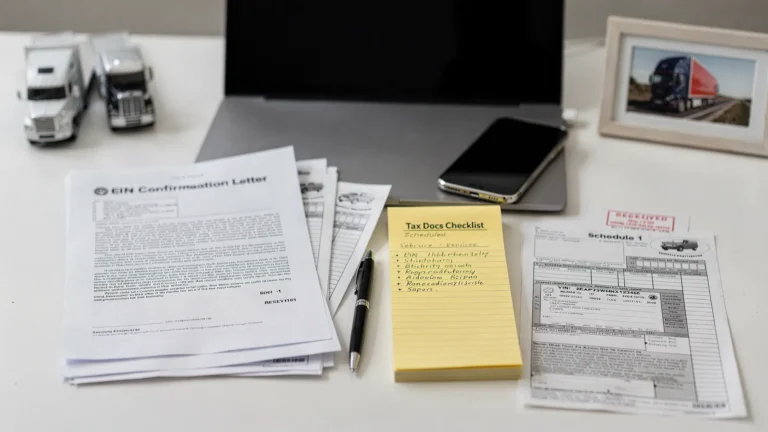
Form 8453-EX is not a payment form and it is not what generates Schedule 1. Instead, it is part of the compliance “paper trail” that supports your electronic filing and signature authorization.
What is Form 8453-EX (and why does the IRS use it)?
Form 8453-EX, Excise Tax Declaration for an IRS e-file Return, is a signature authorization document used with certain electronically filed excise tax returns, including Form 2290 (HVUT).
At a strategic level, this form exists for two reasons:
- Identity and intent: It documents that the taxpayer (or authorized signer) approved the e-filed excise tax return.
- Operational auditability: It gives the IRS and the Electronic Return Originator (ERO) a consistent record to retain if the IRS later questions authorization, signature, or submission details.
You can review the latest IRS version and references on the official IRS forms page for Form 8453-EX.
When do you need Form 8453-EX for Form 2290 HVUT?
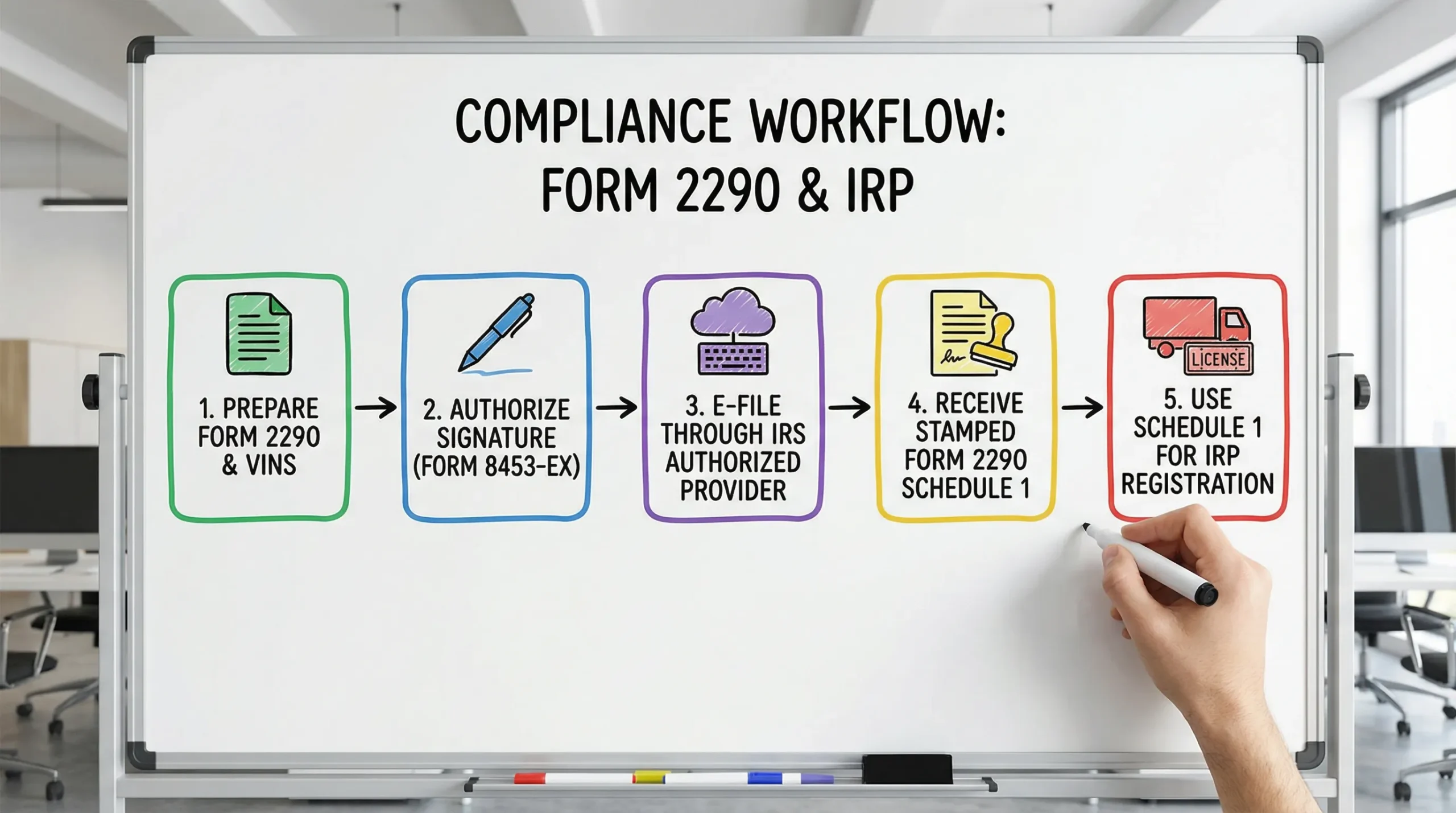
You generally need Form 8453-EX when your Form 2290 is filed electronically through an authorized e-file process that requires signature authorization documentation.
In practical terms for truckers and fleets, the easiest way to think about it is by filing method.
| How you file Form 2290 | Do you need Form 8453-EX? | What happens to the form? | Why it matters |
|---|---|---|---|
| E-file through an IRS Authorized E-file Provider (common for owner-operators and fleets) | Typically yes (completed/signed as part of e-file authorization) | Usually retained electronically by the provider/ERO (not mailed unless requested) | Supports signature authorization and compliance recordkeeping |
| E-file through a tax professional/agent (ERO) | Yes | The ERO keeps it per IRS instructions | Documents that you authorized the preparer to transmit |
| Paper file Form 2290 by mail | No | Not used | Paper returns are signed directly on Form 2290 |
| E-file an amendment (VIN correction, mileage exceedance, Taxable Weight Amendments) | Typically yes if e-filed | Retained like the original e-file authorization | Amendments still require valid authorization trails |
The most common “yes” scenario
If you are using an online platform such as Simple Form 2290 (an IRS Authorized E-file Provider) to electronic file Form 2290 and pay online, the 8453-EX requirement is usually handled as part of the e-file signature workflow (either by capturing the required authorization electronically or generating the form for signature, depending on the filing flow).
The most common “no” scenario
If you are mailing Form 2290 to the IRS with a check or money order, Form 8453-EX is not part of that process.
Why Form 8453-EX is strategically important (even if you never mail it)
Most HVUT compliance problems are not caused by tax calculations, they are caused by process friction: missing IDs, mismatched records, authorization gaps, and last-minute IRP pressure.
Form 8453-EX becomes important because it sits right in the middle of three operational realities:
1) IRP registration is a timing game
For many carriers, 2290 Schedule 1 for IRP is the immediate goal. States and IRP jurisdictions typically want proof of HVUT payment (or filing status) before processing registrations.
Paper filing can create a timing gap. The IRS has long warned that paper processing can take weeks, and many HVUT guidance resources cite 4 to 6 weeks as a realistic window during peak periods. E-filing can reduce the “proof gap” dramatically because your Form 2290 Schedule 1 is generated after IRS acceptance.
Here is a simple planning view you can use internally.
| Task | Paper filing (typical) | E-file with an IRS-authorized provider (typical) |
|---|---|---|
| Submit Form 2290 | Mail time plus IRS intake | Minutes |
| Resolve rejections (EIN/VIN mismatches, duplicates) | Slow feedback loop | Faster feedback loop |
| Receive stamped Schedule 1 | Often weeks | Often available shortly after acceptance |
| Use Schedule 1 for IRP | Delayed registration risk | Faster IRP readiness |
2) Bulk and fleet filing increases signature risk
As fleets scale, the risk is less about “how to file” and more about “who is authorized to sign.” If you are doing Bulk and fleet filing, the 8453-EX record is part of keeping your compliance defensible.
Example scenario (common in fleet acquisitions): a small fleet investor acquires 8 trucks in Q3 and adds them to an existing filing workflow. The return itself is easy, but the signer on record is still the previous manager. A clean authorization trail (8453-EX or approved e-sign equivalent) prevents internal confusion and helps you respond quickly if an agency or auditor questions who approved the transmission.
3) It protects you when something goes wrong
If your submission is challenged, the “proof stack” matters:
- The IRS acceptance (and your Schedule 1 form 2290) shows the return was processed.
- Your payment confirmation (EFTPS, direct debit, or card processor record) shows the tax was paid.
- Form 8453-EX shows authorization for the e-file transmission.
That combination is especially valuable when you are facing time-sensitive needs like irp truck registration.
Form 8453-EX instructions: what to verify before you sign
You do not need to overcomplicate this form, but you do need to keep it consistent with your 2290 filing.
Focus on these high-rejection and high-delay items:
- Business name and EIN: Must match IRS records. EIN mismatches are a major cause of e-file friction.
- Tax period: Form 2290 operates on the HVUT tax year (July 1 to June 30). Your filing must match the correct period.
- Return type: Ensure it corresponds to Form 2290 (and amendment type when applicable).
- Signer authority: The person signing must have authority for the entity (owner, officer, partner, authorized member, or authorized agent).
- Vehicle identification number (VIN) alignment: While VINs are reported on the return, operationally you should confirm the VIN list you file matches what you need for registration.
For official retention and procedural rules, consult the IRS guidance referenced with the Form 8453-EX instructions.
Lessons learned: where Form 8453-EX problems actually show up
Most filers do not get “rejected because of Form 8453-EX.” Instead, 8453-EX issues show up as business process problems:
Authorization gaps during delegation
If your dispatcher, office manager, or outside preparer files for you, you need a clear authorization flow. Fleets that treat HVUT filing like a repeatable monthly ops process tend to have fewer surprises than fleets that treat it like a once-a-year scramble.
Misaligned timelines with IRP renewals
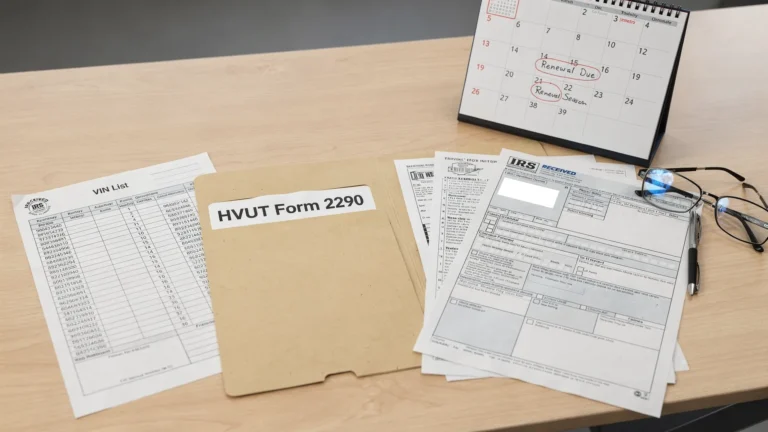
When your schedule 1 form 2290 due timeline collides with IRP renewal, small administrative delays become expensive. Strategic takeaway: file early enough that you have time to fix rejections and still meet IRP deadlines.
Amendments without updated authorization
If you file Taxable Weight Amendments (weight category increases) or other changes later in the year, the same authorization discipline applies. The amendment may be fast, but your recordkeeping has to stay consistent.
How Simple Form 2290 fits into a modern HVUT workflow
For many carriers, the practical goal is an “Easy 2290” process that produces a valid Schedule 1 with minimal back-and-forth. Simple Form 2290 is an IRS-authorized platform designed to streamline this, especially for filers who want:
- A guided, step-by-step e-file experience
- Fast access to Form 2290 Schedule 1 after acceptance
- Bulk vehicle filings for fleets
- Support in English and Spanish
- Secure storage and retrieval for compliance records
If your operating model depends on keeping trucks registered and rolling, the main strategic benefit of using an IRS-authorized provider is reducing administrative cycle time (and therefore reducing downtime risk tied to paperwork).
You can learn more or start an online filing at Simple Form 2290.
Common questions truckers ask about Form 8453-EX and Form 2290
Do I have to mail Form 8453-EX to the IRS after e-filing Form 2290? In most e-file situations, no. It is generally retained by the ERO/provider for recordkeeping, unless the IRS specifically requests it.
If I paper file Form 2290, do I need Form 8453-EX? No. Form 8453-EX is tied to the electronic filing process. Paper filers sign Form 2290 directly.
Does Form 8453-EX affect how fast I get Form 2290 Schedule 1? Indirectly. Schedule 1 speed depends on IRS acceptance of the e-file return, but correct authorization and clean filing data reduce the chance of preventable delays.
Do I need a new Form 8453-EX for a Form 2290 amendment (like a taxable weight increase)? If you e-file the amendment through an ERO/provider workflow that requires authorization documentation, typically yes. Treat it like a new authorized submission.
What information should match between Form 8453-EX and my 2290 filing to avoid issues? Your legal business name, EIN, tax period, and the authorized signer details should be consistent with your Form 2290 and IRS records.